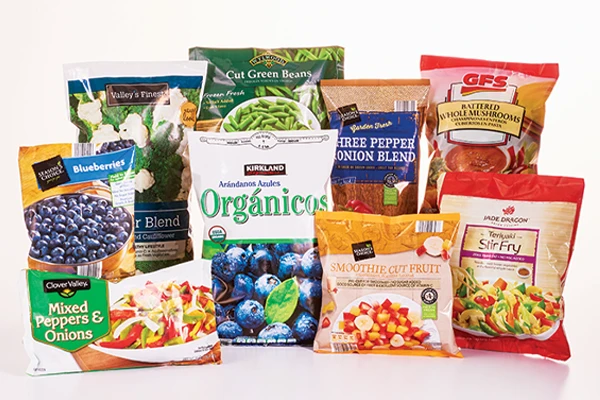
Walk down any grocery aisle and count the packaging formats you see. Cans. Glass jars. Rigid plastic tubs. Then look at everything else — the coffee pouches, the snack bags, the squeeze pouches, the resealable zip bags, the spouted liquid packs. That second category has a name: flexible packaging.
Flexible packaging has quietly become one of the dominant forces in global packaging, and for good reason. It does things rigid packaging simply cannot: it conforms to product shape, weighs a fraction of comparable containers, enables multi-layer barrier engineering, and offers a printable surface that brings brands to life. The global flexible packaging market was valued at over $258 billion in 2024 and is projected to surpass $400 billion by 2032 — a trajectory driven by growth in food, e-commerce, personal care, and sustainability-focused product categories.
This guide covers everything you need to know: what flexible packaging is, how it works, the materials and formats it comes in, its key advantages, and how to choose the right solution for your product.
What Is Flexible Packaging?
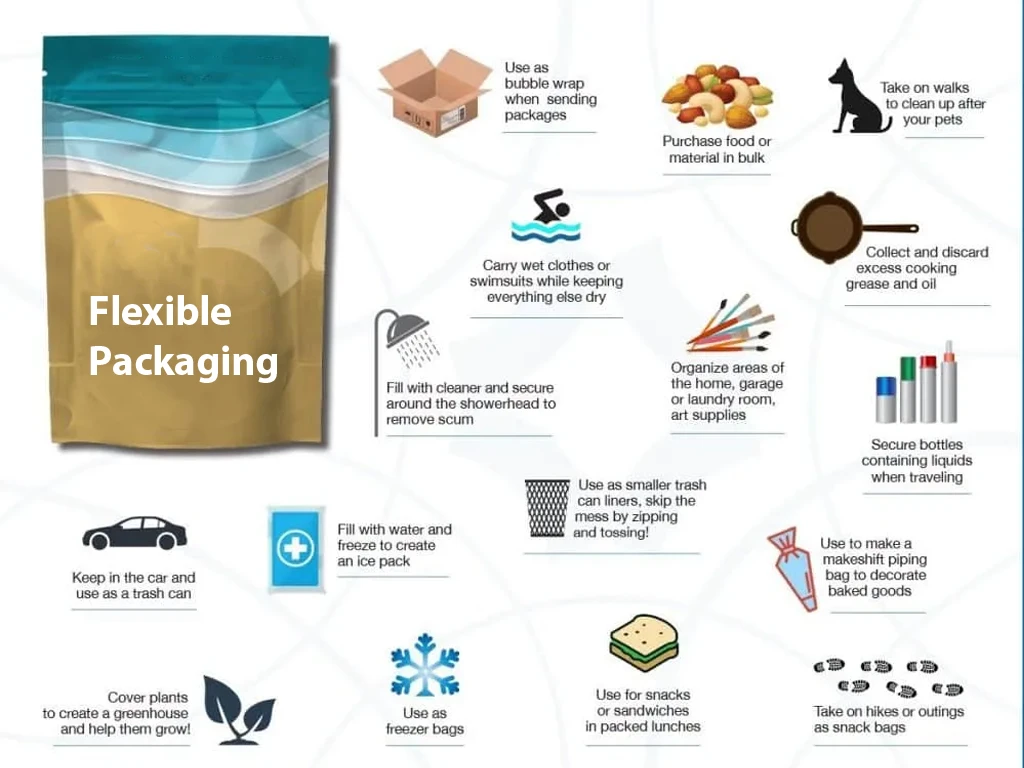
Flexible packaging refers to any package or pouch made from pliable materials — films, foils, paper, or laminates — that can be shaped, formed, and sealed around a product. Unlike rigid packaging such as glass bottles, metal cans, or hard plastic containers, flexible packaging yields when pressed and can be flattened when empty.
It includes a broad category of products: stand-up pouches, flat-bottom bags, side gusset bags, three-side seal pouches, spouted pouches, vacuum bags, roll stock film, and more. What unites them is the use of flexible film as the primary structural material, typically manufactured through extrusion, lamination, or coating processes that layer multiple materials together to achieve the desired combination of properties.
Flexible packaging can be used as primary packaging (in direct contact with the product), secondary packaging (grouping multiple units together), or both. It is used across food and beverage, pet food, coffee, pharmaceuticals, personal care, agricultural products, and industrial goods.
What Materials Are Used in Flexible Packaging?
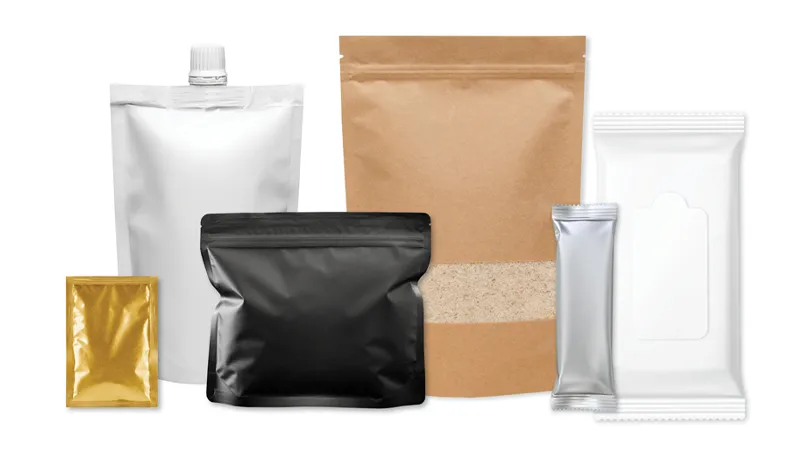
The performance of a flexible package depends almost entirely on its material structure. Most flexible packaging is not made from a single material but from laminated multi-layer films — two or more different materials bonded together, each layer contributing specific properties.
Common Film Materials
Polyethylene (PE) — including LDPE, LLDPE, and HDPE — is the most widely used material in flexible packaging. It provides excellent flexibility, heat-sealability, moisture resistance, and food safety. PE is the typical choice for the inner sealant layer of laminated pouches.
Biaxially Oriented Polypropylene (BOPP) offers high clarity, stiffness, and a good surface for printing. It is frequently used as the outer layer of snack bags and confectionery pouches.
Polyester (PET) provides excellent tensile strength, heat resistance, and a premium print surface. It is commonly used as the outer layer in high-barrier laminate structures.
Aluminum Foil delivers the highest oxygen and moisture barrier of any flexible material. It is used in laminates for products requiring long shelf life or protection from light — coffee, dried foods, pharmaceutical sachets, and retort pouches.
Kraft Paper provides a natural, tactile aesthetic and is fully recyclable. It is commonly used as the outer layer of coffee bags, snack pouches, and artisan food packaging, typically combined with an inner film layer for barrier performance.
Nylon (PA) offers exceptional puncture resistance and oxygen barrier properties. It is used in vacuum bags, meat packaging, and any application requiring durability under pressure or thermal processing.
How Layers Work Together
A typical stand-up coffee pouch, for example, might consist of: an outer PET layer for print quality and structure, a middle aluminum foil layer for oxygen and light barrier, and an inner LDPE layer for heat-sealability and food contact safety. Each layer is laminated together to create a single composite film that no individual material could achieve alone.
This layered approach is what allows flexible packaging engineers to precisely tune barrier performance, seal strength, flexibility, and aesthetics for each specific application.
Sustainable Material Options
The flexible packaging industry has made significant progress in sustainable materials:
Recyclable mono-material structures — such as all-PE or all-PP films — are designed to be processed through existing plastic film recycling streams, unlike traditional multi-material laminates that are difficult to separate.
Compostable films — including PLA (polylactic acid) and PBAT blends — break down in industrial or home composting conditions. They are used in food packaging, coffee bags, and produce pouches for brands with compostability certification goals.
Biodegradable films — designed to degrade over time through microbial activity — are used in agricultural packaging and specialty food applications.
Recycled content (PCR) films — incorporating post-consumer recycled plastic into the film structure — reduce demand for virgin materials while maintaining functional performance.
Common Types of Flexible Packaging Bags
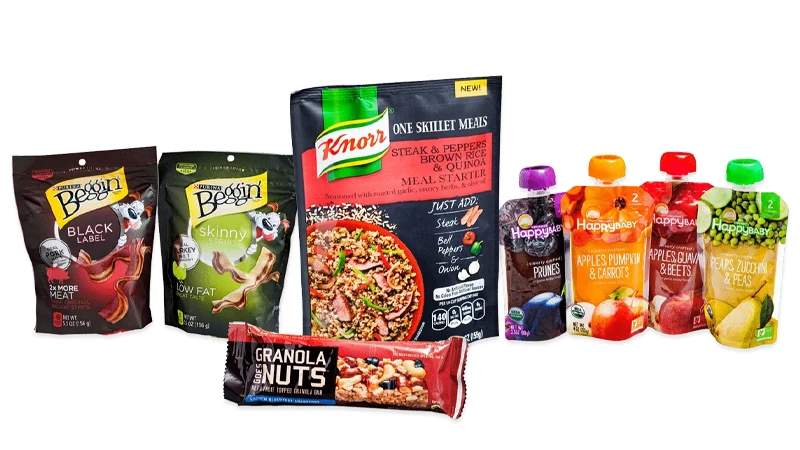
Flexible packaging comes in a wide range of formats, each suited to different products, filling methods, and retail environments.
Stand-Up Pouches
Stand-up pouches have a bottom gusset that allows the bag to stand upright on a shelf without external support. They are one of the most versatile flexible formats and are used across coffee, snacks, pet food, dried goods, liquid products, and personal care. Available with or without resealable zippers, degassing valves, and transparent windows.
Flat-Bottom Pouches (Box Pouches)
Flat-bottom pouches have a structured rectangular base that provides exceptional shelf stability and a large branding surface on all four sides. They are popular for premium coffee, tea, and specialty food brands that want a distinctive, high-end retail presence.
Side Gusset Bags
Side gusset bags have expandable panels on both sides that allow the bag to hold larger volumes while maintaining a compact footprint when empty. They are the standard format for wholesale coffee, rice, flour, pet food, and industrial bulk goods.
Three-Side Seal Pouches
Three-side seal pouches are flat bags sealed on three edges, leaving one edge open for filling. They are lightweight, cost-effective, and commonly used for snacks, condiments, single-serve portions, and sachets.
Spouted Pouches
Spouted pouches include a plastic spout and cap that allows controlled pouring and resealing. They are used for liquid and semi-liquid products including juices, sauces, baby food, liquid soap, and laundry detergent.
Vacuum Bags
Vacuum bags are designed to be evacuated of air before sealing, conforming tightly to the product. They are used for fresh meat, cheese, deli products, and other perishables where extended refrigerated shelf life is needed.
Roll Stock Film
Roll stock film is supplied as a continuous roll of laminated film that is converted into bags directly on a customer’s form-fill-seal (FFS) packaging line. It offers efficiency and flexibility for high-volume operations across vertical and horizontal filling systems.
The Key Advantages of Flexible Packaging
Lower Material and Shipping Costs
Flexible packaging uses significantly less material by weight than rigid alternatives. A stand-up pouch to hold the same volume of product as a glass jar can weigh as little as 2–5% of the jar’s weight. This reduction in material weight directly translates to lower raw material costs, lower manufacturing energy consumption, and substantially reduced freight costs — more units fit per pallet, and the weight per shipment drops.
The high product-to-package ratio of flexible formats — sometimes as high as 97:3 for single-serve pouches — means brands are spending more of their packaging budget on product, not packaging mass.
Extended Product Shelf Life
Multi-layer flexible packaging with engineered barrier properties can dramatically extend product shelf life by limiting exposure to the three main spoilage drivers: oxygen, moisture, and light. Barrier laminates incorporating aluminum foil or high-barrier films create a controlled micro-environment inside the package that slows oxidation, microbial growth, and moisture exchange.
The practical impact is significant. Flexible packaging can extend the shelf life of ground beef from 3 days to 20 days, green beans from 7 to 19 days, and table grapes from 7 days to 70 days under modified atmosphere conditions. For coffee, a high-barrier pouch with a one-way degassing valve can preserve peak flavor for months rather than weeks.
Sustainability Advantages
Flexible packaging has a smaller environmental footprint than most rigid alternatives across key metrics:
It requires less energy and water to manufacture. It generates less packaging waste by weight — flexible packaging makes up only around 4% of landfill packaging volume despite protecting a large share of food products. Its lightweight nature reduces transportation-related emissions. And a growing range of recyclable, compostable, and recycled-content options allow brands to meaningfully reduce their packaging’s end-of-life impact.
When comparing flexible pouches to glass jars or rigid plastic containers for the same product, flexible packaging typically produces lower greenhouse gas emissions across the full product lifecycle — from raw material extraction through manufacturing, transport, and disposal.
Branding and Shelf Impact
Flexible packaging offers a large, continuous printable surface that can be decorated with high-resolution graphics across the full bag face, back, and gussets. Modern printing technologies — including digital, flexographic, and gravure — support vibrant color reproduction, specialty finishes (matte, gloss, soft-touch, metallized), and variable data printing for limited editions or regional variants.
Unlike rigid containers where the label is separate from the package, flexible packaging integrates brand graphics directly into the material structure. The result is consistent, premium-looking packaging that holds up across retail shelf conditions, e-commerce transit, and consumer handling.
Consumer Convenience
Flexible packaging is designed around how consumers actually use products. Resealable zippers allow products to be opened and closed multiple times without loss of freshness. Spouted closures enable controlled pouring and drip-free resealing. Easy-tear notches allow clean opening without scissors. Transparent windows let consumers see the product before purchase.
These functional features increase usability and reduce product waste — two factors that consistently rank among the most important packaging attributes for today’s consumers.
Flexible Packaging vs. Rigid Packaging: How to Choose
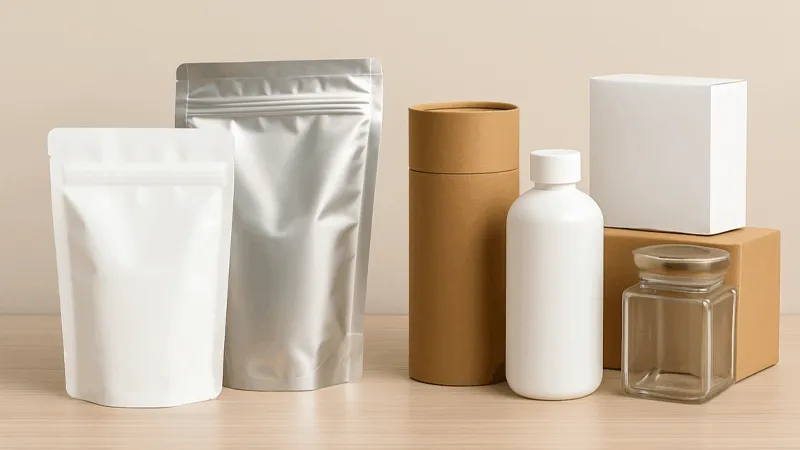
Flexible packaging is not the right answer for every product. Understanding the trade-offs helps in making the right decision.
| Factor | Flexible Packaging | Rigid Packaging |
|---|---|---|
| Weight | Lightweight | Heavy |
| Material cost | Lower | Higher |
| Barrier options | Excellent (via lamination) | Good (glass, metal) |
| Branding surface | Full surface, high quality | Label only (most formats) |
| Consumer convenience | High (reseal, spout, easy-open) | Moderate |
| Structural rigidity | None — requires product fill | High |
| Sustainability | Fewer materials, lower weight | Recyclable (glass, metal), but heavier |
| Fill compatibility | FFS lines, pre-made pouches | Filling lines for jars/cans/bottles |
Flexible packaging is typically the better choice when product weight and volume allow, when barrier performance is achievable through film engineering, and when branding and shelf presence matter. Rigid packaging remains preferred for products requiring structural support (carbonated beverages, certain industrial liquids), products sold in reusable containers, or categories where consumer perception of rigidity signals quality.
Industries That Use Flexible Packaging
Food and Beverage is the largest application by volume. Snacks, coffee, tea, dried goods, frozen food, sauces, condiments, liquid beverages, dairy products, and ready meals all use flexible packaging formats. The combination of barrier performance, shelf life extension, and retail presence makes flexible packaging the dominant format for processed and packaged food.
Pet Food has seen significant growth in flexible packaging adoption, with stand-up pouches and flat-bottom bags replacing cans and rigid tubs for both dry and wet pet food. Consumers and retailers prefer the lighter weight, better shelf footprint, and resealability.
Personal Care and Home Care uses flexible pouches for refill formats — shampoo, conditioner, laundry detergent, hand soap — driven by sustainability goals and cost-per-use advantages versus rigid bottles.
Pharmaceutical and Nutraceutical packaging relies on flexible sachets, pouches, and blister films for unit-dose and multi-dose formats where barrier performance and tamper evidence are critical.
Agricultural and Industrial applications include seed bags, fertilizer pouches, chemical packaging, and protective films where functional performance outweighs aesthetic requirements.
What to Look for When Sourcing Flexible Packaging
If you’re evaluating flexible packaging suppliers, several factors matter beyond price per unit:
Material specification and barrier performance — understand the laminate structure you’re being quoted. Know the oxygen transmission rate (OTR) and water vapor transmission rate (WVTR) of the film, and whether it matches your product’s shelf life requirements.
Print capability and quality — check whether the supplier supports the print method (digital, flexo, gravure) appropriate for your order volume, and request physical samples to evaluate color fidelity and registration accuracy.
Certifications — food-grade flexible packaging should be supported by relevant certifications: ISO 9001 for quality management, BRC or SQF for food safety, FDA compliance for food contact materials, and FSC if kraft paper is used.
Minimum order quantities (MOQ) — flexible packaging suppliers vary widely on MOQ. Some require minimum runs of tens of thousands of units; others offer digital printing with MOQs as low as 500 units for small brands and product launches.
Lead times — standard lead times for custom flexible packaging typically run 2–4 weeks for digital print and 3–6 weeks for gravure or flexo. Verify lead times before committing, especially for launch timelines.
Customization range — the best flexible packaging partners can work with you on bag format, size, material structure, closure type, valve specification, finish, and print, rather than limiting you to a menu of fixed options.
Custom Flexible Packaging from BN Pack
At BN Pack, we manufacture custom flexible packaging bags for food, coffee, pet food, personal care, and specialty product brands across more than 100 countries. Our factory is ISO 9001 and BRC certified, with over 20 years of experience producing stand-up pouches, flat-bottom bags, side gusset bags, three-side seal pouches, spouted pouches, vacuum bags, and roll stock film.
We work with a full range of materials — kraft paper, PET, aluminum foil, PE, BOPP laminates, and eco-friendly recyclable, compostable, and biodegradable options — and support digital, flexographic, and gravure printing to fit any order volume and quality requirement.
Low MOQ from 500 units. Typical lead times of 5–15 business days. No tooling fees. Full customization on size, material, closure, finish, and print.
Get a custom quote or explore our full range of flexible packaging solutions.
Frequently Asked Questions
What is the difference between flexible packaging and rigid packaging?
Flexible packaging is made from pliable film, foil, or paper materials that bend and conform under pressure. Rigid packaging — glass jars, metal cans, hard plastic containers — maintains its shape regardless of content. Flexible packaging is lighter, uses less material, and offers more customization, while rigid packaging provides structural support and certain barrier advantages.
Is flexible packaging safe for food?
Yes. Food-grade flexible packaging is produced using FDA-compliant, food-safe materials that are tested and certified for direct food contact. Common food-safe films include PE, PET, PP, and aluminum foil in appropriate grades.
What types of products are best suited for flexible packaging?
Flexible packaging works well for most dry goods, liquids, semi-liquids, powders, and fresh or frozen foods. It is particularly well-suited for products where barrier performance, weight reduction, branding, and consumer convenience matter — coffee, snacks, pet food, sauces, personal care refills, and pharmaceutical sachets are all common applications.
Can flexible packaging be recycled?
It depends on the material. Multi-layer laminate flexible packaging (PET/foil/PE) is difficult to recycle through standard curbside programs. However, mono-material PE or PP pouches can be recycled through plastic film drop-off programs. Compostable flexible packaging can be processed in industrial or home composting systems. Many brands are transitioning to recyclable or compostable flexible packaging structures to improve end-of-life outcomes.
What is the minimum order quantity for custom flexible packaging?
MOQ varies by supplier and print method. Digital printing can support MOQs as low as 500 units, making it practical for new product launches and small brands. Gravure and flexographic printing typically require larger minimum runs (10,000+ units) but deliver lower per-unit costs at volume.
How do I choose between a stand-up pouch, flat-bottom bag, and side gusset bag?
Stand-up pouches are versatile and cost-effective for most retail and e-commerce applications. Flat-bottom bags provide superior shelf presence and a premium aesthetic, preferred by specialty food and coffee brands. Side gusset bags are designed for high-volume or wholesale formats where capacity and filling efficiency matter most.