
Every morning, billions of us around the world begin our day with the rich aroma and comforting ritual of a cup of coffee. It’s a moment so ingrained in our routines that we rarely pause to consider the incredible journey that went into producing it. We might know the name of our favorite café or roaster, but the most fundamental question often goes unasked: where does our coffee come from? The story of that bean is a global adventure, one that starts not in a roastery, but on a mountain in a distant and tropical part of the world.
Coffee is not a simple commodity; it is a precious agricultural treasure grown from a surprisingly finicky plant. Unlike wheat or corn, coffee can only thrive in a very specific, narrow band of the globe under a strict set of environmental conditions.
We will explore the three primary growing regions of the world, understand their unique climates and topographies, and discover how the place of origin of coffee is the single most important factor in shaping the flavors and aromas you enjoy in your cup every day.
The Coffee Belt: A Strict Set of Rules for a Finicky Plant
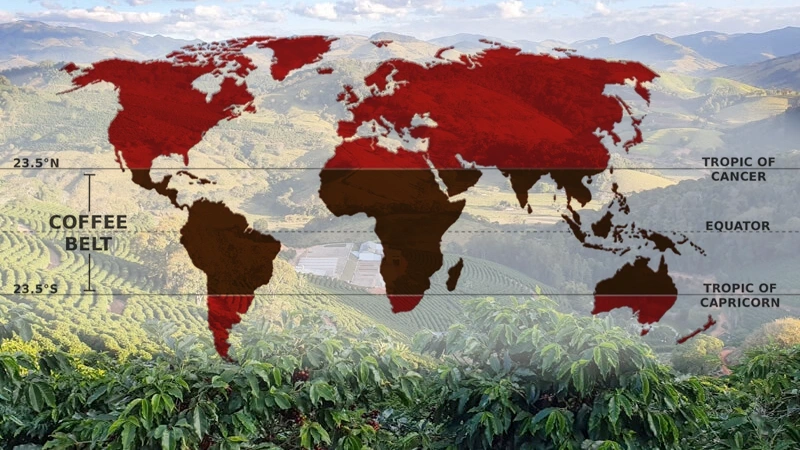
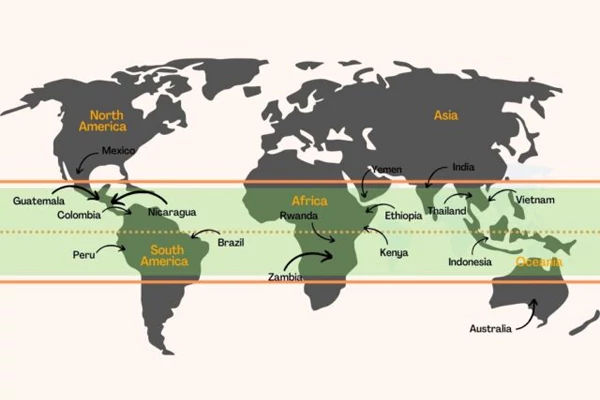
The answer to the question “where is coffee grown in the world?” lies within a specific geographical area affectionately known as the Coffee Belt, or sometimes the Bean Belt. So, what is the coffee belt? It is a horizontal band of land that stretches around the globe, situated between the Tropic of Cancer in the Northern Hemisphere and the Tropic of Capricorn in the Southern Hemisphere. Nearly every commercially grown coffee bean in the world, especially high-quality Coffea arabica, originates from a country within this strip.
The coffee plant is notoriously finicky. For it to produce the dense, complex beans required for specialty coffee, it demands a very particular set of environmental conditions that are almost exclusively found in the mountainous regions within this equatorial belt.
The ideal climate for specialty coffee includes:
- High Altitudes: The best Arabica coffee is grown at altitudes between 3,000 and 6,000 feet (about 900 to 1,800 meters). The cooler temperatures at these elevations cause the coffee cherry to mature more slowly, resulting in a denser bean with more complex sugars and acids—the building blocks of incredible flavor.
- Stable, Mild Temperatures: Coffee plants require a stable climate, generally between 60-75°F (15-24°C), and cannot survive a frost.
- Rich, Fertile Soil: Well-drained, nutrient-rich soil, often of volcanic origin, is ideal for providing the coffee plant with the sustenance it needs.
- Distinct Rainy and Dry Seasons: Ample rainfall is needed to help the coffee cherries grow and develop, followed by a dry season which is essential for harvesting and processing the beans effectively.
This unique combination of factors is why the coffee belt map includes a roster of famous coffee-producing countries like Brazil, Colombia, Ethiopia, Kenya, Vietnam, and Indonesia, all nestled within this lush and productive equatorial zone.
The Three Great Continents of Coffee: A Flavor Tour
While all coffee grows within the relatively narrow Coffee Belt, the flavors it produces are incredibly diverse. The distinct soil, varietals, altitudes, and processing traditions of each major growing continent give its coffee a unique and recognizable personality. Understanding these general profiles is the first step to finding the coffee you love most. Let’s explore the three primary coffee growing regions.
Latin America (The Americas)
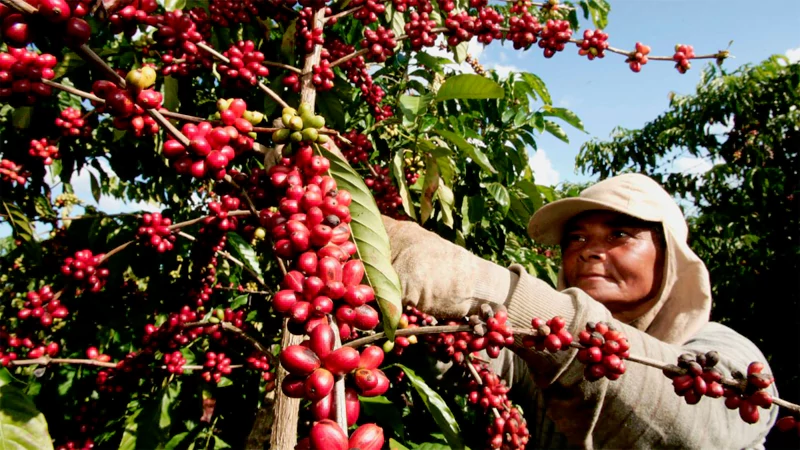
When many people think of a classic, comforting cup of coffee, they are often thinking of a coffee from Latin America. Coffees from this vast region are celebrated for their balance, clean flavors, and bright, pleasant acidity. The flavor profiles are often dominated by familiar and approachable notes of chocolate, nuts, and caramel, frequently accompanied by a gentle sweetness reminiscent of stone fruit.
- Brazil: As the world’s largest coffee producer, Brazil is the backbone of the coffee industry. Its coffees are known for their heavy body, low acidity, and deep notes of chocolate and toasted nuts. This makes them a fundamental component of countless espresso blends around the globe.
- Colombia: Colombian coffee is famous for its incredible balance. It typically offers a medium body, a mild and clean acidity, and a sweet, nutty profile that has become a benchmark for a high-quality, easy-drinking coffee.
- Central America (Guatemala, Costa Rica, Honduras): This mountainous region is prized for coffees with a more pronounced and vibrant acidity. Here you will find beans with bright, crisp notes of citrus, green apple, and often complex floral hints, all supported by a sweet, clean finish.
Africa
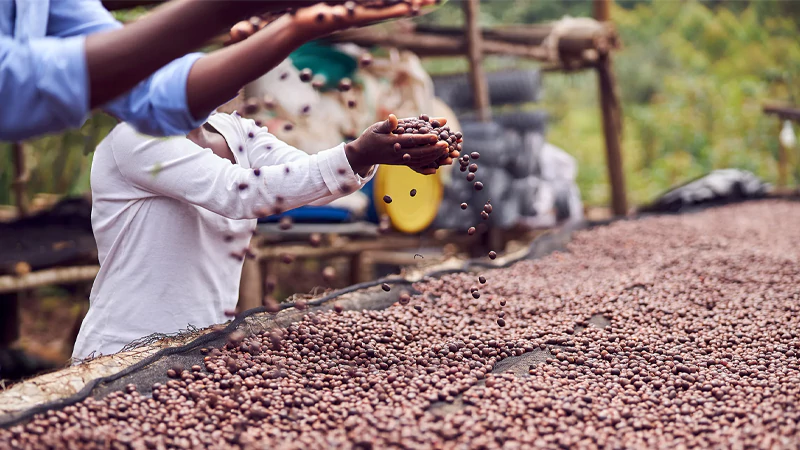
Africa is the birth place of coffee, and its coffees are a testament to that wild and ancient legacy. African coffees are known for producing some of the most unique, exotic, and intensely aromatic flavor profiles in the world. They are often bright, fruity, floral, and wine-like, offering a sensory experience that is dramatically different from their Latin American counterparts.
- Ethiopia: As the country of origin of coffee, Ethiopia is home to thousands of wild, unclassified “heirloom” varietals. This incredible biodiversity results in a stunning range of flavors. Washed coffees from regions like Yirgacheffe are famously delicate and tea-like, with powerful aromas of jasmine, bergamot, and lemon. Natural processed coffees from regions like Harrar are the opposite: bold, syrupy, and wine-like, with intense notes of blueberry and dried fruit.
- Kenya: Kenyan coffee is celebrated for its powerful, complex, and savory-sweet acidity. It’s a truly unique profile, often described as having notes of blackcurrant, cranberry, and even a savory hint of tomato—a bright and dynamic cup that is prized by coffee connoisseurs.
Asia & the Pacific
Coffees from Asia and the Pacific are known for their bold, unique, and often polarizing flavor profiles. They are typically very full-bodied, low in acidity, and feature deep, earthy, and sometimes spicy or woody notes. These distinct characteristics are often a result of unique processing methods specific to the region.
- Indonesia (Sumatra, Java): Indonesian coffees, particularly from Sumatra, are famous for their signature “wet-hulled” (Giling Basah) processing method. This technique creates a cup that is exceptionally full-bodied and profoundly earthy, with low acidity and notes of cedar, spice, and tobacco.
- Vietnam: As the world’s second-largest coffee producer, Vietnam is a global powerhouse. While it does produce some Arabica, it is most famous for its Robusta beans, which are bold, strong, and high in caffeine, often with a rubbery and chocolatey taste. These beans are the traditional base for the popular Vietnamese iced coffee.
A Note on Coffee Grown in the USA
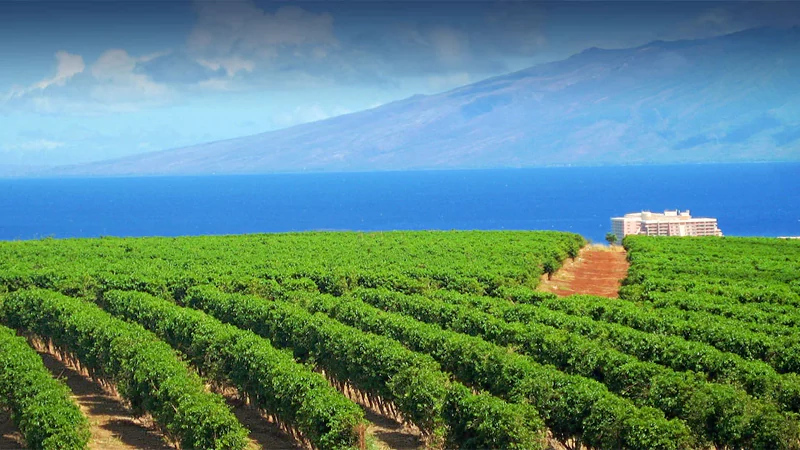
While the vast majority of the world’s coffee is grown in the equatorial regions of the Coffee Belt, a common question is whether there is any coffee grown in the usa. The answer is yes, though the production is very small and concentrated in a few specific areas that have the right microclimates.
Hawaii: The most famous American coffee origin is Hawaii, specifically the Kona district on the Big Island. The slopes of the Hualalai and Mauna Loa volcanoes provide the perfect storm of conditions: high altitudes, rich volcanic soil, and consistent cloud cover. True Kona coffee is celebrated for its exceptionally smooth, clean, and mild profile, often with a buttery mouthfeel and sweet notes of caramel, nuts, and a hint of fruit.
California: In recent years, a new and exciting frontier for American coffee has emerged in Southern California, primarily in Santa Barbara and San Diego counties. A small number of pioneering farms are successfully cultivating high-quality varietals like Gesha and Caturra. While still very rare and premium-priced, coffee grown in California is a testament to the ongoing innovation within the industry and is known for producing a high-acidity, complex cup.
From Global Origin to Your Cup: The Roaster’s Responsibility
The incredible diversity of flavor from these coffee from different countries represents the beautiful palette of raw materials available to a specialty coffee roaster. A roaster’s primary and most important job is not to create flavor from scratch, but to skillfully unlock and showcase the unique character that the coffee’s origin has already bestowed upon the bean. Their craft is to honor the farmer’s work and to present the most delicious and transparent expression of that specific place.
This is a profound challenge. A dense, high-altitude Ethiopian bean with delicate floral notes requires a completely different roasting approach than a low-acidity, full-bodied Indonesian bean. The roaster must apply their knowledge and experience to create a unique roast profile for each coffee to bring its best attributes to the forefront.
After this meticulous and artful work is complete, the unique flavor that has been unlocked is incredibly fragile and highly susceptible to degradation from its number one enemy: oxygen.
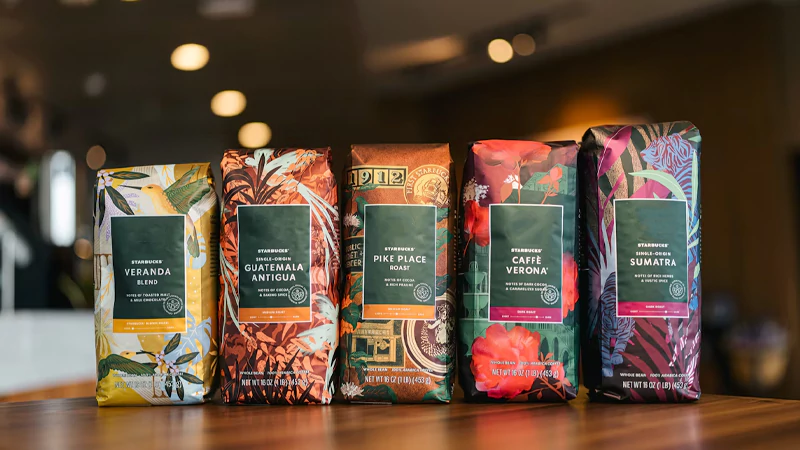
Preserving this precious “taste of place” is the final, critical step in the coffee’s long journey. The packaging must act as a vault, protecting the unique story of the coffee’s origin. High-quality coffee bags from BN Pack are engineered to do exactly that. Our multi-layer, high-barrier materials lock out staling oxygen and UV light, ensuring that the bright, fruity notes of a Kenyan or the rich chocolate notes of a Colombian are perfectly preserved. The one-way degassing valve is essential for allowing freshly roasted beans to rest without exposure, guaranteeing that the journey that started on a mountain thousands of miles away ends perfectly in your customer’s cup.
Conclusion
After a journey around the globe, from the volcanic slopes of Latin America to the ancient highlands of Africa and the lush islands of Asia, one thing is clear: a coffee’s flavor is inextricably linked to its place of origin. The soil, climate, altitude, and traditions of each region combine to create a unique “taste of place” that a skilled roaster can bring to life.
This brings us to the final, ultimate question: where does the best coffee come from? The honest and most exciting answer is that the “best” coffee is entirely a matter of personal preference. The best coffee in the world is the one that best matches your unique taste. If you love bright, fruity, and floral notes, the best coffee for you might come from Ethiopia. If you prefer a deep, chocolatey, and low-acidity cup, you might find your favorite in Brazil. The true joy of coffee is in the exploration—in tasting the world, one cup at a time.