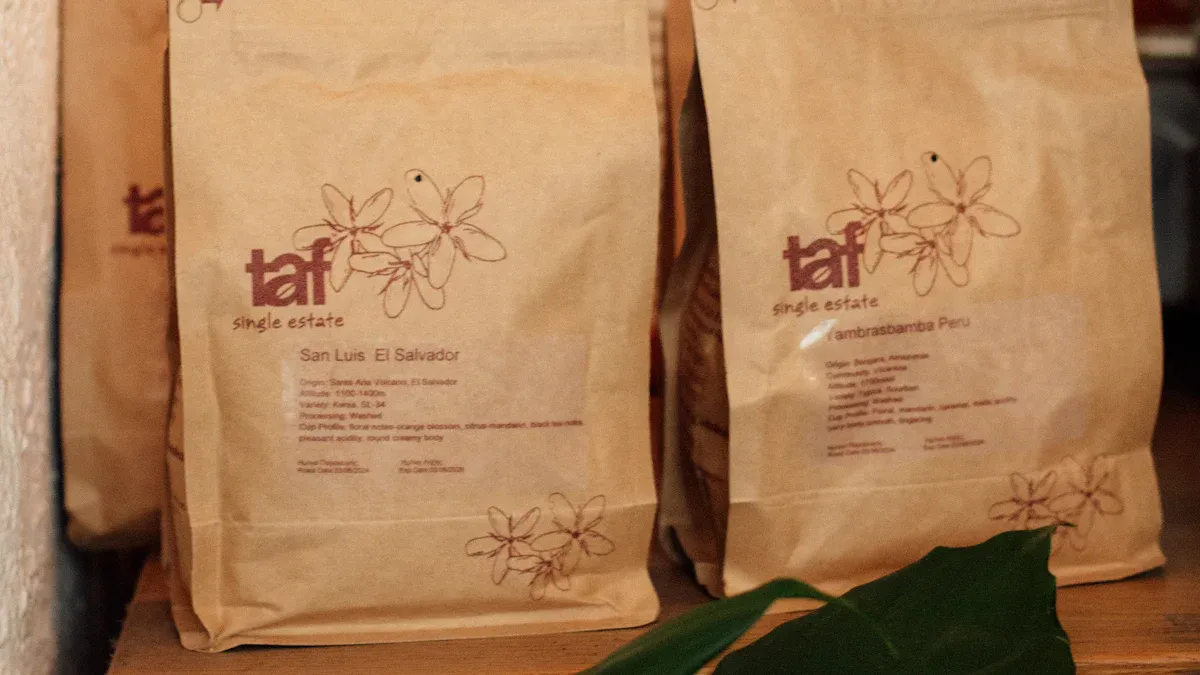
Coffee brands face increasing demand for eco-friendly solutions. PLA packaging bags offer a sustainable answer, helping preserve coffee freshness and reduce environmental harm. Recent industry data shows:
The coffee packaging market will reach 150 million units by 2025, with PLA as a key sustainable material.
Major retailers plan to phase out plastic packaging by 2025, driven by new regulations and consumer demand.
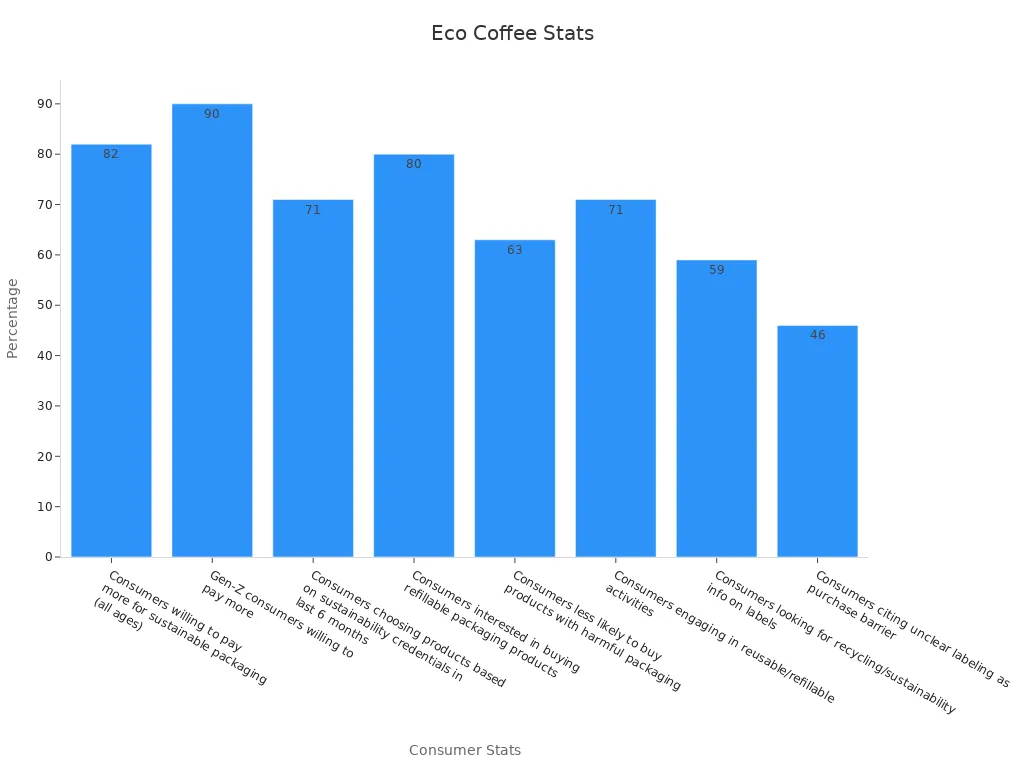
Consumers now prefer brands that use compostable, renewable packaging and show willingness to pay more for sustainable choices.
Key Takeaways
PLA packaging bags use renewable materials like corn and sugarcane, reducing plastic waste and carbon emissions significantly.
These bags break down quickly in industrial composting, helping brands support a circular economy and lower environmental impact.
PLA packaging protects coffee freshness by blocking oxygen and moisture, keeping flavor and aroma longer than many traditional bags.
Brands can customize PLA bags with vibrant designs, resealable zippers, and degassing valves to enhance convenience and brand appeal.
While PLA packaging costs more than plastic, growing demand and technology improvements are making it a smart, sustainable choice for coffee brands.
What Is PLA
PLA Origins
Polylactic acid (PLA) stands out as a leading bioplastic in today’s packaging industry. Manufacturers produce PLA mainly from renewable crops such as corn, cassava, and sugarcane. The process begins with fermenting plant sugars to create lactic acid, which then undergoes ring-opening polymerization to form PLA resin. This method dates back to the first commercial lactic acid production in Germany in 1895.
PLA production has grown steadily since 2010, with global output projected to exceed 300,000 tonnes by 2024.
PLA exists in three forms—PLLA, PDLA, and PDLLA—each offering unique mechanical properties for different applications.
Environmental assessments show that PLA biodegrades within weeks under composting conditions, or up to two years in natural environments, much faster than petroleum-based plastics.
Lifecycle analyses reveal that PLA uses less energy and emits less CO2 during production compared to fossil-based plastics.
Composting PLA returns nutrients to the soil, supporting a circular economy.
Note: PLA’s integration with sugarcane biorefineries further reduces its environmental impact by using renewable energy from bagasse and straw.
PLA vs. Plastics
PLA offers a sustainable alternative to traditional plastics like PET and PE. The following table summarizes key scientific and environmental differences:
Comparison Aspect | PLA | Traditional Plastics (PET, PE) |
|---|---|---|
Raw Material | Renewable crops (corn, sugarcane) | Petroleum-based |
CO2 Emissions (per kg) | ~3.5 kg CO2 | 7–10 kg CO2 |
CO2 Reduction vs. Plastics | 50%–70% less | Baseline |
Biodegradability | Compostable, degrades in weeks to 2 years | Not biodegradable |
Energy Consumption (production/3D printing) | Up to 70% less | Higher |
Market Share in Bioplastics (2021) | 26% | N/A |
PLA’s lower carbon footprint and compostability make it a preferred choice for brands seeking to reduce environmental impact while maintaining product performance.
PLA Packaging Bags Benefits
Environmental Impact
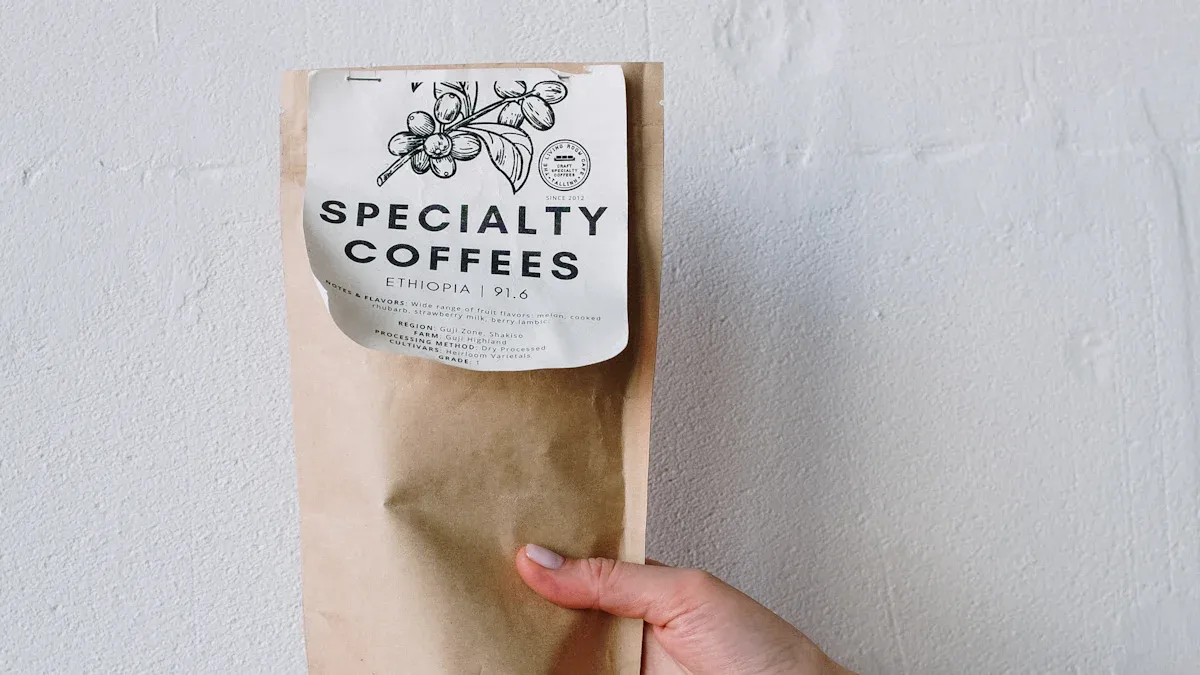
PLA packaging bags deliver measurable environmental advantages for coffee brands. Manufacturers create these bags from renewable resources such as corn and sugarcane, which reduces reliance on fossil fuels. Brands that switch to PLA packaging bags have reported a 60% reduction in plastic waste and a 30% decrease in carbon emissions. These improvements support global efforts to lower greenhouse gas emissions and promote sustainable sourcing.
Benefit Category | Quantified Benefit | Explanation |
|---|---|---|
Plastic Waste Reduction | 60% reduction | A coffee brand switching to PLA pouches achieved a 60% decrease in plastic waste. |
Carbon Emissions | 30% decrease | Switching to PLA pouches resulted in a 30% reduction in carbon emissions. |
Renewable Sourcing | Derived from cornstarch (renewable resource) | PLA pouches are made from renewable materials, promoting sustainability. |
Compostability | Biodegradable in composting environments | PLA pouches break down in composting, reducing landfill waste. |
BN Pack leads the industry with custom flexible packaging solutions that meet strict eco-friendly certifications. Their ISO9001 and BRC-certified factory ensures every product aligns with international safety and sustainability standards. Studies show that using PLA packaging bags can reduce CO2 emissions by 50–70% compared to conventional petroleum-based plastics. If all fossil-based plastics were replaced with PLA, global greenhouse gas emissions could drop by approximately 800 million tons annually. These results highlight the significant role PLA packaging bags play in helping brands achieve their sustainability and ESG goals.
Brands that adopt PLA packaging bags demonstrate a clear commitment to environmental responsibility, which resonates with eco-conscious consumers.
Compostability
Compostability stands as a defining feature of PLA packaging bags. These bags biodegrade in controlled composting environments, returning valuable nutrients to the soil. The composting process follows strict international standards, such as EN 13432, which requires 90% disintegration within 12 weeks under industrial conditions. Laboratory tests use the ISO 14855 method, measuring CO2 production to quantify biodegradation. Manufacturers report that PLA packaging bags typically break down within two to six months in commercial composting facilities, although actual times may vary based on temperature, moisture, and oxygen levels.
Note: Compostable packaging helps divert waste from landfills and supports a circular economy by closing the loop on material use.
BN Pack’s expertise ensures that every PLA packaging bag meets these compostability benchmarks. Their eco-friendly certifications guarantee compliance with global standards, making it easier for brands to communicate their environmental efforts to customers.
Coffee Freshness
Preserving coffee freshness is essential for both roasters and consumers. PLA packaging bags offer advanced protection against oxygen and moisture, which are the main threats to coffee quality. Studies on biodegradable packaging films with PLA show enhanced antioxidant activity, which delays lipid oxidation and maintains the integrity of coffee beans. Key biochemical metrics—such as acid value, peroxide value, and thiobarbituric acid value—remain lower in PLA-based packaging, indicating better preservation of flavor and aroma.
Performance Metric | Standard Bags | PLA/PBS Biodegradable Coffee Bags |
|---|---|---|
Oxygen Transmission Rate (OTR) | N/A | ≤10 cm³/m²·day (meets EU regulations) |
CO2 Retention (at 30 days) | 45% | 88% |
Aroma Preservation (SCAA Cupping) | 37% | 79% |
BN Pack enhances coffee packaging with features like degassing valves and resealable zippers. These innovations allow gases to escape without letting oxygen in, extending the shelf life and ensuring every cup tastes fresh. PLA packaging bags perform almost identically to traditional polymers for up to one year, with some tests showing superior barrier properties and freshness retention for up to 16 weeks.
Coffee brands that choose BN Pack’s PLA packaging bags benefit from both sustainability and product quality. These bags help brands meet consumer expectations for freshness while supporting environmental goals.
Customization and Features
Design Options
BN Pack offers a wide range of design options for PLA packaging bags. Brands can select from various shapes and sizes, including stand-up pouches, flat-bottom bags, and side gusset styles. Custom-printed designs allow for vibrant graphics and detailed branding, covering up to 95% of the package surface with high-resolution printing. The manufacturing process uses advanced techniques such as injection molding, extrusion, and blow molding, which have been optimized for biodegradable materials. Automation enables the production of up to 3,000 units per hour with a customization rate of 1,000 unique designs per hour. This high level of precision ensures consistent quality, with placement accuracy within ±0.1mm and a defect detection rate of 99.98%. BN Pack supports low minimum order quantities, making it easy for both startups and established brands to access custom packaging.
Feature | Value/Description |
|---|---|
Customization Rate | 1,000 unique designs per hour |
Printing Coverage | 95% of package surface |
Minimum Order Quantity | 500 units |
Turnaround Time | 5-7 days |
Placement Accuracy | ±0.1mm |
Resealable and Valve Bags
Functional features play a key role in preserving product quality. BN Pack integrates resealable zippers and degassing valves into their PLA packaging bags. These valves, such as Wipf and Goglio, operate based on pressure thresholds to release carbon dioxide while preventing air and moisture from entering. This technology keeps coffee fresh by allowing one-way gas release and maintaining an optimal environment inside the bag. Resealable zippers add convenience for consumers, enabling easy opening and closing without compromising freshness. These features are available in multiple styles, allowing brands to choose the best fit for their products.
Resealable and valve options help maintain product freshness, enhance convenience, and support a premium brand image.
Branding Potential
Custom-printed PLA packaging bags offer strong branding opportunities. By 2025, personalized packaging is expected to capture over 40% of the food and beverage market. About 36% of consumers prefer brands that offer personalized packaging, and more than 70% are willing to pay extra for products with recyclable or zero-waste packaging. The rise of e-commerce has increased the importance of packaging that creates a memorable unboxing experience. BN Pack’s digital workflow allows brands to design, approve, and track orders online, ensuring fast turnaround and consistent results. The use of eco-friendly materials also aligns with consumer values, helping brands build loyalty and stand out in a crowded market.
Limitations and Considerations
Composting Needs
PLA packaging bags offer compostability, but they require specific conditions to break down efficiently. Industrial composting facilities provide the right temperature, humidity, and oxygen levels for PLA to decompose within a few months. Home composting systems may not reach these conditions, so PLA bags might take longer to break down outside of commercial settings. Studies show that the biodegradability and disposability of PLA packaging depend on these controlled environments. Brands should inform customers about proper disposal methods to maximize environmental benefits. Clear labeling and consumer education help ensure that PLA packaging does not end up in landfills, where it may not degrade as intended.
Shelf Life
Coffee freshness depends on packaging that protects against oxygen and moisture. PLA packaging bags maintain strong barrier properties, but their performance can vary based on formulation and use of additives. Research indicates that when spent coffee grounds are used as fillers in PLA, mechanical strength can decrease. For example, at 10% spent coffee ground content, mechanical values range between 276 and 394, showing reduced strength. Processing methods, such as solvent casting, may also extend drying times, which can affect production efficiency. However, the use of compatibilizers like functionalized oligomers of lactic acid can improve tensile strength by up to 60%. Brands should select PLA packaging formulations that balance sustainability with the need for product protection and shelf stability.
Cost Factors
Switching to PLA packaging bags involves several economic considerations:
PLA production costs remain higher than traditional plastics due to raw material and processing expenses.
Raw materials like corn starch and sugarcane cost more than petroleum-based plastics.
Processing methods for PLA-coated products add to overall expenses.
Supply chain factors, including raw material availability and transportation, influence final costs.
Market prices for PLA packaging are currently higher, but ongoing innovations and increased demand are making PLA more competitive.
Recent advances in fermentation and polymerization have started to lower production costs. As regulatory trends and consumer demand for sustainable packaging grow, companies adopting PLA can avoid fines and meet market expectations. Over time, economies of scale and improved technology are expected to further reduce costs, making PLA packaging a more accessible choice for coffee brands.
PLA packaging bags offer coffee brands a smart, sustainable solution. These bags provide strong protection, fast biodegradation, and help reduce greenhouse gas emissions. The table below highlights key advantages:
Feature | Value |
|---|---|
Durability | 7,000 psi tensile strength |
Biodegradation | Decomposes in months, not centuries |
Freshness Protection | Up to 12 months against moisture, oxygen |
Emission Reduction | 25% lower greenhouse gases (corn-based PLA) |
Market trends show rising demand for compostable packaging.
New regulations and consumer preferences drive PLA adoption.
Coffee brands seek packaging that supports sustainability goals.
BN Pack’s custom flexible packaging helps brands meet these needs. Brands can contact BN Pack for samples or more information.
FAQ
What makes PLA packaging bags eco-friendly?
PLA packaging bags use renewable resources like corn and sugarcane. These materials reduce reliance on fossil fuels. The bags break down in industrial composting facilities, helping brands lower their environmental impact.
Can PLA packaging bags keep coffee fresh?
Yes. PLA packaging bags provide strong barriers against oxygen and moisture. Features like degassing valves and resealable zippers help maintain coffee aroma and flavor for months.
Are PLA packaging bags safe for food contact?
BN Pack’s PLA packaging bags meet strict FDA and international safety standards. The materials do not leach harmful chemicals, making them safe for coffee and other food products.
How should consumers dispose of PLA packaging bags?
Consumers should place PLA packaging bags in industrial composting bins where available. Home composting may not break down the bags as quickly. Brands can add clear disposal instructions on the packaging.
What customization options does BN Pack offer for PLA coffee bags?
BN Pack offers custom printing, various sizes, shapes, and features like stand-up pouches, flat-bottom bags, and resealable closures. Brands can order as few as 500 units with fast turnaround and no setup fees.