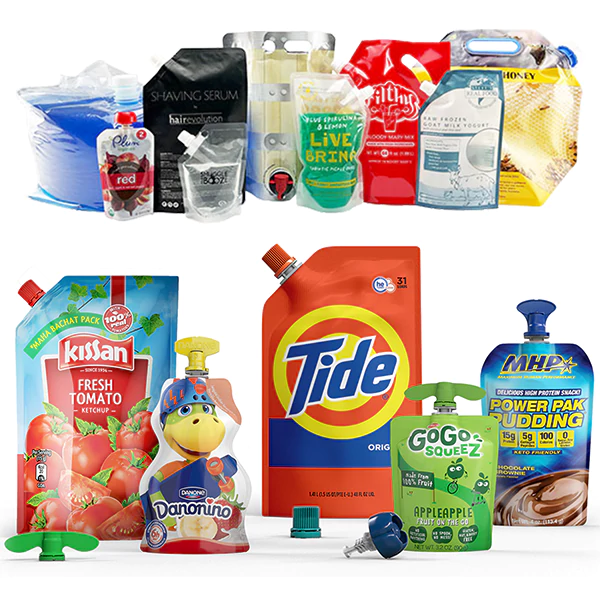
Spouted pouches deliver greater savings than rigid containers in packaging. These pouches use up to 70% less material, cut shipping costs by 25%, and lower carbon emissions by as much as 70%. Spouted pouch packaging provides space efficiency, improved product preservation, and reduced water consumption during production. BN PACK leads innovation in spouted pouch packaging, offering lightweight, flexible solutions that help brands save on costs while protecting the environment.
Key Takeaways
Spouted pouches use less material and energy, cutting production and shipping costs significantly.
Their flexible design saves storage space and allows more products to fit on shelves and in transport.
Multi-layer construction keeps products fresh longer and reduces food waste after opening.
Spouted pouches lower environmental impact by reducing plastic use, emissions, and landfill waste.
Customizable and user-friendly, these pouches boost brand visibility and offer convenient resealable features.
Cost Savings
Spouted Pouches vs Rigid Containers
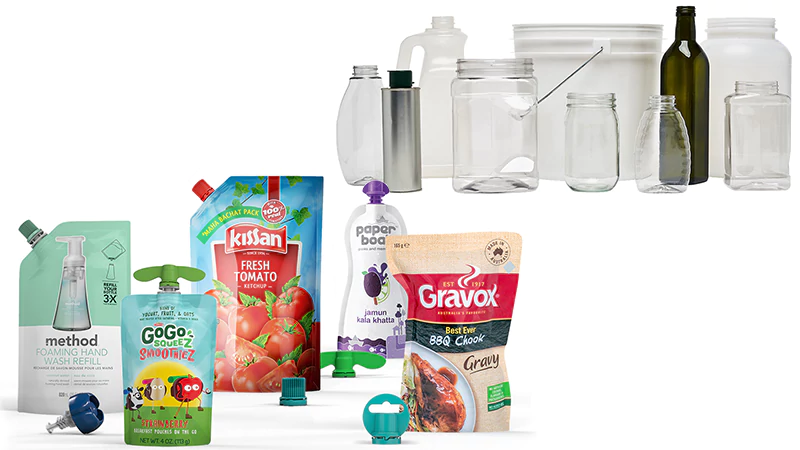
Spouted pouches and rigid containers serve similar purposes, but their cost structures differ greatly. Many brands choose pouches because they offer savings at every stage of the packaging process. Flexible packaging, such as spouted pouches, uses less material and energy. This leads to lower production costs and less waste. Rigid containers, like bottles, require more plastic or glass and involve extra steps for sealing and protection.
Brands that switch to flexible packaging often report lower costs and improved efficiency. In fact, 57% of brands that moved to flexible packaging saw a drop in production costs. Nearly half of brands using lightweight packaging also reduced their supply chain and shipping expenses.
Consumers also show a clear preference for pouches. Over 60% of shoppers prefer snacks in resealable stand-up pouches, which increases demand for this packaging style.
Manufacturing and Material Costs
Manufacturing costs play a big role in packaging decisions. The table below compares key aspects of spouted pouches and rigid containers:
Aspect | Spouted Pouches (Flexible Packaging) | Rigid Containers (e.g., Bottles) |
|---|---|---|
Energy Use in Production | Approximately 50% less energy used | Higher energy consumption |
Plastic Material Usage | Up to 60% less plastic used | Uses significantly more plastic |
Manufacturing Process | Simpler steps; integrated tamper-evident caps | Additional sealing steps (induction seal, shrink band) |
Production Cost Impact | 57% of brands reported lower production costs | Higher production costs implied |
Spouted pouches use multi-layer flexible materials that weigh about one-tenth of a glass bottle. This results in a 30% to 50% reduction in packaging material needs and procurement costs compared to rigid containers. The lightweight and compact design of pouches further reduces shipping and storage expenses, making them a cost-effective choice for many products.
Shipping and Storage
Shipping and storage costs can make or break a packaging budget. Spouted pouches stand out because they are lightweight and take up less space. This means companies can ship more units at once and pay less for transportation. The table below highlights the main differences:
Packaging Type | Shipping Cost Factors | Explanation |
|---|---|---|
Spouted Pouches | Lightweight, less material, compact storage | Lower shipping and storage costs due to reduced weight and space requirements. |
Rigid Containers | Heavier, bulkier, requires extra protective packaging | Higher shipping expenses due to weight, volume, and need for protective packaging to avoid breakage. |
Pouches do not need extra packaging to prevent breakage, unlike rigid containers. Their flexible structure allows for spill-free, resealable convenience, which improves transport efficiency. Companies benefit from lower shipping costs and easier storage, especially when handling large volumes.
Tip: Choosing spouted pouches can help brands save on both shipping and storage, while also protecting products during transit.
Space Efficiency
Storage Space
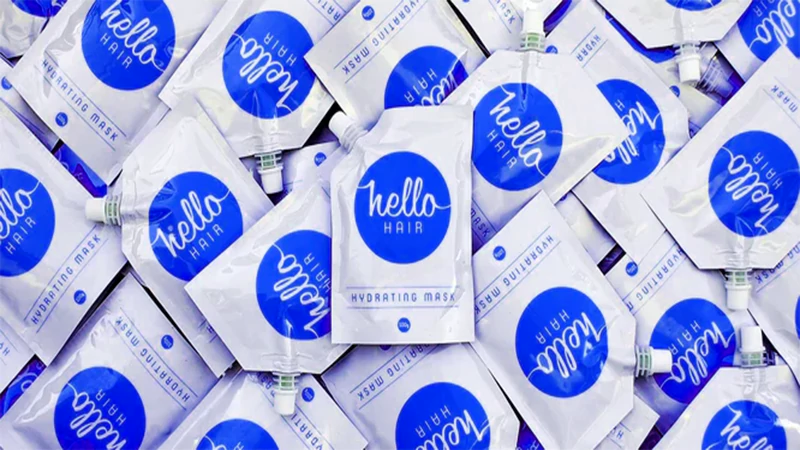
Spouted pouches offer a major advantage in storage efficiency. Their flexible design allows companies to store and ship them flat before filling. This feature saves a large amount of warehouse space compared to rigid containers, which always take up the same volume, even when empty. As products are used, pouches collapse, freeing up even more shelf and disposal space. Retailers can fit more items on shelves, which helps meet growing demand for efficient product displays. Stand up pouches also provide a product-to-package ratio of 33:1, meaning more product fits in less space than with glass jars or bottles. This ratio leads to better shelf utilization and improved product visibility for shoppers.
Spouted pouches can be stored and shipped flat, reducing storage and transportation space.
Rigid containers occupy significant volume even when empty, while pouches collapse as the product is consumed.
Flexible packaging allows more products to fit on shelves and in storage areas.
Stand up pouches are easy to stack and display, making them ideal for retail environments.
Shipping Volume
Shipping volume drops significantly when companies use spouted pouches instead of rigid containers. These pouches are thin, lightweight, and much less bulky than PET or HDPE bottles. Their reduced size and weight mean that fewer fossil fuels are needed for transport. This change not only lowers shipping costs but also makes handling and logistics easier. Flexible packaging requires less raw material and weighs less, so companies can ship more units per truckload. Fewer shipments lead to lower transportation costs and a smaller carbon footprint. The lightweight nature of pouches also means fewer resources are used throughout the supply chain.
Tip: Choosing spouted pouches helps brands maximize storage and shipping efficiency, saving both space and money.
Product Preservation
Extended Shelf Life
Spouted pouches help products last longer than those stored in rigid containers. Their multi-layer construction creates a strong barrier against moisture, oxygen, and light. This barrier keeps food and liquids fresh and safe for a longer time. The table below shows how each layer in a spouted pouch works to protect the contents:
Layer | Material(s) | Function/Benefit |
|---|---|---|
Outer Layer | Kraft paper (eco-friendly, durable) | Displays branding; provides durability and premium quality |
Middle Layer | Aluminum foil, PET, metalized film | Blocks moisture, light, and oxygen; aluminum foil can extend shelf life up to 20 months |
Inner Layer | Linear low-density polyethylene | FDA-approved, heat-sealable, tamper-proof seal |
Spouted pouches use hermetic seals to keep air and moisture out. This prevents bacteria growth and stops products from spoiling quickly. The resealable spout lets users pour out what they need and close the pouch tightly again. This feature helps keep the product fresh after opening.
Stand-up spouted pouches are popular for juices, sauces, and even baby food because they keep flavors and nutrients locked in. Many brands report shelf life extensions of up to 18 months for sauces and 12 months for beverages.
Product Category | Approximate Shelf Life Extension |
|---|---|
Beverages | Up to 12 months |
Sauces | Up to 18 months |
Personal Care | Up to 24 months |
Industrial | Up to 36 months |
Waste Reduction
Spouted pouches help reduce waste in several ways. They use much less plastic than rigid containers, which means less material ends up in landfills. The chart below shows how spouted pouches compare to rigid containers in key environmental areas:
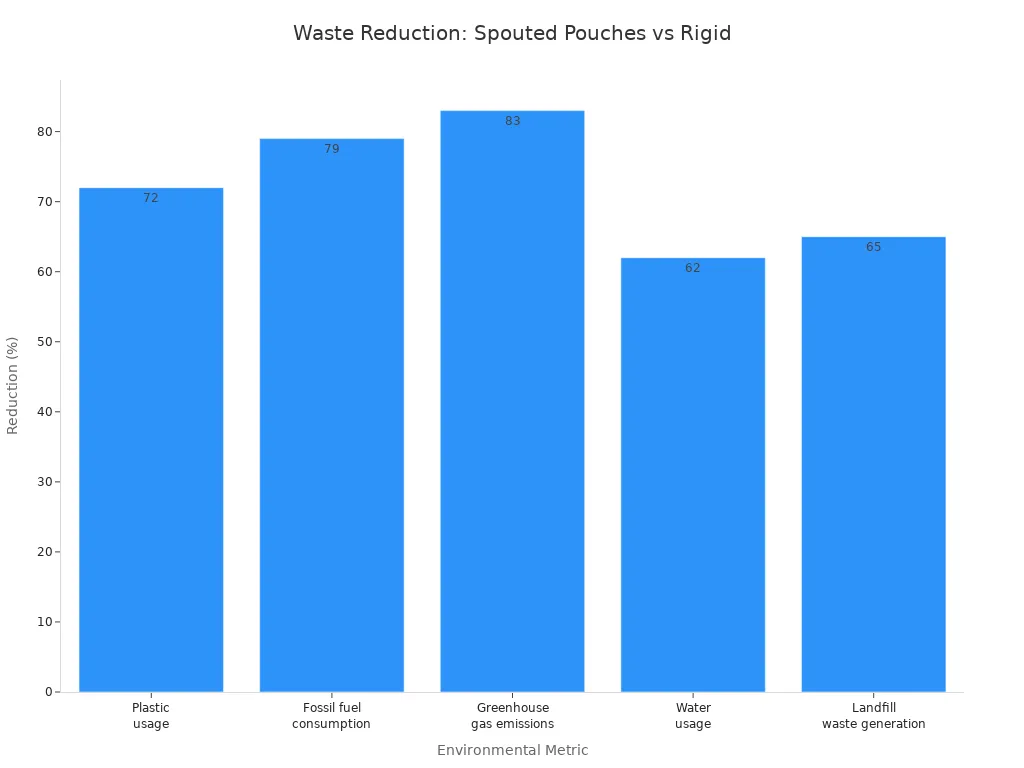
Spouted pouches use up to 85% less plastic than rigid jugs.
They store, ship, and dispose flat, saving landfill space.
Flexible pouches can be recycled or made from recycled materials.
Rigid containers often leave 6-14% of product inside, while pouches can evacuate up to 99.5% of the contents.
Choosing spouted pouches means less waste, lower emissions, and better use of resources. Brands and consumers both benefit from a cleaner, more efficient packaging solution.
Environmental Impact
Spouted Pouch Packaging Sustainability
Spouted pouch packaging leads the way in sustainability. Companies choose these pouches because they use less material and energy than rigid containers. BN PACK offers eco-friendly options, including recyclable spouted pouches made from mono-materials like polyethylene and polypropylene. They also provide compostable laminate alternatives for beverages, seasonings, and cleaning liquids. These designs help brands reduce single-use waste and support environmental protection.
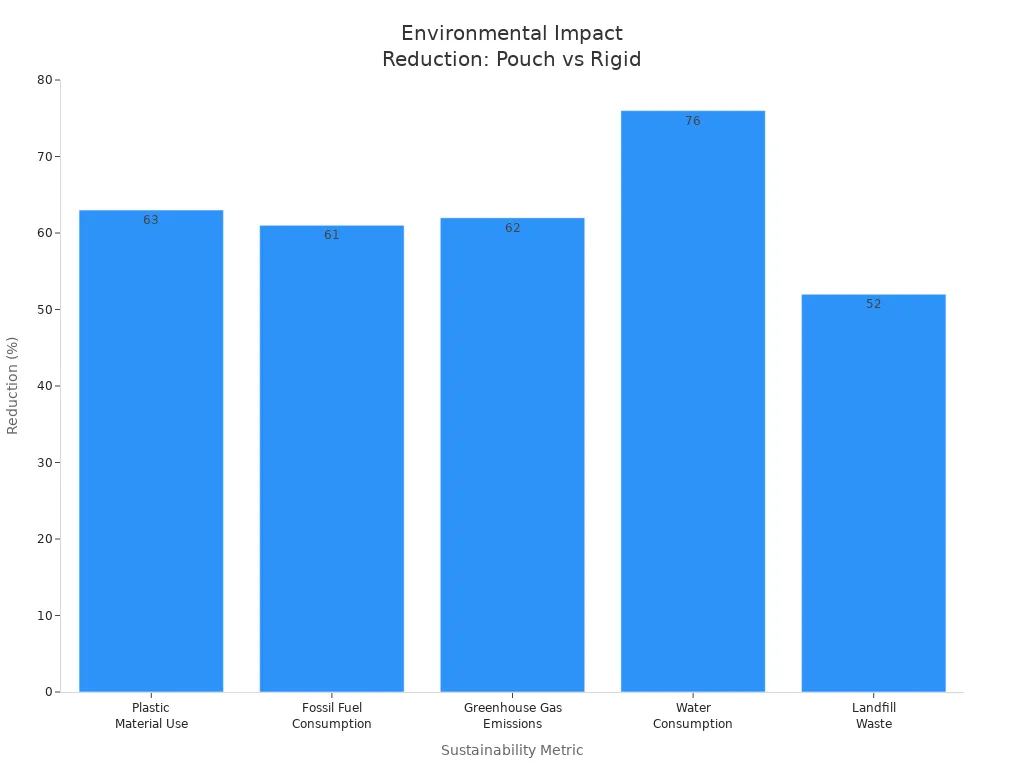
The table below compares key sustainability metrics between flexible packaging and traditional rigid containers:
Sustainability Metric | Spouted Pouch Packaging Impact Compared to Rigid Containers |
|---|---|
Plastic Material Use | Up to 63% less plastic used |
Fossil Fuel Consumption | Up to 61% less fossil fuel consumed |
Greenhouse Gas Emissions | Up to 62% less GHG emissions |
Water Consumption | Up to 76% less water used |
Landfill Waste | Up to 52% less waste generated |
Product-to-Package Ratio | Higher (more efficient packaging) |
Transportation Efficiency | Reduced emissions due to lighter weight and compactness |
Life cycle assessments show that spouted pouch packaging reduces climate change impact by over 60% compared to glass jars and steel cans. The lightweight design means fewer trucks are needed for transportation, which lowers emissions and fuel use. BN PACK’s refillable and compostable pouches further support a sustainable future.
Recycling and Disposal
Recycling and disposal present challenges for spouted pouch packaging. Most pouches use multi-layer laminates, which make recycling difficult. Municipal recycling systems often cannot process these materials. Rigid containers, made from single materials, are easier to recycle and have higher recycling rates.
BN PACK addresses these issues by offering recyclable spouted pouches designed for easy disassembly. Their mono-material pouches fit better with recycling programs. Compostable options break down naturally, reducing landfill waste. The lightweight and flat disposal of pouches saves landfill space and lowers environmental impact.
Spouted pouch packaging uses less plastic and energy in production than rigid bottles. This helps reduce overall waste and supports eco-friendly practices. Brands that choose sustainable spouted pouch packaging help protect the environment and promote responsible resource use.
Branding and Convenience
Spouted Stand Up Pouches for Branding
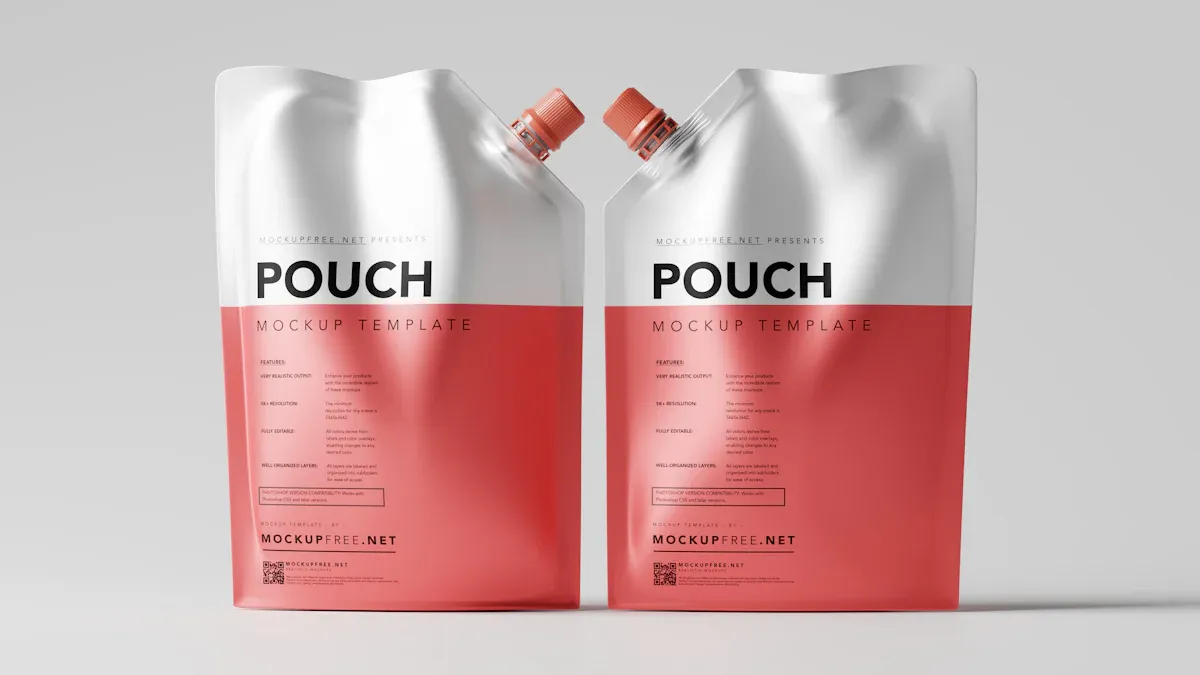
Spouted stand up pouches give brands a strong competitive advantage on store shelves. These pouches stand upright, making products more visible and attractive to shoppers. Companies can use 360° high-definition printing to display bold logos, vibrant colors, and unique designs. Matte, gloss, and metallic finishes help products stand out even more. Brands can add clear windows to show the product inside, which builds trust and increases demand from consumers who want transparency.
BN PACK offers many customization options for spouted stand up pouches. Brands can choose different sizes, shapes, and gusset designs to match their product needs. Spout and cap styles come in many colors and placements, such as corner or center. Handles, tear notches, and tamper-evident seals add both style and safety. These features help brands tell their story and create packaging that matches their identity.
Stand-up design improves shelf presence and product visibility.
High-quality printing supports eye-catching graphics and messaging.
Custom shapes and windows increase shelf differentiation.
Resealable spouts and zippers add value and convenience.
The strong market growth of spouted stand up pouches shows that both brands and consumers prefer this packaging. The flexibility in design gives companies a real competitive advantage in crowded markets.
User Experience
Spouted stand up pouches make life easier for consumers. The resealable caps let users open and close the package many times, keeping products fresh and preventing spills. The spout allows for controlled pouring, which reduces mess and waste. Lightweight and flexible materials make these pouches easy to carry, store, and use at home or on the go.
Consumers like the space-saving design because it fits better in kitchen cabinets, backpacks, and even lunchboxes. The upright shape helps with storage and display, both at home and in stores. Market research shows that people choose spouted stand up pouches for their convenience, portability, and easy-to-use features. These benefits increase demand and help brands build customer loyalty.
Resealable caps preserve freshness and prevent spills.
Controlled dispensing reduces waste and mess.
Lightweight design improves portability and storage.
Stand-up shape supports efficient stacking and display.
Spouted stand up pouches offer a clear competitive advantage by combining user-friendly features with strong branding opportunities.
Real-World Examples
Case Studies
BN PACK has helped many brands switch from rigid containers to spouted pouch packaging. One juice company in North America replaced glass bottles with spouted pouches for its smoothies. This change led to a 30% drop in shipping costs and a 50% reduction in storage space. The company also noticed fewer damaged products during transport. Customers liked the new packaging because it was easy to pour and reseal. The pouches kept the juice fresh longer, even after opening.
Many companies in the food and beverage market have seen similar results. They report better shelf presence and more space for branding. Spouted pouch packaging allows for custom printing, which helps products stand out. The table below shows some measurable outcomes for companies that made the switch:
Measurable Outcome | Description |
|---|---|
Content Evacuation Efficiency | At least 98% of product can be used, reducing waste. |
Space Savings | Pouches take up three times less space than rigid containers. |
Transportation Cost Reduction | Lighter weight means lower shipping costs. |
Product Preservation | Pouches protect against oxygen, light, and heat, keeping products fresher. |
Safety Improvements | Unbreakable design reduces losses from breakage. |
Shelf Utilization and Branding | Custom printing improves shelf presence. |
Convenience and Handling | Easier to handle and use than rigid containers. |
Freshness After Opening | Maintains freshness longer after opening. |
Companies that use spouted pouch packaging often see higher customer satisfaction and lower costs.
Industry Data
Many industries now prefer spouted pouch packaging over rigid containers. The beverage, baby food, and edible oils sectors lead this shift. These industries want lighter, greener, and more convenient packaging. Spouted pouches help reduce shipping costs and environmental impact.
Spouted pouches are popular in the food and beverage market because they use less plastic and lower transportation emissions.
U.S. manufacturers now use spouted pouches for baby food, sauces, and performance nutrition products.
The North American market shows strong growth in spouted pouch packaging due to sustainability concerns and brand commitments.
New designs, like recyclable mono-material pouches, help address recycling challenges.
The U.S. leads in revenue, while Canada grows quickly because of new sustainability rules.
Industry | Product Examples | Reasons for Adopting Spouted Pouches |
|---|---|---|
Beverage Industry | Fruit juices, milk products, smoothies, energy drinks | Lightweight, convenience, waste reduction, attractive design, product visibility |
Baby Food and Nutritional Drinks | Pureed fruits, dairy drinks, protein shakes | Easy dispensing, safe feeding, resealable, leak prevention, freshness preservation |
Edible Oils, Sauces, Condiments | Edible oils, dressings, ketchup, honey | Precise delivery, mess-free use, custom sizes, less leakage and waste |
Other Sectors | Snacks, supplements, pet food | Lightweight, resealable, eco-friendly features |
Brands in these industries choose spouted pouch packaging to meet consumer demand for convenience and sustainability.
Spouted pouches deliver clear advantages over rigid containers. Brands and consumers benefit from lower costs, space savings, and strong product protection. The table below highlights key features:
Advantage | Benefit |
|---|---|
Lightweight | Easier handling and reduced shipping costs |
Space-saving | Efficient storage and transportation |
Customization | Enhanced branding and shelf appeal |
Product protection | Longer shelf life and less waste |
Less plastic and lower carbon footprint |
BN PACK’s spouted pouches offer modern, convenient, and sustainable packaging. Companies seeking smart solutions can rely on these innovative pouches for better performance and brand impact.
FAQ
What products work best with spouted pouches?
Spouted pouches suit liquids, semi-liquids, and powders. Many brands use them for juices, sauces, baby food, cleaning products, and personal care items. The flexible design fits many product types.
Are spouted pouches safe for food and beverages?
Manufacturers use food-grade materials for spouted pouches. These materials protect contents from air, moisture, and light. Spouted pouches keep food and drinks fresh and safe for consumers.
How do spouted pouches help reduce waste?
Spouted pouches use less plastic than rigid containers. Most pouches can evacuate almost all product inside, which means less leftover waste. Many options are recyclable or biodegradable.
Can brands customize spouted pouches for their products?
Brands can choose pouch size, spout type, cap style, and printing finishes. BN PACK offers many customization options, including transparent windows, special shapes, and resealable features.
Are spouted pouches easy for consumers to use?
Spouted pouches offer resealable caps and controlled pouring. The lightweight design makes them easy to carry and store. Many people find them more convenient than bottles or jars.