
Wondering how to extend coffee shelve life? Start by choosing the right storage methods and packaging. You can keep coffee fresh by using airtight containers, storing it in a cool, dry place, and avoiding sunlight. Check out the table below to see how different methods impact freshness:
Storage Method | Impact on Shelf Life |
|---|---|
Airtight containers | Keeps air out, preserves flavor longer |
Cool, dry, dark place | Slows down oxidation, keeps coffee fresh |
Nitrogen-flushed bags | Blocks oxygen, extends shelf life |
Grinding before brewing | Best for flavor, grind just before use |
Keeping in quality packaging | Maintains freshness with features like one-way valves |
BN PACK coffee bags use high-barrier materials and smart design to help you get the most out of every bean. Take a moment to think about your coffee storage habits—small changes can make a big difference.
Why Coffee Loses Freshness
You want your coffee to taste amazing every time, right? Let’s look at what causes coffee to lose its freshness and how you can fight back.
Oxygen
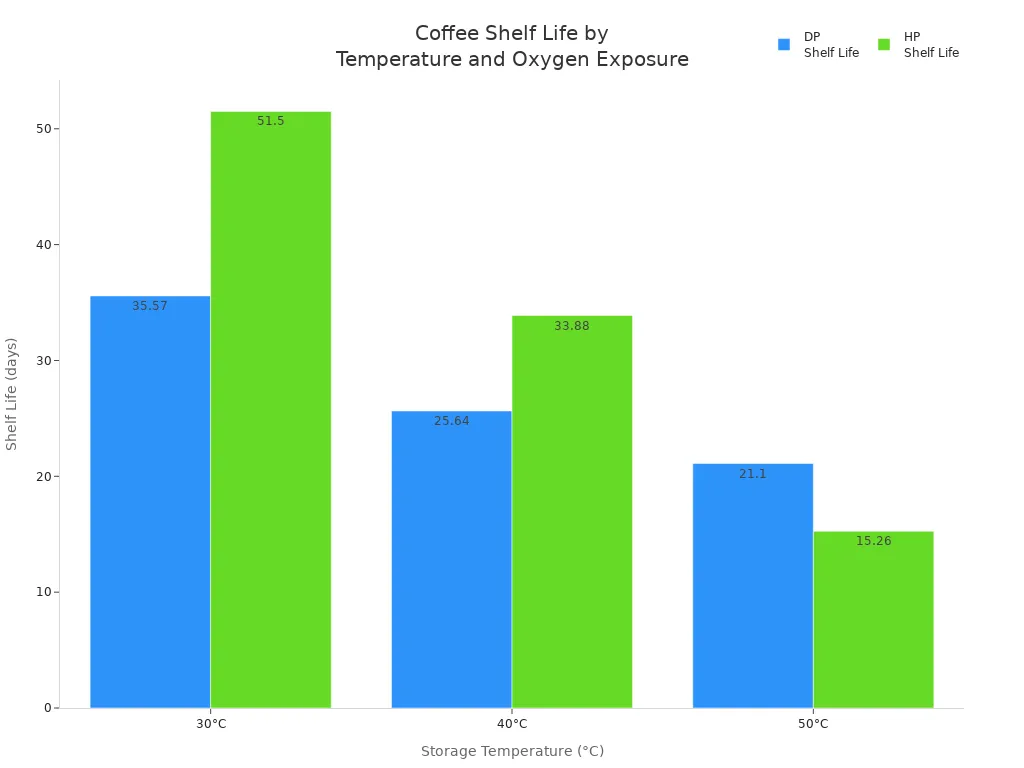
Oxygen is the biggest enemy of coffee freshness. When you open a bag, oxygen rushes in and starts breaking down those delicious aroma compounds. You’ll notice the flavor fading and sometimes even a rancid smell. Scientists have found that oxygen exposure leads to the loss of key aroma molecules like methanethiol and propanal. These changes happen faster at higher temperatures. Take a look at how shelf life drops as temperature rises:
Storage Temperature (°C) | Shelf Life of DP (days) | Shelf Life of HP (days) |
|---|---|---|
30 | 35.57 | 51.50 |
40 | 25.64 | 33.88 |
50 | 21.10 | 15.26 |
Moisture
Moisture sneaks into your coffee and causes trouble. If the humidity is too high, your beans can absorb water, lose flavor, and even grow mold. If it’s too low, the beans dry out and taste flat. Experts recommend keeping humidity between 50% and 65% to keep your coffee fresh and safe.
Humidity between 50% and 65% prevents moisture absorption.
This range keeps beans from drying out or getting moldy.
Light
Light can mess with the chemical makeup of your coffee. Too much light breaks down important compounds, changing the taste and aroma. Studies show that coffee stored in natural shade keeps more chlorogenic acids and amino acids, which help with flavor. If you leave your coffee in direct sunlight, you risk losing acidity, balance, and even caffeine.
Study | Effect of Light Exposure on Coffee Composition |
|---|---|
Bote and Vos (2017) | Decline in acidity, aftertaste, flavor, balance, and overall preference with increased light under nitrogen limitation. |
Somporn et al. (2012) | Highest chlorogenic acids in coffee grown in natural shade (>70%). |
Heat
Heat speeds up the loss of freshness. High temperatures make aroma molecules escape faster and boost oxidation. You should store your coffee between 59°F and 77°F (15°C to 25°C) to slow down these changes and keep your beans tasting great.
Temperature Range | Description |
|---|---|
15°C to 25°C (59°F to 77°F) | Ideal storage temperature for coffee beans. |
Tip: Keep your coffee in a cool, dry, and dark spot. You’ll notice the difference in every cup!
How to Extend Coffee Shelf Life
Learning how to extend coffee shelve life can make every cup taste better. You do not need fancy equipment or complicated steps. You just need to follow a few proven tips for coffee storage and choose the right packaging. Let’s break down the best ways to keep your coffee fresh and full of flavor.
Use Airtight Containers
An airtight container is your first line of defense against stale coffee. When you store coffee in an airtight container, you block out oxygen, moisture, and light. These are the main things that ruin coffee freshness. Here’s what research shows about airtight containers:
They protect coffee from oxygen, moisture, and light, which are harmful to freshness.
Removing oxygen helps prevent coffee degradation.
Moisture and light, which contribute to staleness, are effectively blocked.
Using airtight containers helps coffee stay fresher for a longer period, especially for pre-ground coffee.
Vacuum-sealed stainless steel canisters slow down oxidation much better than other materials.
The Specialty Coffee Association recommends dark, airtight containers for optimal coffee storage.
If you want to know how to extend coffee shelve life, start with a good airtight container. You will notice your coffee retains freshness and flavor longer.
Store Coffee in Cool, Dark Places
You should always store coffee in a dark and cool location. Heat and light speed up the loss of coffee freshness. When you store coffee in a cool, dark place, you protect it from these enemies. This simple step can make a big difference in how long your coffee stays good.
Proper storage practices, like using airtight containers and avoiding moisture, help maintain coffee freshness. Light and heat can quickly lower the quality of your coffee. So, keep your coffee away from windows, ovens, and other warm spots. A pantry or cupboard works well for most homes.
Buy Whole Beans
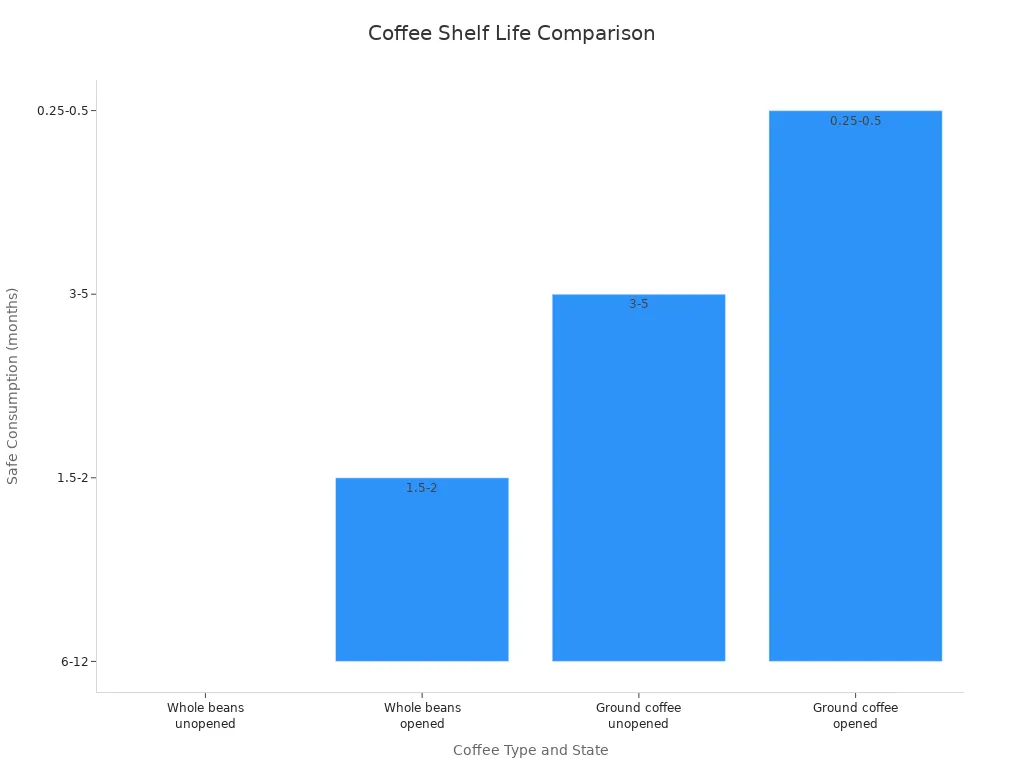
If you want to know how to extend coffee shelve life, buy whole beans instead of pre-ground coffee. Whole beans keep their flavor and quality much longer. Once you grind coffee, it starts to lose freshness fast. Check out this table to see the difference:
Coffee Type | Peak Freshness | Safe Consumption | Storage Notes |
|---|---|---|---|
Roasted whole beans (unopened) | 2-4 weeks | 6-12 months | Vacuum/nitrogen packaging extends life |
Roasted whole beans (opened) | 2-3 weeks | 6-8 weeks | Quality drops rapidly after opening |
Ground coffee (unopened) | 1-2 weeks | 3-5 months | Pre-ground loses quality quickly |
Ground coffee (opened) | 3-7 days | 1-2 weeks | Use immediately for best results |
Grinding increases the coffee’s exposure to air, which speeds up its decline. Even vacuum-sealed ground coffee loses flavor complexity within weeks. Whole beans give you more control over freshness and taste.
Grind Before Brewing
Grinding coffee right before brewing is one of the best ways to keep that fresh roasted flavor. When you grind coffee, you increase its surface area. This means more air can reach the coffee, causing it to lose flavor and aroma quickly. Here’s why you should grind just before brewing:
Grinding coffee increases its surface area, leading to faster oxidation and flavor loss.
Freshly ground coffee preserves delicate aromatic compounds that fade quickly after grinding.
Grinding too far in advance can lead to flat, stale-tasting coffee.
Grinding just before brewing helps trap CO2, which boosts the release of flavor compounds.
Oxidation can introduce off-notes, so immediate grinding is essential for freshness.
Pairing fresh grinding with immediate brewing gives you the most vibrant and aromatic cup.
If you want to know how to extend coffee shelve life and enjoy the best flavor, always grind your beans right before you brew.
Vacuum Seal and Freeze
Vacuum sealing and freezing coffee beans is a smart move for long term storage. Freezing coffee beans can keep them fresh for months, even up to a year. Here’s what happens when you vacuum seal and freeze coffee:
Vacuum sealing can remove CO2, which protects against oxygen exposure.
Coffee that was vacuum-sealed and stored in the freezer for over a year still tasted great.
Coffee stored in the freezer for more than a year showed minimal aging effects.
Taste tests showed no big difference in flavor between fresher and older frozen coffee.
Be careful with un-freezing and re-freezing, as this can affect quality.
If you buy coffee in bulk or want to save special beans, freezing coffee beans in vacuum-sealed bags is a great way to extend shelf life and preserve coffee freshness.
Choose BN PACK Coffee Bags
If you want to know how to extend coffee shelve life with the best packaging, BN PACK coffee bags are a top choice. These bags use high-barrier materials like Mylar and aluminum foil to block out oxygen, moisture, and light. This means your coffee stays fresh and full of flavor for much longer. Here’s a quick look at what makes BN PACK coffee bags stand out:
Feature | Benefit |
|---|---|
Mylar bags | Strong barrier against oxygen, moisture, and light. Extends shelf life up to six months. |
Vacuum sealing | Removes oxygen, slows oxidation, keeps coffee fresh for up to six months. |
Nitrogen flushing | Replaces oxygen with nitrogen, preserves flavor and freshness for three to six months. |
Heat-sealed foil bags | Prevents oxygen and moisture entry, maintains freshness for two to four months. |
BN PACK coffee bags also come with resealable zippers and one-way degassing valves. These features let you open and close the bag without losing freshness. You can choose eco-friendly options, custom sizes, and even add your own branding. If you care about coffee freshness and want to know how to extend coffee shelve life, BN PACK coffee bags make it easy.
Tip: The right packaging and storage can help you enjoy every cup at its best. Try these tips and see how much better your coffee tastes!
Store Coffee for Maximum Freshness
Avoid Fridge and Freezer Mistakes
You might think the fridge or freezer is a safe place for coffee, but these spots can actually hurt your beans. When you move coffee in and out of the freezer, condensation forms. This moisture sneaks into the beans and breaks down their quality. Coffee also acts like a sponge and can soak up odors from other foods, leaving you with strange flavors in your cup. The freezing and thawing process can damage the beans’ structure, causing them to lose essential oils that give coffee its rich aroma and taste. If you must freeze coffee for long-term storage, use airtight, opaque containers and only take out what you need. Try to avoid repeated freezing and thawing.
Rotate Stock
Keeping your coffee fresh means using the oldest beans first. Make it a habit to rotate your stock regularly. Each week, check what you have and move older bags to the front. Aim to use coffee within a few weeks to a month after roasting. This way, you always enjoy the best flavor and avoid waste. A simple weekly inventory check helps you manage your supply and keeps your coffee routine running smoothly.
Label and Date Bags
Labeling and dating your coffee bags is a smart move. Write the “Roasted On” date on each bag as soon as you get it. This helps you track freshness and know exactly when the flavor starts to fade, which usually happens after four to six weeks. Don’t rely on “Best Before” dates, since they can be misleading about real quality. By keeping clear labels, you make sure every cup tastes as fresh as possible.
Tip: Protect your coffee from air, moisture, heat, and light. Use airtight, opaque containers and store them in a cool, dark place for the best results.
Signs of Lost Freshness
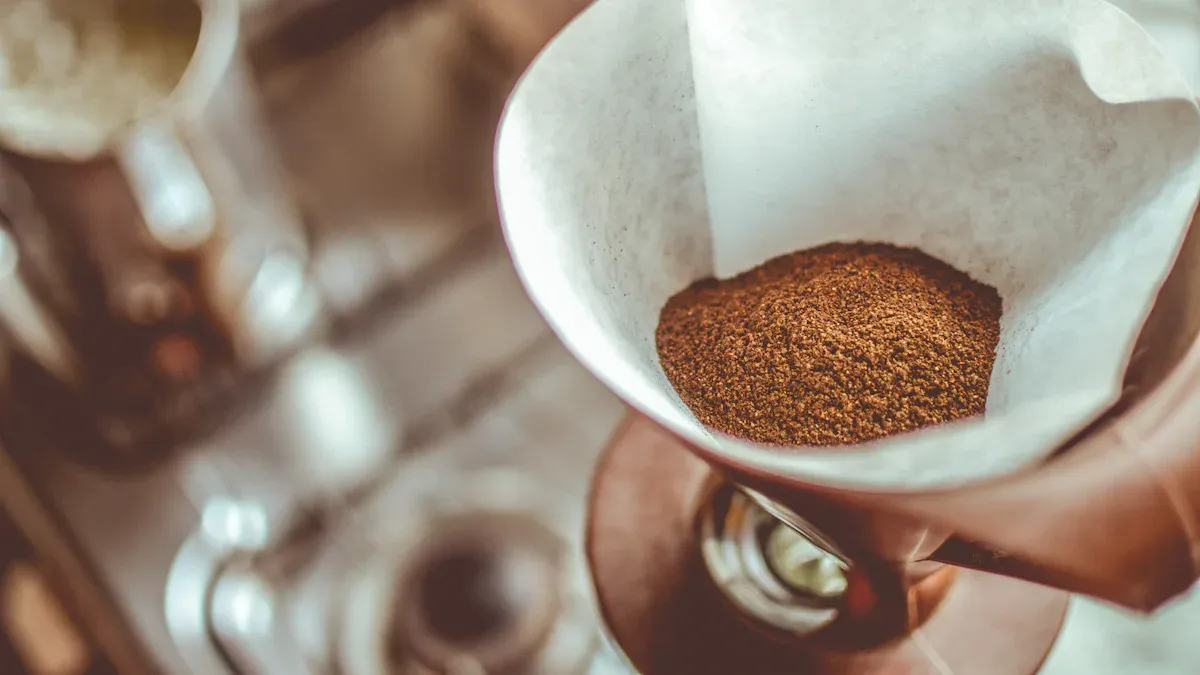
How do you know when your coffee has lost its freshness? You can spot the signs with your senses. Let’s break down what to look for so you never have to settle for a stale cup.
Aroma Changes
Your nose is the first tool for checking coffee freshness. When you open a bag, you should get a burst of rich, inviting aroma. If you notice a weak, musty, or even rancid smell, your coffee is past its prime. Sensory analysis studies show that the release of aroma compounds signals a loss of volatile freshness. Rancid aromas mean staling reactions have started. Here’s a quick guide:
Indicator | Description |
|---|---|
Rancid aromas | Smells sour or off, a clear sign of staling |
Aroma compound release | Faint or missing aroma means lost freshness |
Storage conditions | Poor storage speeds up aroma loss and staleness |
Tip: Always trust your nose. If the coffee doesn’t smell right, it probably won’t taste good either.
Taste Differences
Taste is the next big clue. Fresh coffee should taste lively and balanced. When freshness fades, you might notice the flavor turns flat, sour, or bitter. Sometimes, the coffee just tastes dull, with none of the bright notes you expect. Here’s what to watch for:
Smell: Weak, musty, or woody aroma means lost flavor.
Taste: Flat, sour, or bitter taste points to staleness.
Grind Aroma: No aroma when grinding is a red flag.
If your cup leaves you disappointed, it’s time to check how long the coffee has been sitting around.
Texture and Color
You can also spot lost freshness by looking at the beans. Fresh coffee beans often have a shiny, oily surface. When they turn dry or brittle, they have lost moisture and flavor. Color changes matter too. Beans that look lighter or dusty have likely been exposed to air or light for too long. Here are some signs:
Oily surface fades, beans look dry.
Color turns lighter or dusty.
Beans feel brittle or crumble easily.
These changes show that your coffee has lost its best qualities. Good storage can help you avoid these problems and keep your coffee tasting great.
BN PACK Coffee Bag Solutions
BN PACK coffee bags give you the power to keep your roasted coffee beans fresh for longer. You get smart features and materials that protect your coffee from the main enemies—oxygen, moisture, light, and heat. Let’s look at how these bags help you enjoy every cup at its best.
High-Barrier Materials
You want your roasted coffee beans to stay flavorful and aromatic. BN PACK uses high-barrier materials that block out everything that can ruin your coffee. Here’s a quick look at what goes into these bags:
Material | Function |
|---|---|
Aluminium Foil | Protects against moisture, oxygen, and light. |
Rice Paper | Provides a barrier against moisture and oxygen. |
Kraft Paper | Offers a rustic aesthetic and sustainable option. |
These materials keep your roasted coffee beans safe during storage. You get a longer shelf life and better taste in every brew.
Resealable Zippers
You open your coffee bag, scoop out some roasted coffee beans, and seal it back up. The resealable zipper makes this easy. It locks in freshness and keeps out air and moisture. You don’t have to worry about your roasted coffee beans going stale after each use. The zipper also gives you a tamper-proof seal, so your coffee stays safe until the last scoop.
Resealable zippers help you keep roasted coffee beans fresh between uses.
You get a secure seal that blocks out unwanted air and moisture.
Degassing Valves
Freshly roasted coffee beans release gases that can build up inside the bag. BN PACK coffee bags come with degassing valves that let these gases escape without letting air in. This keeps your roasted coffee beans from getting soggy or losing flavor. The valve also helps preserve the aroma and taste, so your coffee always smells and tastes amazing.
Degassing valves keep gases and moisture at bay.
You enjoy roasted coffee beans that stay fresh and full of flavor.
Eco-Friendly Choices
You care about the planet and your coffee. BN PACK offers eco-friendly options for your roasted coffee beans. You can choose bags made from biodegradable, recyclable, or compostable materials. These choices help reduce waste and support healthier ecosystems. Compostable packaging breaks down naturally, while recyclable solutions save energy and resources.
The demand for eco-friendly coffee bean packaging keeps rising. Eco-friendly coffee bags use materials that are biodegradable, recyclable, or compostable.
Eco-Friendly Practice | Environmental Benefit |
|---|---|
Adopt Eco-Friendly Materials | Reduces waste by shifting to biodegradable or recyclable packaging. |
Invest in Research | Develops innovative solutions that balance sustainability and quality. |
Educate Consumers | Encourages proper recycling habits and highlights the benefits of sustainable packaging. |
You can also customize your coffee bags to match your brand. Soft touch finishes, unique textures, and creative designs help your roasted coffee beans stand out. Customers often judge coffee by its packaging before they even taste it. A beautiful, eco-friendly bag builds trust and makes your coffee feel special.
Common Mistakes
Poor Packaging
You might not realize how much packaging matters for your coffee. If you use the wrong bag or a weak seal, your beans can go stale fast. Poor packaging lets in air and moisture, which can ruin the flavor and even cause mold. Choosing the right materials and sealing methods keeps your coffee fresh and protects your brand’s reputation. Here are some common packaging mistakes:
Mistake | Description |
|---|---|
Improper Drying | Not drying green coffee enough before packaging leads to moisture problems. |
Poor Sealing | Loose or broken seals let air and moisture sneak in. |
Tampered Packaging | Damaged bags expose coffee to the environment. |
Incorrect Packaging | Using the wrong type of bag can’t keep coffee fresh for long. |
If you want your coffee to taste great every time, pay attention to packaging. It’s not just about looks—it’s about keeping every bean at its best.
Exposure to Air
Air is one of the biggest threats to your coffee. When you let air into your storage container, oxidation starts right away. This process steals the aroma and creates off-flavors, sometimes making your coffee taste rancid. Even a small amount of oxygen can speed up staleness. Studies show that just a 1% increase in oxygen can make your coffee go stale 10% faster. Always close your bags tightly and use containers that keep air out. You’ll notice a big difference in taste and smell.
Air exposure causes oxidation, which leads to flat and stale coffee.
Even minimal oxygen can trigger flavor loss.
Tip: Always squeeze out extra air before sealing your coffee bag.
Repeated Freezing
Freezing can help you store coffee for longer, but you need to do it right. The real problem starts when you freeze and thaw your coffee beans over and over. This cycle creates ice crystals that break down the oils and aroma compounds inside the beans. When you take coffee out of the freezer, condensation can form, which leads to flavor loss and sometimes even mold. Here’s what happens with repeated freezing:
Effect | Description |
|---|---|
Flavor Degradation | Ice crystals disrupt oils and aromas, changing the taste. |
Condensation Risk | Thawing causes moisture to collect, which can ruin flavor. |
Avoid Repeat Freezing | Each freeze-thaw cycle speeds up flavor loss. |
If you need to freeze coffee, divide it into small portions. Only take out what you need, and avoid putting the rest back in the freezer. This way, you keep your coffee tasting fresh for every brew.
You can keep your coffee tasting fresh with a few smart habits.
Darker roasts last longer than lighter ones.
Store coffee beans in airtight containers and keep them away from light, moisture, and oxygen.
Arabica beans usually stay fresh longer than Robusta.
Unroasted beans can last up to 2 years, while roasted coffee beans last 6 months to a year.
Proper storage and BN PACK coffee bags help you enjoy every cup. Try these tips and taste the difference in your daily coffee.