
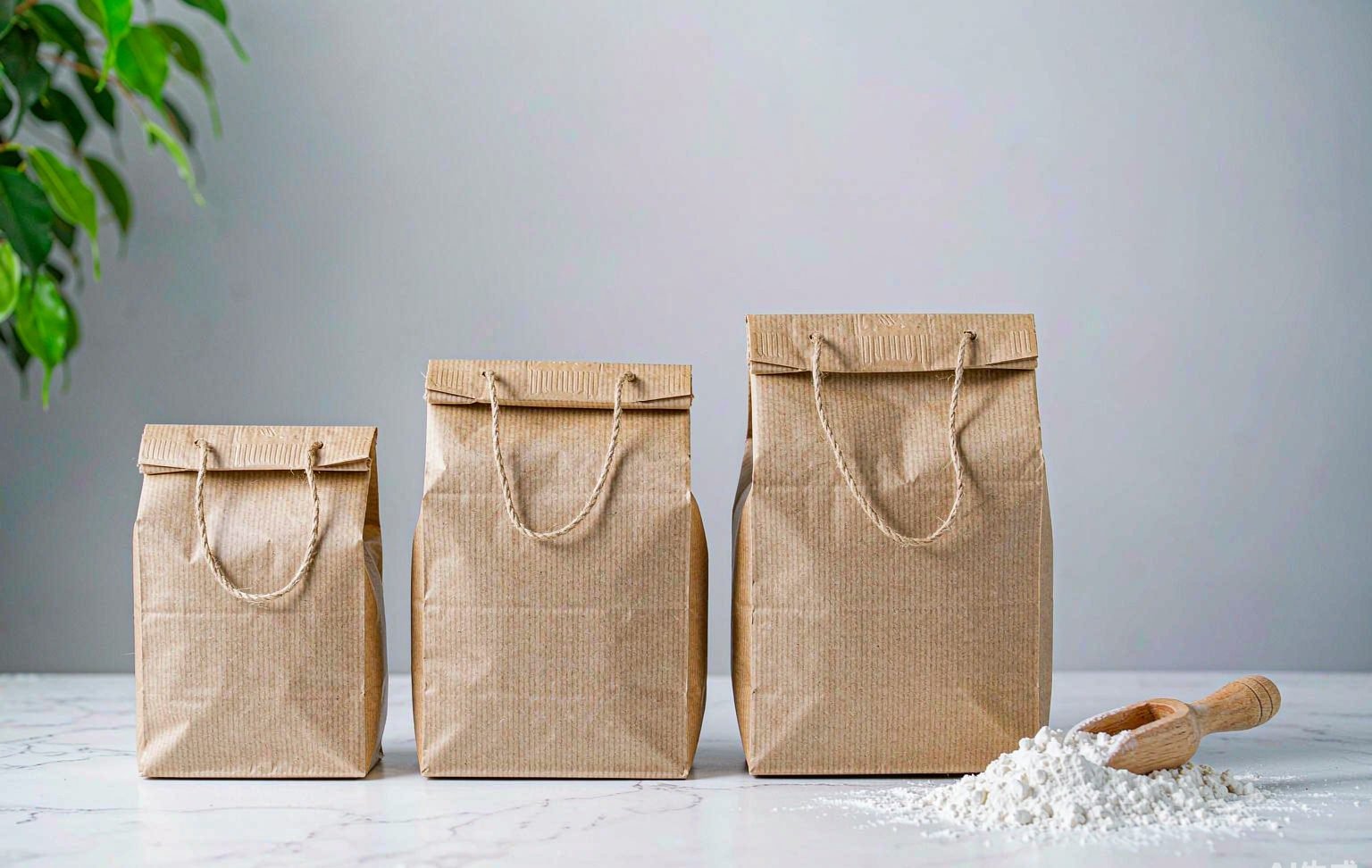
Quick Answer: Flour bag sizes run from 1 lb retail pouches to 50 lb commercial paper sacks. The most common retail flour bag sizes are 2 lb (about 6 x 3.5 x 9 inches), 5 lb (about 6.5 x 3.5 x 12.5 inches), and 10 lb (about 7 x 4 x 16 inches), while bakeries buy 25 lb and 50 lb multiwall sacks. Stand-up pouches cover 1–5 lb premium flours. The chart below matches each flour bag size to its typical fill weight and best use.
| Flour Bag Size | Approx. Dimensions (in) | Typical Use |
|---|---|---|
| 1 lb pouch | 5 x 3 x 8 | Specialty and gluten-free flours, gift sets |
| 2 lb bag | 6 x 3.5 x 9 | Small household packs, boutique brands |
| 5 lb bag | 6.5 x 3.5 x 12.5 | Standard US retail all-purpose flour |
| 10 lb bag | 7 x 4 x 16 | Family-size and bakery counter packs |
| 25 lb sack | 10 x 5 x 22 | Bakeries, pizzerias, food service |
| 50 lb sack | 13 x 6 x 28 | Industrial bakeries and milling distribution |
In This Guide
- What Are the Standard Flour Bag Sizes?
- Retail Flour Bag Sizes from 1 to 10 Pounds
- Commercial Sacks: 25 and 50 Pound Bags
- Stand-Up Pouch Sizes for Premium Flour
- How to Pick the Right Flour Bag Size
- Size and Material: What Works Together
- FAQ
- The Bottom Line
Picking flour bag sizes is a bigger decision than it looks. The size you choose controls your filling cost, your shelf presence, how long the flour stays fresh after opening, and even your shipping damage rate. This guide lists the standard flour bag sizes used in US retail and food service, shows real dimension ranges for each, and explains how to match a size to your flour type and sales channel—so you order the right die cut the first time instead of paying for a reprint.
What Are the Standard Flour Bag Sizes?
The standard flour bag sizes in US retail are 2, 5, and 10 pounds in paper or woven poly bags, with 5 lb being the volume leader on grocery shelves. Food service and industrial buyers jump straight to 25 and 50 lb multiwall paper sacks, while premium and specialty flour brands increasingly use 1–5 lb stand-up pouches with resealable zippers. Among all flour bag sizes, the 5 lb bag remains the reference point: most filling equipment, pallet patterns, and shelf plans are built around it.
Dimensions above are working approximations—actual flour bag sizes vary by bag style (pillow, gusseted, pinch-bottom) and by material. Always confirm the inside dimensions against your fill weight with a sample before ordering a full print run.
Retail Flour Bag Sizes from 1 to 10 Pounds
Retail flour bag sizes follow household consumption. A 2 lb bag suits small households and boutique brands selling chickpea, almond, or gluten-free flour, where buyers pay for variety rather than bulk. The 5 lb size is the default all-purpose pack—big enough for weekly baking, small enough for a pantry shelf. The 10 lb size targets large families and holiday baking seasons, and its taller body needs a stronger bottom seal because the filled weight stresses the corners. Brands moving between these flour bag sizes should also watch headspace: a 5 lb bag filled with cake flour (which is lighter and fluffier) needs more internal volume than the same weight of bread flour.
If your catalog already spans other snack and pantry categories, you can reuse learnings from adjacent size guides such as candy bag sizes and jerky bag sizes—the headspace and seal-zone logic carries over directly.
Commercial Sacks: 25 and 50 Pound Bags
Commercial flour bag sizes are dominated by 25 lb and 50 lb multiwall paper sacks. The 25 lb sack is the workhorse for pizzerias, small bakeries, and restaurants: light enough for one person to carry safely, large enough to cut cost per pound. The 50 lb sack is the milling industry standard for distribution, moved on pallets with forklifts. Both sizes rely on multiwall construction—two to four kraft paper layers, sometimes with a poly liner—to survive stacking and humid warehouses. Buyers comparing these larger flour bag sizes should check pallet counts (a 40×48 pallet holds 40 to 50 fifty-pound sacks) and confirm sift-proof seams.
Stand-Up Pouch Sizes for Premium Flour
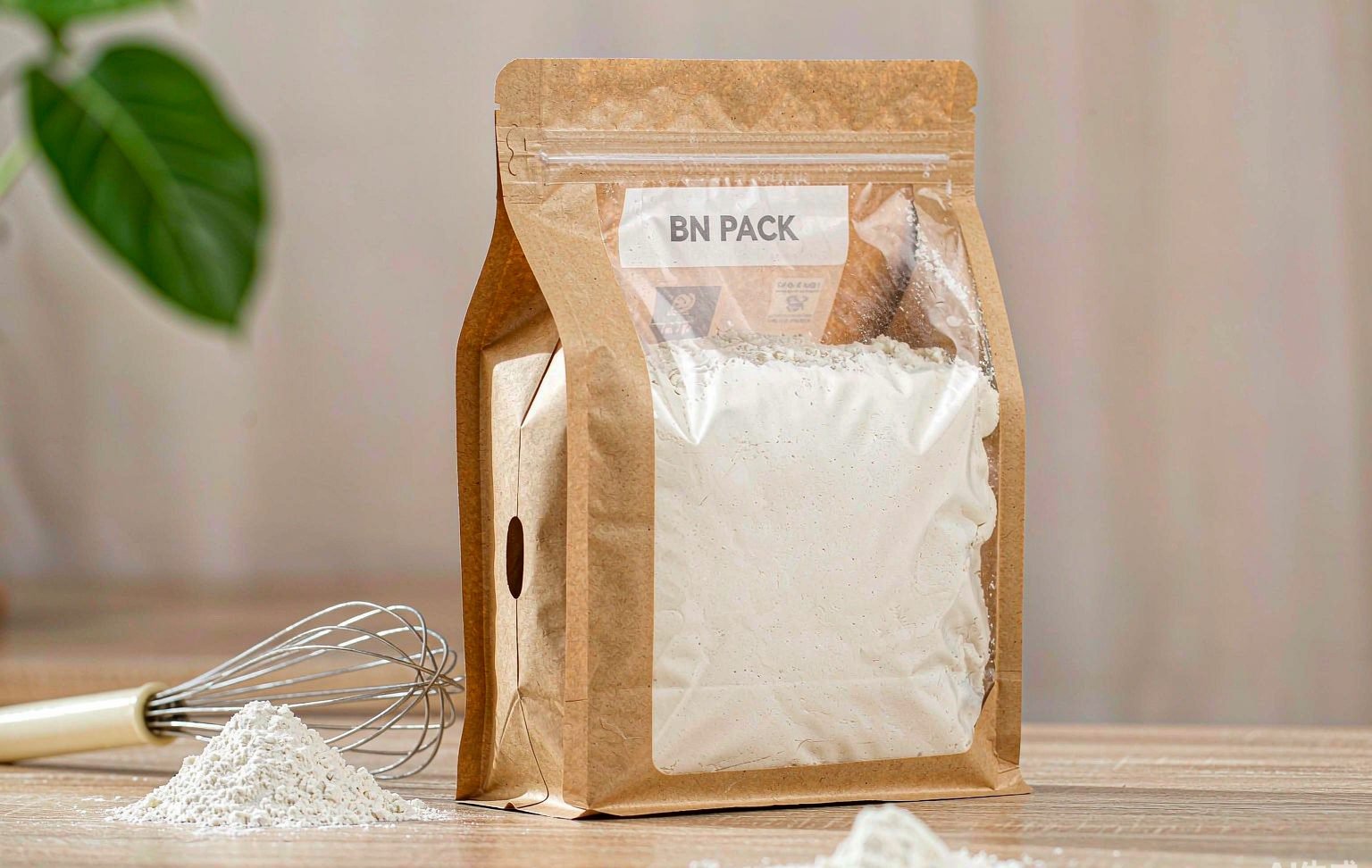
Stand-up pouches have become the format of choice for premium flour bag sizes in the 1–5 lb range. A 1 lb pouch (about 5 x 3 x 8 inches with a bottom gusset) suits almond, coconut, and single-origin flours sold online; a 2–3 lb pouch fits boutique bakery brands; a 5 lb pouch with a zipper and degassing-style valve competes directly with paper bags on weight while winning on resealability and shelf print. The format pairs well with the sizing logic in this stand-up pouch sizes guide, and barrier choices mirror those used for coffee pouch sizes, since both products fear oxygen and moisture.
For long-term pantry storage of decanted flour, many home bakers also compare mylar bag sizes with oxygen absorbers.
How to Pick the Right Flour Bag Size
Start from your buyer, not the bag. Selling to home bakers online? A 2–3 lb resealable pouch balances shipping weight (keeps parcels in the lowest weight tier) and pantry life. Selling to retail grocery? You need the 5 lb format because shelf slots and planograms assume it. Selling to bakeries? The 25 lb sack wins on cost per pound without exceeding safe single-person lifting—50 lb sacks need pallet handling.
Then check three practical limits before locking flour bag sizes: your filling machine’s weight range, your shipping box dimensions (a 10 lb bag often forces the next parcel tier), and your warehouse pallet height. Brands that sell multiple pack sizes should map every SKU onto one or two bag families so films, seals, and print plates stay compatible—the same trick snack brands use across dog food bag sizes.
Size and Material: What Works Together
Not every material suits every size, and flour bag sizes change behavior once filled. For a deeper look at bag constructions and materials, see this guide to flour bags and their types. Paper sacks (1–50 lb) breathe slightly and cost less in budget tier, but they need a poly liner or inner layer for long shelf life. Woven polypropylene sacks (10–50 lb) carry heavy loads and resist tears in warehouse handling. Laminated stand-up pouches (1–5 lb) give the best moisture and oxygen barrier in mid tier, which matters because flour spoils mainly through moisture and rancidity of its natural oils—a risk documented in detail on the Wikipedia flour page.
As a rule of thumb: the larger the flour bag size, the more the material choice is about stacking strength; the smaller the size, the more it is about resealability and barrier.
| Material | Common Sizes | Strength | Barrier | Cost Tier |
|---|---|---|---|---|
| Multiwall paper | 2–50 lb | High stacking strength | Moderate (with liner) | Budget tier |
| Woven polypropylene | 10–50 lb | Very high tear resistance | Low–Moderate | Budget tier |
| Laminated stand-up pouch | 1–5 lb | Good | High | Mid tier |
| Paper + poly liner | 5–25 lb | High | Moderate–High | Mid tier |

FAQ
What size is a standard 5 lb bag of flour? Most 5 lb paper flour bags measure roughly 6.5 x 3.5 x 12.5 inches, though pinch-bottom and gusseted styles vary by about an inch per side.
Which flour bag sizes sell best online? The 2–3 lb resealable pouch is the e-commerce sweet spot: it stays in the lowest shipping weight tier, fits letter-rate boxes in some cases, and the zipper supports the multi-week use pattern of home bakers.
How do flour bag sizes affect shelf life? Smaller sizes open and empty faster, so exposure time is short. Large sizes—10 lb and up—stay open for weeks, so liner quality, barrier layers, and resealable features matter more the bigger the bag.
Can I get custom flour bag sizes? Yes. Bag makers cut custom widths, gussets, and lengths once volumes justify new tooling; below that, the fastest route is a stock die closest to your fill weight plus custom printing.
Do bigger flour bags cost less per pound to package? Yes—packaging cost per pound drops as size increases, which is why commercial buyers default to 25 and 50 lb sacks despite the handling trade-offs.
The Bottom Line
Match flour bag sizes to the buyer first and the numbers second: 1–3 lb pouches for online specialty flours, 5 lb for grocery retail, 10 lb for family packs, and 25–50 lb multiwall sacks for bakeries and mills. Confirm real dimensions with samples before printing, keep your SKUs inside one or two bag families, and let barrier and resealability—not just price—decide between paper and pouch.