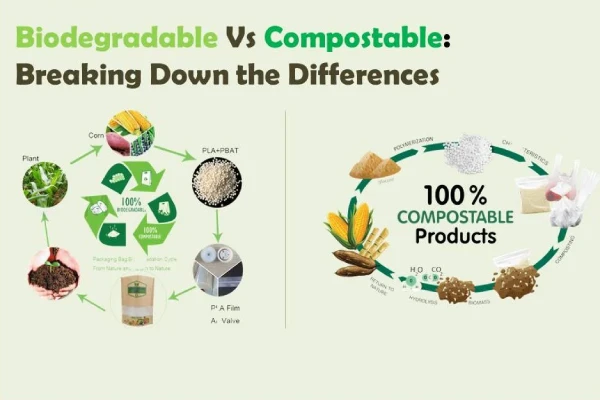
Imagine you are in a store. You want to choose the best eco-friendly packaging for your food. You see some packages labeled “biodegradable” and others labeled “compostable.” Compostable packaging breaks down into natural materials that enrich the soil, while biodegradable packaging simply breaks down over time without necessarily providing benefits to the environment. This difference between biodegradable vs compostable is important. You want to pick what is good for the environment and your business. Understanding the distinction between biodegradable and compostable helps you avoid confusion and make better choices.
Biodegradable vs Compostable: Key Differences
Definitions
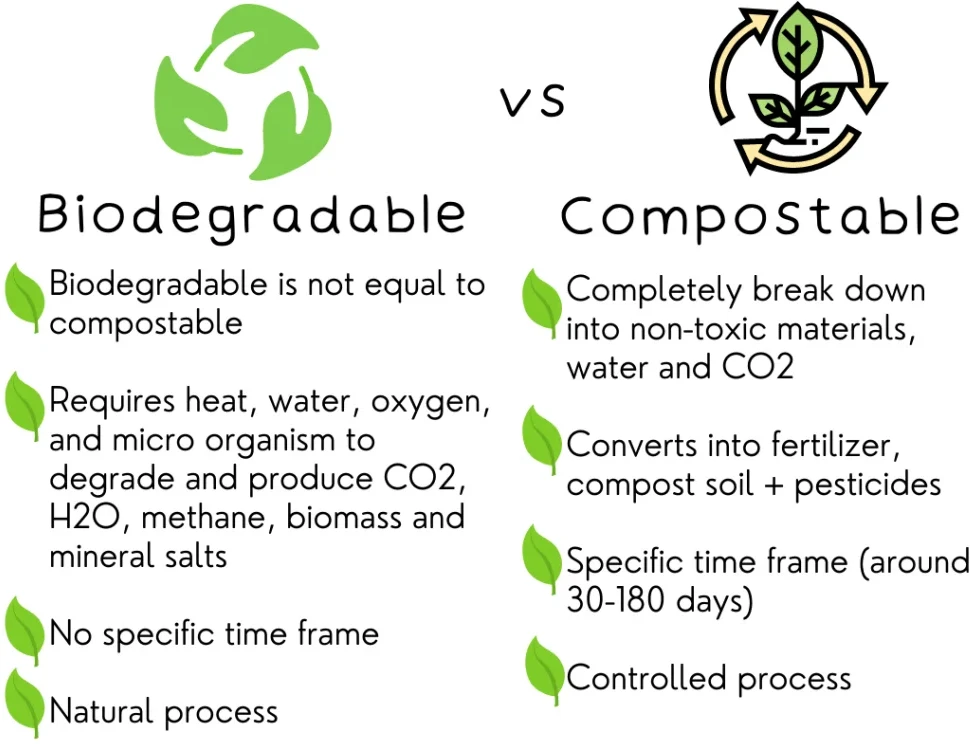
When you look at food packaging, you might see words like biodegradable or compostable. These words seem alike, but they are not the same. Knowing the difference helps you pick what is better for the earth.
Biodegradable packaging breaks down with help from tiny living things like bacteria or fungi. This process changes the material into natural stuff.
Compostable packaging also breaks down with microorganisms, but it must turn into safe, natural things that help the soil. Compostable materials need the right heat, water, and air to become compost.
All compostable packaging is biodegradable, but not all biodegradable packaging is compostable. Compostable packaging always leaves behind safe things for plants and dirt.
Breakdown Process
Biodegradable and compostable packaging do not break down the same way. You should know how long it takes and what is needed.
Biodegradable materials can break down in days or many years. The time depends on the material and where it is. For example, paper can break down in two to five months. A cotton T-shirt takes about six months.
Compostable packaging is made to break down in a set time, usually within six months, but only if it is in the right composting place. These places need the right heat, water, and air.
Composting has strict rules. For example, the EN13432 rule says over 90% of the material must turn into carbon dioxide, water, and minerals in six months. The material must also break into small pieces and leave nothing harmful.
Here is a table that shows how long different packaging takes to break down:
Material | Average Breakdown Time |
|---|---|
Paper and Cardboard | 2 to 6 weeks (standard composting), up to 6 months (cardboard) |
Cornstarch Packaging | 2 to 4 months |
Mushroom Packaging | 30 to 90 days |
Hemp and Fiber Packaging | 6 to 9 months |
Polylactic Acid (PLA) | 3 to 6 months (industrial composting), 80-100 years (on its own) |
Traditional Plastic | 500-1000 years |
You can also see the different breakdown times in this chart:
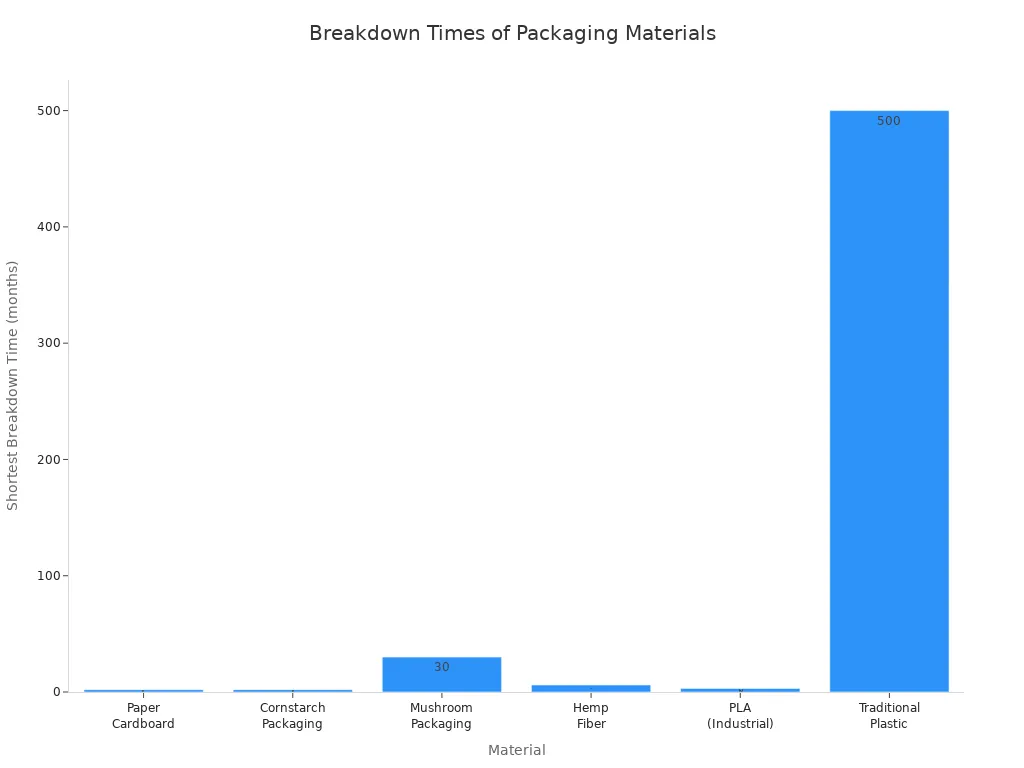
Biodegradable packaging breaks down in a less predictable way. It depends on light, water, air, and temperature. Compostable packaging needs special places, so it breaks down faster and better.
Regulations
You might wonder if you can trust the labels on packaging. Many countries have rules and tests for biodegradable and compostable packaging. These rules help you know the packaging will break down as promised.
Regulation Aspect | Details |
|---|---|
Materials Direction of Travel | Tries to stop non-recyclable layers and wants more recyclable and biodegradable materials. |
Over-packaging Controls | Limits extra layers and decorations, especially for some foods like mooncakes. |
E-commerce & Express Logistics | Stops using non-degradable mailers and uses more recyclable or biodegradable ones. |
Foodservice & Takeaway | Uses fewer non-degradable single-use items and uses more paper and PLA. |
Reporting & Traceability | Tests digital EPR with material lists and recovery reports. |
Certifications are important too. Here are some common certifications for food packaging:
Certification Name | Description |
|---|---|
BPI Certified Compostable | Meets ASTM D6400 and D6868 rules for safe breakdown in composting places. |
OK compost HOME & INDUSTRIAL | Checked by TÜV AUSTRIA under EN 13432, making sure it breaks down safely. |
CMA Certified Compostable | Passes ASTM rules with lab and field tests by the Compost Manufacturing Alliance. |
ASTM-D6400 Standard | Needs to break down in 180 days, leaving safe organic stuff. |
ASTM-D6868 Standard | For compostable plastic films or coatings on compostable products. |
European Standard EN 13432 | Needs to break apart in 12 weeks and fully biodegrade in six months. |
BN PACK always follows strict world rules and has certifications like ISO9001 and BRC. You can trust BN PACK’s eco-friendly packaging meets top safety and green standards.
When you compare biodegradable and compostable packaging, you see clear differences in how they break down, what they leave, and how they are checked. Knowing these facts helps you pick the best packaging for you and the earth.
Environmental and Practical Benefits
Environmental Impact
You want to help the earth when you pick packaging. It is important to know how your choice affects nature. Studies show that both biodegradable and compostable packaging use less energy. They also make less greenhouse gas than regular plastic. Biodegradable packaging breaks down with help from bacteria or fungi. Compostable packaging does even more. It must meet strict rules to break down in special compost places. This process makes compost that helps the soil.
Using compostable packaging means less trash goes to landfills. Compostable things, like those made from potatoes or corn starch, break down with help from tiny living things. This cuts down on landfill waste and lowers CO2. Compostable packaging turns into compost that makes soil better. This helps the earth and supports green packaging. In the UK, over 300 composting sites handle about 2 million tonnes of waste each year. About 75% comes from homes. This shows how much you can help by picking the right packaging.
Biodegradable materials also help the earth by breaking down over time. But they might not make the soil better like compostable ones do. Both types are better than regular plastic, which can last hundreds of years in landfills.
Picking compostable or biodegradable packaging helps you care for the earth and keep it clean.
Practical Advantages
You want packaging that is good for your business and the planet. Compostable packaging has many good uses, especially for food service. You can compost it with food scraps and yard waste. This keeps more trash out of landfills and helps you reach green goals. Compostable packaging also means less plastic waste in nature.
Compostable materials come from natural sources. They do not have harmful stuff, so they are safe for food. Using these materials helps lower your carbon footprint. Biodegradable packaging is also useful. It breaks down over time, so you do not have to worry about waste staying forever. Both choices show you care about the planet. This can bring in customers who care about the earth and make your brand look better.
Here is a table that shows the cost per kilogram for different biodegradable plastics:
Biodegradable Plastic Type | Cost per Kilogram |
|---|---|
Polylactic Acid (PLA) | $2 – $5 |
Polyhydroxyalkanoates (PHA) | $3 – $7 |
Polybutylene Adipate Terephthalate (PBAT) | $3 – $6 |
BN PACK has many green packaging choices. You can pick compostable or biodegradable options that fit your needs and budget. BN PACK’s products help you meet world safety and green rules.
Standards
You need to know your packaging meets the right rules. Compostable and biodegradable packaging must pass tough tests before you can use them in big composting places. These rules make sure the packaging breaks down safely and does not hurt the earth.
Standard | Description |
|---|---|
ASTM-D6400 | Needs to break down in 180 days and be safe at the end. |
ASTM-D6868 | Checks if plastic films or coatings can compost. |
EN 13432 | Needs to break apart in 12 weeks and fully biodegrade in six months. |
BPI Certified Compostable | Makes sure it follows ASTM rules for safe breakdown in composting places. |
Groups around the world set these rules. You can see some main ones in this table:
Organization | Certification | Region |
|---|---|---|
BPI Certification | USA | USA |
EN13432 Certification | European Union | EU |
OK Compost/Seedling | Belgium/TÜV Austria | Belgium |
AS 4736 | Australia | Australia |
ISO 17088 | International | International |
BN PACK always follows these rules. The company has certifications like ISO9001 and BRC. You can trust BN PACK’s green packaging meets top safety and earth-friendly standards.
Tip: Always look for certifications on your packaging. This helps you pick products that protect the earth and help your business.
Best Applications
Food Industry Uses
There are many ways to use these products in food businesses. Compostable packaging is good for things that need to break down fast and safely. You often see compostable items at salad bars, takeout spots, and school cafeterias. Some common types are:
Bagasse meat and produce trays
Bagasse deli containers
Cornstarch meat and produce trays
Cornstarch clamshell containers
Molded fiber trays
Molded fiber carry-out containers
Molded fiber egg cartons
Molded fiber plates, bowls, and cups
Biodegradable packaging also helps keep food safe. But you have to think about how long food stays fresh. Some biodegradable packages let in more air, which can make food spoil faster. Food makers sometimes add natural antioxidants to help food last longer. Always pick packaging that keeps food fresh and follows safety rules.
Consumer Choices
People want to help the earth when they shop. Many choose compostable packaging because it turns into healthy soil. Compostable products break down all the way and do not leave anything bad behind. Biodegradable products also break down, but sometimes leave small bits. When you buy things, you may look for labels that say if the packaging is compostable or biodegradable.
People care about:
Helping the environment
Worrying about the planet
Getting clear facts about green choices
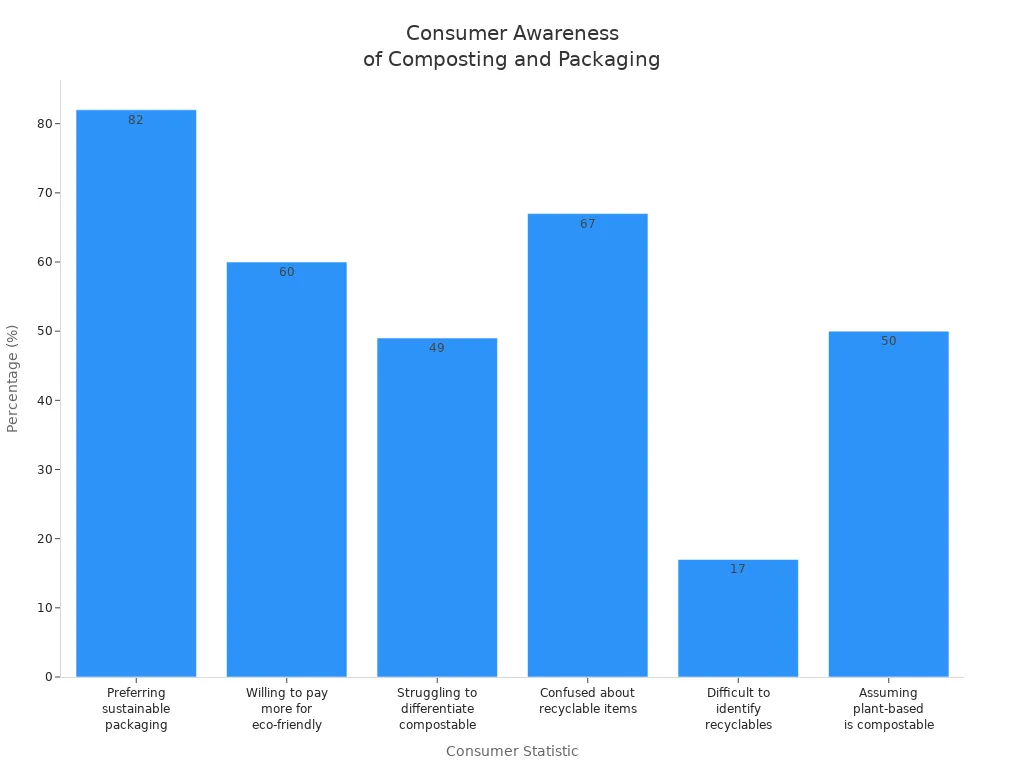
Most people like compostable packaging because it is better for the earth. Here is a table that shows what people think:
Statistic | Value |
|---|---|
Consumers preferring sustainable packaging | 82% |
U.S. consumers willing to pay more for eco-friendly options | 60% |
Consumers struggling to differentiate compostable and biodegradable | 49% |
Consumers confused about recyclable items | 67% |
Consumers incorrectly assuming plant-based packaging is compostable | 50% |
BN PACK Solutions
You can count on BN PACK for compostable packaging that fits your needs. BN PACK has many biodegradable and compostable products for food businesses. Here are some examples:
Type of Packaging | Description |
|---|---|
Bagasse Food Packaging | Made from sugarcane leftovers, keeps out grease and water, good for the earth. |
Dog Food Packaging | Keeps pet food fresh, breaks down on its own, sold as eco-friendly. |
Fast Food Packaging | Easy to throw away, breaks down in compost. |
Biodegradable Film | Keeps food fresh, stops plastic waste. |
Frozen Food Packaging | Handles cold, keeps food fresh without bad plastics. |
Paper Food Packaging | Works well and is green, compostable for many foods. |
Pet Food Packaging | Keeps food fresh, helps the earth, breaks down naturally. |
Biodegradable Plastic Packaging | Breaks down safely, works well and is better for nature. |
BN PACK uses compostable and biodegradable materials that meet world rules. You get packaging that helps your business and the earth. BN PACK knows how to make custom packaging, so you can find the right compostable products for any food use.
Choosing the Right Option
Decision Guide
You want to pick the best food packaging. First, check what your city does with waste. Some places have good composting. Others use recycling or landfills more. Your choice depends on what your area can handle.
Here is an easy guide to help you:
Find out if your city can compost or recycle packaging.
Think about your food. Does it need to stay fresh for a long time? Or do you want packaging that breaks down fast?
Think about the whole journey. How will the packaging travel, get stored, and break down?
Ask experts for help. Packaging suppliers know a lot about green choices.
Teach your customers. Give them simple steps to throw away the packaging the right way.
Your choice affects how your packaging helps the earth. Compostable packaging is best where composting is easy to find. Biodegradable packaging is good for places without much composting, but it still needs to break down safely.
Checklist
Use this checklist to see what works best for you:
Key Findings | Description |
|---|---|
Environmental Impact | Pick packaging that makes less waste and helps the earth. |
Waste Reduction | Choose options that lower food and packaging waste. |
Consumer Preferences | More people want green packaging for their food. |
Climate Awareness | Pick packaging that shows you care about the planet. |
BN PACK can help you at every step. You can get compostable materials for home or big composting places. BN PACK also has biodegradable packaging and special films to keep food safe. The team helps you design packaging that fits your needs. You get new ideas, strong partners, and clear ways to reach your green goals.
Tip: Always pick packaging that matches your local waste system and your product. BN PACK is ready to help you choose what is best for your business and the earth.
You have learned how biodegradable and compostable packaging are different. Compostable packaging breaks down quickly and does not leave anything bad behind. Biodegradable packaging can take more time and might leave some stuff in the soil. Picking the right kind of packaging is good for the earth and your business. More people want to use green packaging, and this number keeps going up.
Aspect | Compostable | Biodegradable |
|---|---|---|
Decomposition | Needs special conditions | Breaks down naturally |
Environmental Impact | No toxic residue | May leave toxins |
Regulation | Strict | Less strict |