
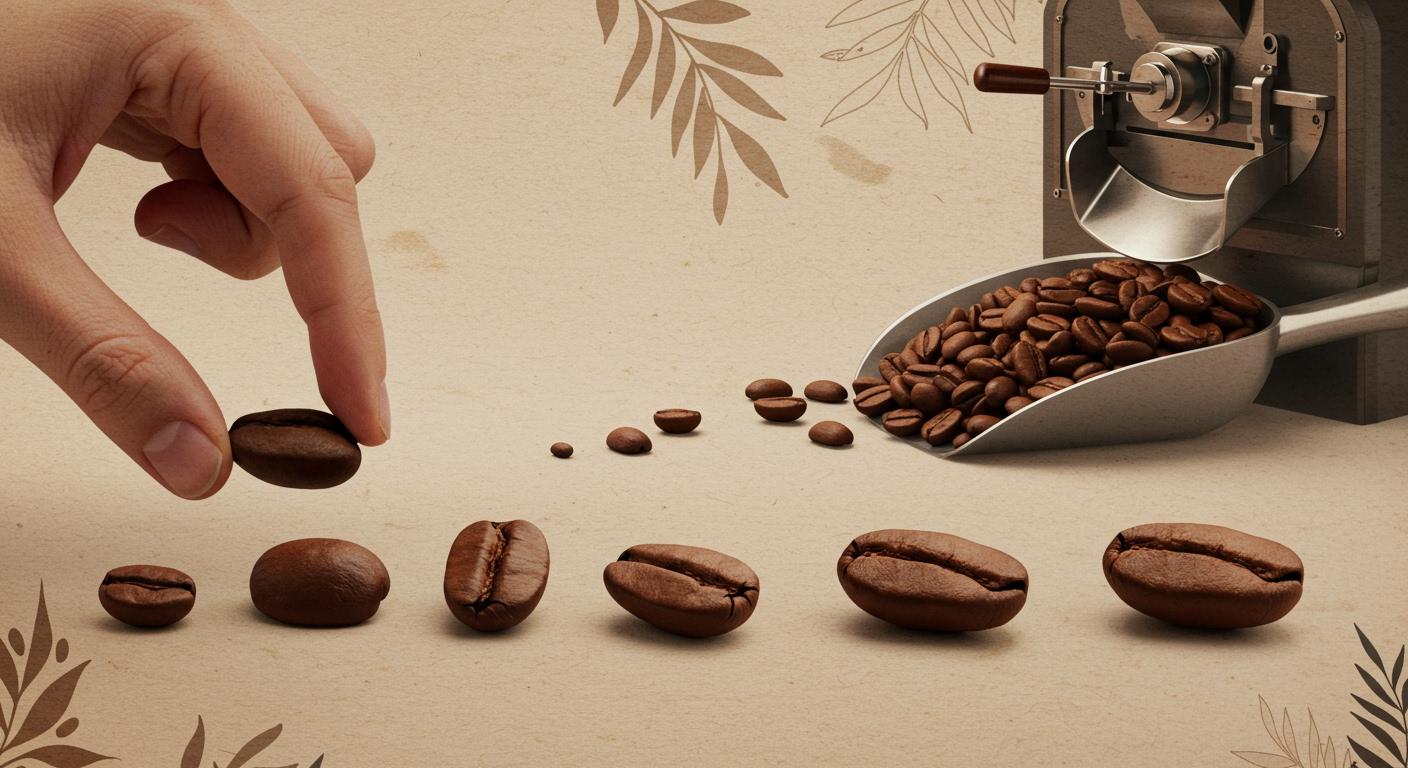
Selecting the right coffee bean sizes shapes the taste and consistency of your roast. Larger beans roast differently than smaller ones, affecting flavor and texture. Proper packaging plays a key role in keeping beans fresh. BN PACK coffee bags use multi-layer laminates and resealable zippers to lock in aroma and quality. The table below shows how packaging materials protect freshness:
Packaging Material | Barrier Properties | Freshness Retention Duration |
|---|---|---|
Multi-layer laminates | Aluminum foil, EVOH, metallized PET | Up to 18 months |
Foil-lined bags | Blocks oxygen, moisture, light | Varies |
Resealable pouches | Airtight seals | Extended freshness |
You can maximize flavor by choosing the right bean grade and packaging.
Why Size Matters
Roast Consistency
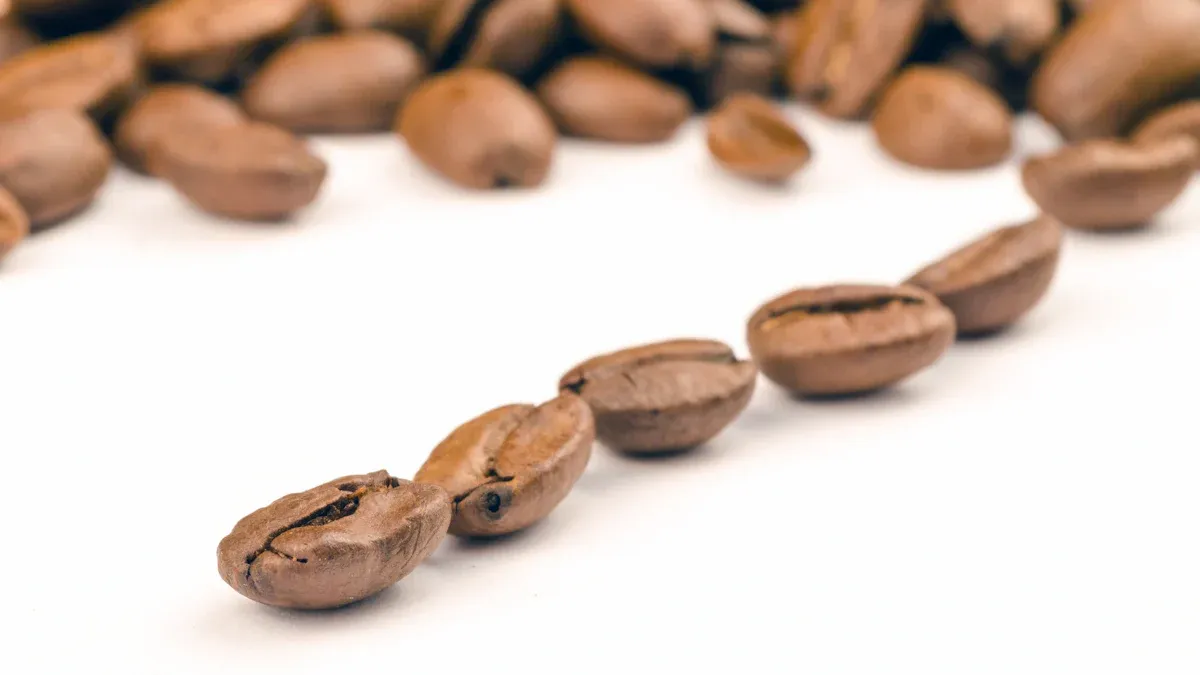
You want your coffee roast to be even and predictable. Coffee bean sizes play a big role in this process. When you roast beans of similar size, they absorb heat at the same rate. This helps you avoid burnt or under-roasted beans in your batch. If you mix large and small beans, the smaller ones roast faster and may taste bitter, while the larger ones might stay underdeveloped. Many professional roasters sort beans by size before roasting. This simple step gives you a more consistent flavor and color in every cup.
Tip: Use a screen or sieve to separate beans by size before roasting. This helps you control the roast and get better results.
Flavor Impact
Bean size affects how flavors develop during roasting. Larger beans often have more moisture inside. They need more time and heat to reach the right roast level. This slow process can bring out sweet and complex notes. Smaller beans roast quickly and may produce sharper, more intense flavors. You can experiment with different sizes to find the taste you like best. Some specialty coffees use only large beans for their unique flavor profiles.
Bean Size | Typical Flavor Notes | Roast Time |
|---|---|---|
Large | Sweet, complex, balanced | Longer |
Small | Bold, intense, sharp | Shorter |
Brewing Methods
The size of your coffee beans also matters when you brew your coffee. After roasting, you grind the beans. Smaller grind sizes increase the surface area that touches water. This boosts extraction efficiency and gives you a stronger cup. Coarser grinds, made from larger beans, reduce the contact area and slow down extraction. Studies show that smaller particles help you get more flavor out of your coffee. If you use a French press, you need a coarse grind. For espresso, you want a fine grind. Matching your grind size to your brewing method helps you get the best taste.
Coffee Bean Sizes and Grading
Screen Size System
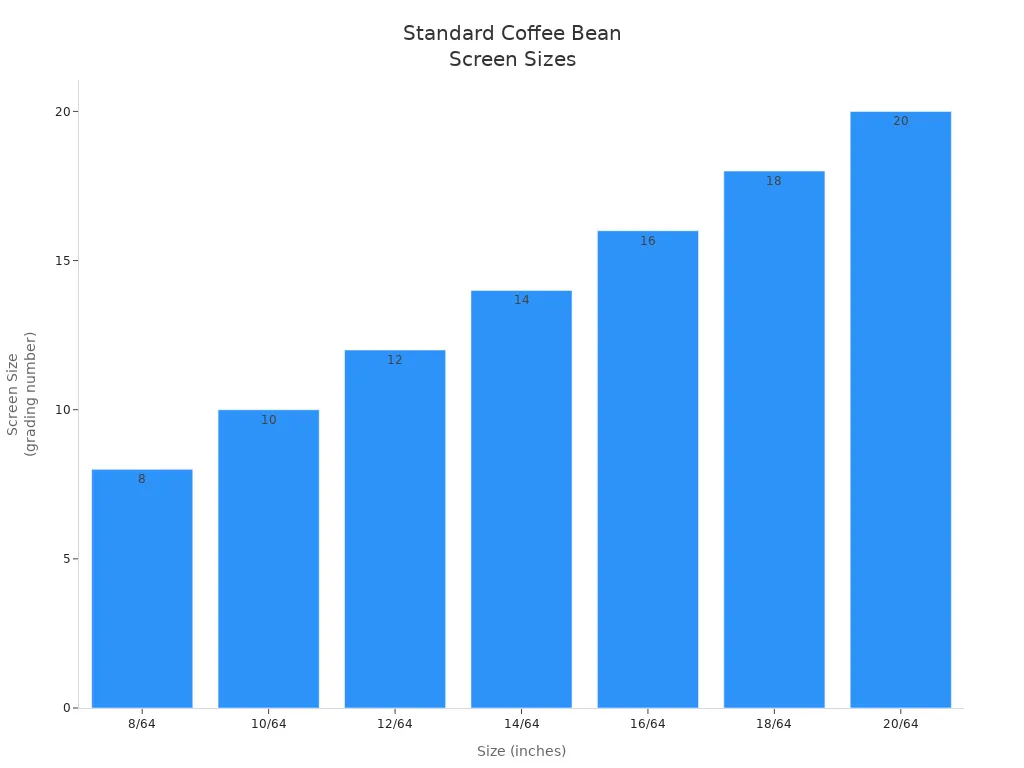
You can measure coffee bean sizes using a screen size system. This method uses metal screens with holes of different diameters. Each screen has a number that matches the width of its holes in 64ths of an inch. For example, a screen size 18 means the holes are 18/64 inch wide. You pour green coffee beans onto these screens. The beans pass through until they reach a screen where they cannot fit. That screen size becomes their grade.
Screen size matters in the coffee market. Larger beans often sell for higher prices. Roasters prefer uniform beans because they roast evenly and produce a consistent flavor. Kenya AA beans, for example, are larger and fetch premium prices compared to smaller grades like Kenya AB.
Screen Size | Size (inches) | Common Terms |
|---|---|---|
20 | 20/64 | Very Large |
18 | 18/64 | Large, Superior, Supremo, AA |
16 | 16/64 | Large, Segundas, Excelso, AB |
14 | 14/64 | Medium, Terceras |
12 | 12/64 | Small, Caracol |
10 | 10/64 | Shells, Caracolli |
8 | 8/64 | Shells, Caracolillo |
Note: Uniform screen size helps you achieve even roasting and better flavor in your cup.
Common Grades
Coffee grades help you understand the quality and size of beans from different regions. Each country uses its own grading system. Some grades focus on bean size, while others consider defects or altitude. You will see terms like AA, AB, Supremo, Excelso, and G1 on coffee bags. These grades guide you when choosing beans for your roast.
Grade | Size Range (mm) | Region |
|---|---|---|
G1 | 20 (8) | Ethiopia |
G2 | 19.5 (7.75) | Ethiopia |
Excelso | 17 (6.75) | Colombia |
Supremo | 18+ (7+) | Colombia |
Superior | 17+ | Central America |
AA | 20+ | Kenya |
AB | 16-15 | Kenya |
PB | N/A | Kenya |
T | N/A | Kenya |
You can see that AA and Supremo grades represent larger beans. Ethiopian G1 and G2 grades are the highest quality. Colombian Excelso and Supremo grades use bean size for marketing, not always for quality.
Industry Terms
You will encounter many industry terms when you shop for coffee beans. These terms help you compare coffee grades and understand what you are buying.
Ethiopian coffees use G1 to G5 grades. G1 and G2 are the best.
Colombian beans use Excelso and Supremo. These terms refer to bean size, not always to quality.
Central American coffees use Superior for the largest beans.
Kenyan beans use AA, AB, PB, and other codes. AA means the largest and highest quality beans. AB includes beans from screen sizes 16 and 15, making up about 30% of Kenya’s coffee production. PB stands for Peaberry, a unique bean that forms when only one seed grows inside the cherry.
You will also see altitude-based grades, such as SHG (Strictly High Grown) in El Salvador and SHB (Strictly Hard Bean) in Guatemala. These grades indicate where the coffee was grown, which can affect flavor.
Coffee bean sizes and grades matter for quality. Larger beans usually produce a better brew when other factors are equal. Specialty grade coffees score 80 points or higher on the Specialty Coffee Association scale. The Green Coffee Classification system also rates beans by size, defects, and processing.
Tip: When you select beans, look for clear grade labels and screen size information. This helps you match your roast to your brewing method and flavor preference.
Comparing Coffee Bean Sizes
Large vs. Small Beans
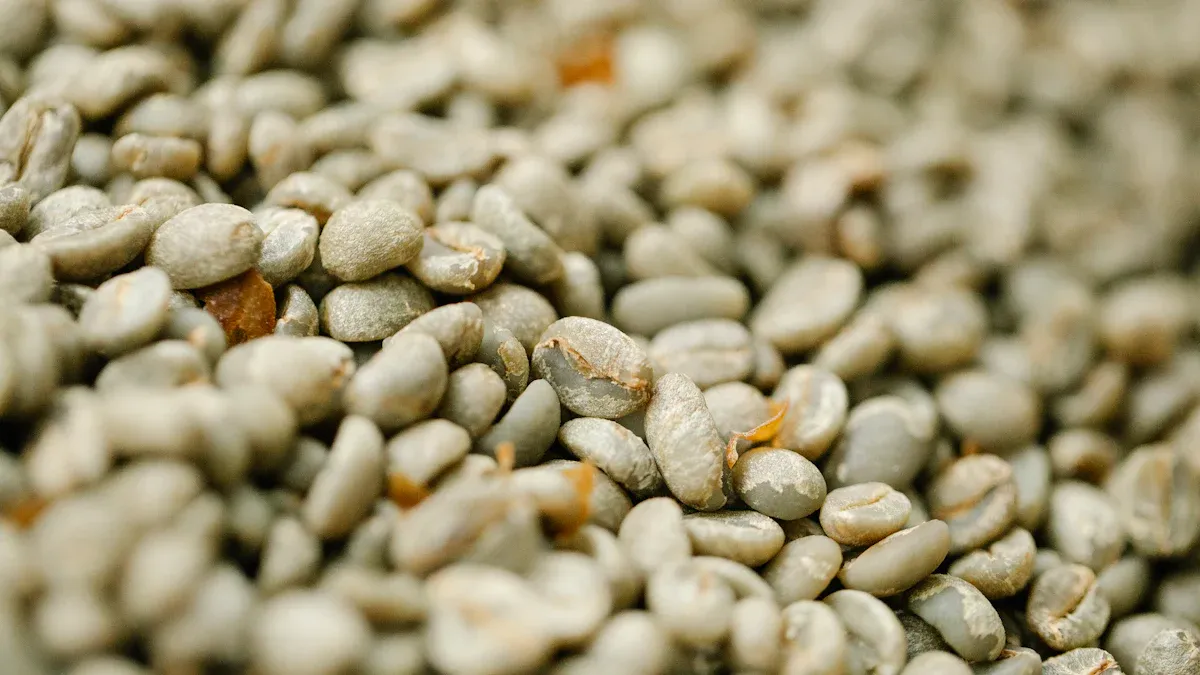
You notice differences in roasting when you compare large and small coffee beans. Large beans, such as those graded at 20/64 or 18/64 on the screen size scale, usually roast more slowly. This slow process allows flavors to develop fully. You get sweet and complex notes in your cup. Small beans, like those at 14/64 or below, roast faster. They often produce bold and sharp flavors. Roasters prefer uniform coffee sizes because even roasting leads to better taste. If you mix bean sizes, you risk uneven roasting and inconsistent flavor.
Tip: Sort your beans by screen size before roasting. This step helps you control the roast and flavor.
Size Chart
You can use a size chart to compare common coffee bean categories. The chart below shows how screen size relates to bean size and typical roast outcomes.
Screen Size (64ths inch) | Bean Category | Roast Impact |
|---|---|---|
20 | Very Large | Slow, sweet, complex |
18 | Large | Balanced, full-bodied |
16 | Medium | Versatile, consistent |
14 | Small | Fast, bold, intense |
12 and below | Shells/Peaberry | Unique, variable |
BN PACK coffee bags can be customized for any bean size. You choose bag sizes from small 8 oz pouches to large 5 lb options. Materials include foil, kraft paper, and biodegradable films. You select stand-up pouches or flat bags to match your shelf display needs.
Customization Aspect | Details |
|---|---|
Bag Sizes | Range from small 8 oz to larger 5 lb options |
Materials | Foil, kraft paper, biodegradable films |
Unique Shapes | Stand-up pouches, flat bags |
Quality Factors
Coffee experts agree that bean size influences several quality factors:
Larger beans often produce a better brew because they mature more fully.
Consistent bean size ensures even roasting and enhances flavor.
Bean size affects heat absorption during roasting, which shapes the final taste.
Uniform screen size helps you achieve a balanced flavor profile.
The initial size of the bean impacts grind consistency, which is important for brewing.
You improve your coffee’s quality by selecting beans with uniform screen size and using packaging that preserves freshness. BN PACK offers custom coffee bags that protect beans of all coffee sizes, helping you maintain quality from roast to brew.
Choosing the Right Size
Match to Roast Type
You should always consider your roast type when selecting coffee bean sizes. Light roasts often work best with larger beans. These beans have more moisture and density, which helps them develop sweet and complex flavors during a longer roast. Medium roasts can handle a mix of medium and large beans, giving you a balanced cup. For dark roasts, smaller beans may be suitable because they roast quickly and can handle higher temperatures without burning.
If you want a specialty grade coffee, choose beans that match your desired roast profile. Uniform bean size ensures even heat absorption. This leads to a consistent roast and better flavor in every batch. You avoid underdeveloped or burnt beans by keeping your batch size and bean size consistent.
Tip: Always sort your beans by size before roasting. This step helps you control the roast and achieve your preferred flavor.
Match to Brewing Method
Your brewing method also plays a big role in choosing the right coffee sizes. Each brewing style needs a specific grind size, which depends on the original bean size and density. Matching the right grind to your brewing method improves cup quality and taste.
Using the correct grind size prevents under-extraction, which can result in sour flavors.
The right grind size also prevents over-extraction, which can lead to bitter flavors.
Different brewing methods require specific grind sizes because water and coffee interact for different amounts of time.
High contact time methods, like cold brew, need coarser grinds.
Low contact time methods, like espresso, require finer grinds.
If you use a French press, you want a coarse grind from larger beans. For pour-over or drip coffee, a medium grind works well with medium-sized beans. Espresso machines need a fine grind, which you get from dense, uniform beans. Matching your bean size and grind to your brewing method helps you get the best flavor from every cup.
Selection Tips
When you select coffee beans, think about your roast and brewing preferences. Start by choosing beans with a uniform size. This step gives you more control over the roasting process and helps you achieve a consistent flavor. Look for clear labels that show screen size or grade. Specialty grade beans often have this information on the packaging.
BN PACK coffee bags make it easy to store and protect your beans, no matter the size. You can choose from a range of bag sizes, from small samplers to large bulk options. Resealable zippers keep your beans fresh after opening. One-way valves let freshly roasted beans release carbon dioxide while blocking oxygen. Eco-friendly materials support your sustainability goals and protect your coffee.
Feature | Description |
|---|---|
Bag Sizes | Choose from sampler to bulk, matching your storage needs. |
Resealable Zippers | Maintain freshness after each use. |
One-Way Valves | Allow CO₂ to escape, keeping beans fresh. |
Eco-Friendly Materials | Protect your coffee and the environment. |
Compact Design | Store and ship your coffee efficiently, saving space and cost. |
You should also consider how many bags fit in a box or on a pallet. Weight restrictions for shipping may affect your choice. A compact design helps reduce shipping costs and improves shelf efficiency.
Note: Selecting the right coffee bean sizes and using the right packaging ensures your coffee stays fresh and flavorful from roast to brew.
Packaging for Freshness
BN PACK Coffee Bags
You want your coffee to stay fresh from the moment it leaves the roaster until you brew it. BN PACK coffee bags help you achieve this goal. These bags use high-barrier materials like aluminum foil and multi-layer laminates. They block out oxygen, moisture, and light, which are the main causes of stale coffee. You can choose custom sizes to fit any batch, from small samples to large wholesale orders. This flexibility lets you match your packaging to your coffee sizes and business needs.
Note: Custom bag sizes help you store both small and large batches without wasting space or risking quality loss.
Features for Quality
BN PACK coffee bags include features that protect your beans and keep them tasting great. You get one-way degassing valves that let carbon dioxide escape while stopping oxygen from getting in. This keeps your coffee fresh and prevents the bag from swelling. Resealable zippers create an airtight seal, so you can open and close the bag many times without losing freshness. These features work together to lock in aroma and flavor.
One-way degassing valves release CO₂ but block oxygen.
Resealable zippers keep air and moisture out after each use.
Airtight seals prevent spills and protect against outside odors.
Laboratory tests show that packaging with one-way valves, nitrogen flushing, or vacuum sealing best preserves coffee quality. Here is a quick comparison:
Key Feature | Description |
|---|---|
One-way aluminum-lined valve bags | Allow gases to escape, block air entry, preserve freshness |
Pre-flushing with nitrogen | Removes oxygen, maintains freshness |
Vacuum removal of oxygen | Slows oxidation, keeps beans from going stale |
Eco-Friendly Options
You may want to choose packaging that is good for the environment. BN PACK offers kraft paper, recyclable, and compostable bags. Kraft paper bags block light well but need a foil lining to stop moisture. Recyclable mono-material bags are popular for bulk coffee, though they may not protect as well as foil against air and light. Compostable bags break down quickly, but tests show they may not keep coffee fresh for long periods. The coffee industry continues to look for sustainable options that balance freshness and environmental impact.
Tip: If you want both freshness and sustainability, look for bags that combine eco-friendly materials with high-barrier layers.
Tips for Home Roasters
Sourcing Beans
You want to start with high-quality beans. Look for suppliers who offer clear information about bean size, grade, and origin. Specialty coffee shops and online retailers often list these details. Choose beans with uniform size for easier roasting. Ask about recent harvests to get the freshest beans. You can try small sample packs before buying larger quantities. This helps you find the flavor profiles you enjoy most.
Tip: Always check for visible defects or uneven sizes. Uniform beans roast more evenly and taste better.
Adjusting Roast Profiles
You need to adjust your roasting approach based on bean size and density. Larger beans require longer roasting times at lower temperatures. This lets heat reach the center without burning the outside. Smaller beans roast faster and need less heat. High-density beans absorb heat quickly, so you can use higher temperatures for a shorter time. Low-density beans risk scorching, so keep the temperature lower.
Larger beans: Roast longer at lower temperatures.
Smaller beans: Roast quickly with less heat.
High-density beans: Use higher heat for shorter periods.
Low-density beans: Lower heat prevents burning.
Experiment with small batches to find your ideal roast profile. Keep notes on time, temperature, and bean size for each batch.
Troubleshooting
You may face challenges as a home roaster. Uneven roasting often comes from mixing bean sizes. Sort your beans before roasting to avoid this problem. If your coffee tastes bitter, you may have roasted small beans too long. If it tastes sour, large beans may need more time. Adjust your roast profile and try again.
Proper packaging keeps your beans fresh after roasting. BN PACK custom coffee bags offer features that help you preserve quality:
Feature | Benefit for Freshness |
|---|---|
High barrier properties | Protects coffee from oxygen, moisture, and light |
One-way degassing valves | Allows CO₂ to escape while preventing oxygen from entering |
Resealable closures | Enables repeated access while maintaining airtight seal |
You can choose bags with high barrier layers and one-way valves. These features maintain your coffee’s aroma and flavor. BN PACK provides custom sizes and eco-friendly options, making it easy for you to store and share your roasted beans.
Note: Good sourcing, careful roasting, and quality packaging help you achieve the best results at home.
Choosing the right coffee bean sizes helps you control flavor and consistency in every cup. You can keep beans fresh and aromatic with BN PACK coffee bags, which offer features like foil lining, biodegradable options, vacuum sealing, and one-way valves. Many customers report better sales and reduced waste after switching to BN PACK packaging.
Case Study Description | Outcome | Customer Feedback |
|---|---|---|
Los Angeles micro-roastery switched to BN’s bags | 25% increase in online sales | “premium feel” and “barista-ready aesthetics” |
Canadian zero-waste coffee chain used compostable bags | Reduced annual plastic waste by 12 metric tons | 86% chose the brand for its eco-packaging |
Melbourne cold brew brand introduced gradient-printed cans | Sold out in 72 hours | 68% cited packaging as primary purchase motivator |
Try different bean sizes and packaging styles to discover your ideal roast. You can explore custom coffee bag solutions at BN PACK for the best results.