
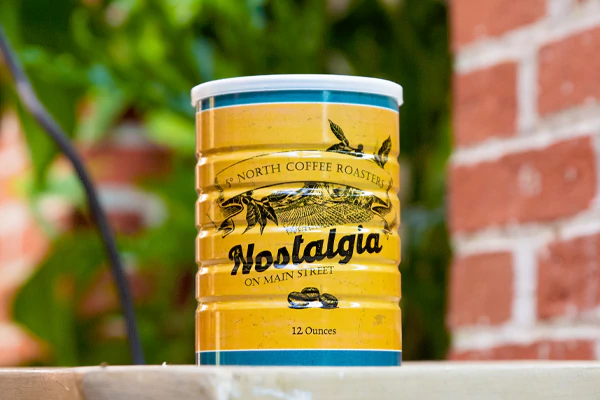
When you pick the right coffee can dimensions, your coffee stays fresh. It is also easier to store. The container size decides how much coffee you can keep. It also helps protect coffee from air and water. Many people use metal cans. You can also try flexible packaging. BN PACK coffee bags are one example. These options fit different storage needs and preferences.
Coffee Can Dimensions
Standard Sizes
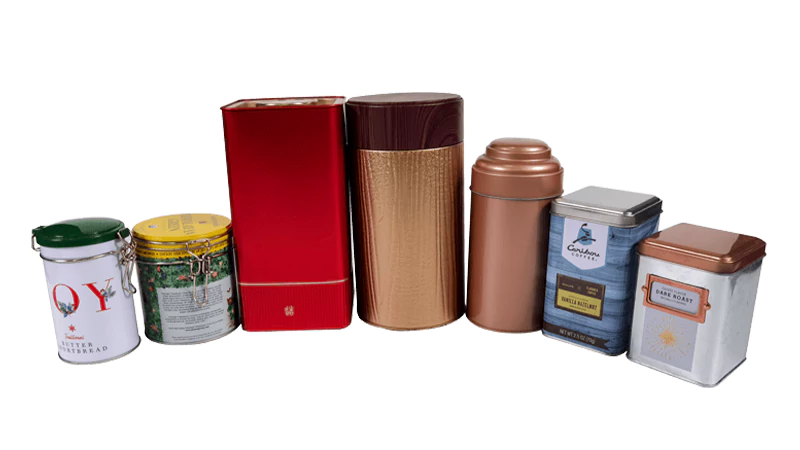
When you look at coffee can dimensions, you will notice that different sizes serve different needs. Some cans work best for home use, while others fit commercial settings. You often see brands like Folgers and Cornucopia Brands using these standard sizes. Here are some common options:
Size | Use |
|---|---|
4 oz | Ideal for samples or single-serve |
8 oz | Best for premium small-batch offerings |
12 oz | Most popular retail size |
1 lb | Popular among specialty coffee roasters |
2 lb | Common offering for wholesale retail |
5 lb | Great for wholesale and bulk sales |
You can choose a 4 oz can if you want to try a new roast. A 12 oz can fits most home kitchens. Cafes often use 1 lb or 2 lb cans. Wholesale buyers prefer the 5 lb size. These coffee can dimensions help you match your storage and serving needs.
Industry Codes
Manufacturers use codes to describe the dimensions of coffee cans. You might see a code like 307 x 409 on a label. This code tells you the diameter and height of the can. The first number shows the diameter in inches, and the second number shows the height in inches.
The first number in the code stands for the diameter.
The second number shows the height.
For example, a code of 303 x 406 means the can has a diameter of 3-3/16 inches and a height of 4-6/16 inches.
Here is a quick reference table for common codes:
Size Code | Diameter (inches) | Height (inches) |
|---|---|---|
307 x 409 | 3 7/16 | 4 9/16 |
303 x 406 | 3 3/16 | 4 6/16 |
You can use these codes to compare coffee can dimensions across brands. When you see a code, you know exactly what to expect for diameter x height.
Volume and Capacity
The volume of a coffee can depends on its diameter and height. A larger diameter gives you more space for coffee beans or grounds. A taller can increases the total capacity. You should think about how much coffee you use each week. If you drink coffee every day, a 12 oz or 1 lb can may work best. For large families or businesses, a 2 lb or 5 lb can offers more storage.
Tip: Always check the dimensions before you buy. The right size keeps your coffee fresh and fits your storage space.
Coffee can dimensions affect how much coffee you can store and how long it stays fresh. You can use the tables above to pick the best size for your needs.
Metal Tin Can Dimensions
Home Use
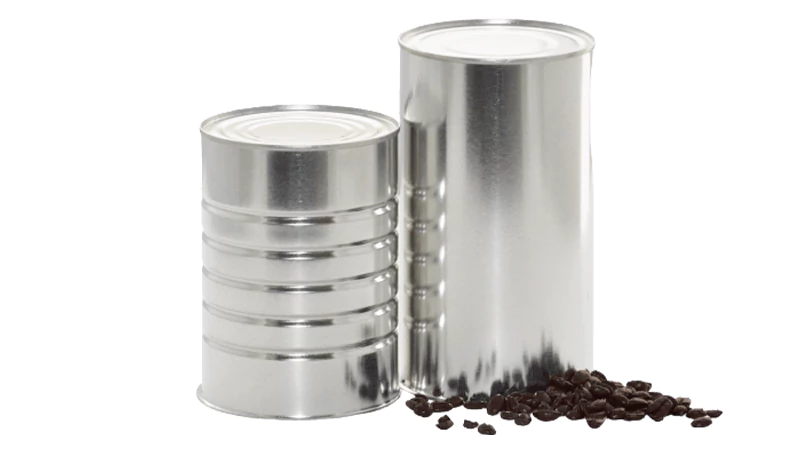
When you store coffee at home, you often use smaller cans. These cans fit well in kitchen cabinets and help keep coffee fresh. You can find several standard sizes. The table below shows common metal tin can dimensions for home coffee storage:
Can Size | Diameter (inches) | Height (inches) | Capacity (ounces) |
|---|---|---|---|
#1 | 3 1/8 | 4 1/8 | 11 |
#2 | 3 3/8 | 4 3/8 | 20 |
#3 | 3 7/16 | 5 1/4 | 32 |
#5 | 4 1/8 | 6 1/4 | 58 |
#10 | 6 3/16 | 7 3/8 | 110 |
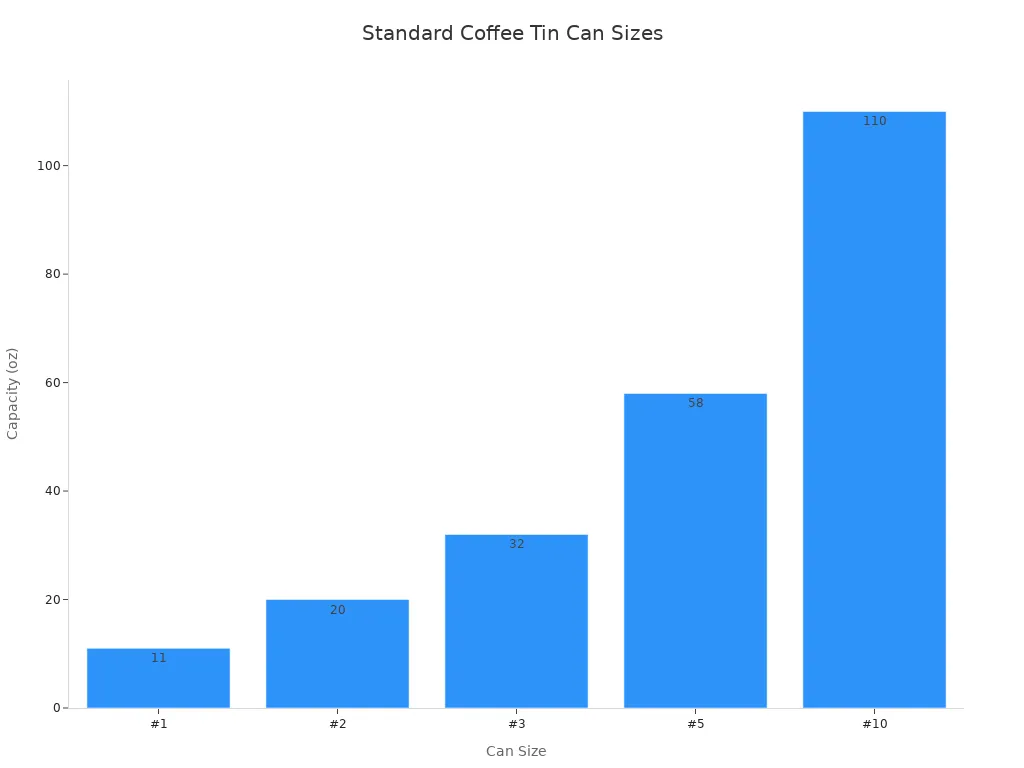
You can choose a smaller can for daily use or a larger one for bulk storage. Metal tins protect coffee from light and damage. They also help preserve the taste and aroma.
Commercial Use
Coffee shops and roasters need larger cans for bulk storage. These cans hold more coffee and support high-volume sales. The table below lists typical metal tin can dimensions for commercial applications:
Can Type | Diameter | Height | Minimum Order |
|---|---|---|---|
401 x 508 Stock | 4 1/16″ | 5 1/2″ | 1 pallet (968 cans) |
401 x 700 Stock | 4 1/16″ | 7″ | 1 pallet (726 cans) |
401 x 508 Custom | 4 1/16″ | 5 1/2″ | 10,000 cans |
401 x 700 Custom | 4 1/16″ | 7″ | 10,000 cans |
You see these cans in busy cafes and wholesale outlets. They offer strong protection against moisture, air, and sunlight. This helps keep coffee fresh for longer periods.
Metal tins have many advantages. They preserve color, taste, and odor. They resist damage and are recyclable. However, they can be heavy and costly to transport. Some cans may allow moisture or air to enter if not sealed well.
If you want more flexibility or eco-friendly options, you can try custom coffee bags from BN PACK. These bags come in many sizes and styles. They offer features like resealable zippers and degassing valves. You can choose materials that support sustainability goals. Many coffee shops use flat bottom bags, quad-seal bags, or kraft paper bags for bulk storage. These alternatives help you match your packaging to your needs.
Aluminum Can Dimensions
Material Benefits
Today, many people use aluminum cans for coffee. These cans keep coffee safe from light and air. This helps your coffee stay fresh longer. The seal on the can keeps out water and air. Your coffee keeps its taste and smell.
Aluminum cans are easy to recycle. You can recycle them many times. They do not lose quality when recycled. This is good for the environment. Aluminum cans are recycled more than plastic ones. They are lighter than glass cans. They also do not break easily. Aluminum cans are strong and simple to use.
Tip: Aluminum cans keep your coffee safe from light, air, and water. This helps you enjoy fresh coffee every time.
Industry Standards
There are a few common aluminum can sizes for coffee. These sizes work for single drinks or bigger servings. The table below shows the most used sizes:
Can Size (oz) | Volume (ml) | Common Uses |
|---|---|---|
8.4 | 250 | Ready-to-drink coffee, energy drinks |
12 | 355 | Standard coffee beverages |
16 | 473 | Cold brew, specialty drinks |
19.2 | 568 | Bulk or specialty coffee drinks |
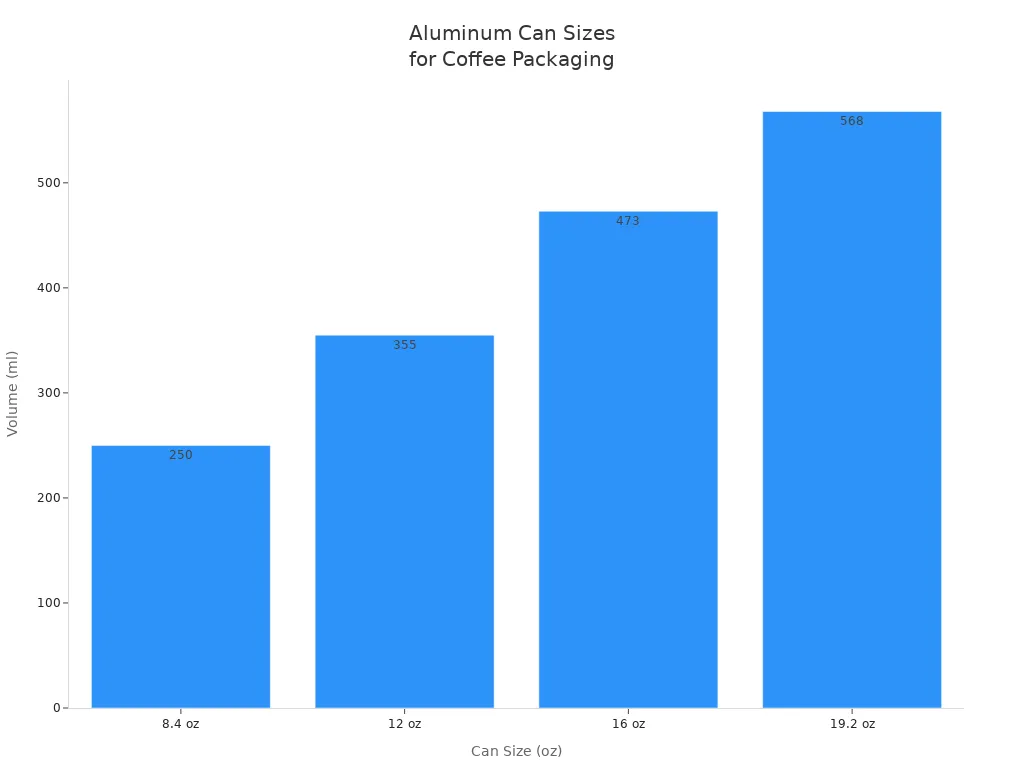
Standard aluminum can sizes help you pick the right one. For example, a 12-ounce can is about 66.1mm wide and 122.22mm tall. These numbers help you compare cans and choose the best size for your coffee.
Recyclability: You can recycle aluminum cans many times.
Durability: They keep coffee safe from light and air.
Aluminum cans are lighter than glass and do not break.
If you want a different or greener choice, try BN PACK’s custom coffee bags. These bags use strong materials and can be resealed. They also help the planet with recyclable and compostable options. You get packaging that fits your brand and helps the earth.
Choosing the Right Size
Factors to Consider
When you choose the right coffee can or bag size, you make sure your coffee stays fresh and easy to use. Here are some important factors to help you decide:
Evaluate Your Market: Think about who will use the coffee. Retail customers often prefer smaller bags, like 8 oz or 12 oz. Cafes and restaurants usually need larger sizes, such as 5 lb or 10 lb.
Know Your Production Quantity: Match the bag size to how much coffee you roast at one time. Small batches work best with smaller bags to keep the coffee fresh. Large roasters can use bigger bags.
Branding and Presentation: Larger, custom-printed bags can make your brand stand out. Attractive packaging helps your coffee look high-end.
Customer Convenience: Consider how often your customers drink coffee. Daily drinkers may want smaller bags, while bulk buyers save money with larger sizes.
Storage and Shipping: Large bags take up more space and cost more to ship. Smaller bags are easier to store and may encourage more frequent purchases.
Tip: Always match your packaging size to your customers’ habits and your business goals.
Matching Needs
You need to pick packaging that keeps your coffee fresh and supports your brand. Packaging protects coffee from oxygen, moisture, and light. Airtight seals stop oxidation and keep the flavor strong. Opaque materials block UV light, which helps preserve taste and aroma.
BN PACK coffee bags use Mylar or vacuum-sealed materials. These bags create an airtight space that slows down oxidation. They protect coffee from air, water, light, and heat. This keeps the aroma and flavor at their best.
Traditional cans do not always offer the same level of protection. Coffee in cans may lose quality faster.
Flexible packaging, like BN PACK coffee bags, offers more benefits:
They extend shelf life and lock in flavor.
They are easy to carry and store.
They use less material, which helps the environment.
You can choose many designs to make your brand unique.
They lower shipping and storage costs.
Choosing the right size and type of packaging helps you deliver fresh, flavorful coffee and build a strong brand.
Quick Reference Chart

Coffee Can Sizes
You may find it helpful to see all the main coffee packaging sizes in one place. This can dimension conversion chart gives you a quick look at the most common options for home and commercial use. You can compare metal tins, aluminum cans, and flexible packaging side by side.
Type | Common Sizes | Typical Capacity (oz) | Diameter (in) | Height (in) | Notes |
|---|---|---|---|---|---|
Metal Tin Can | #1, #2, #3, #5, #10 | 11, 20, 32, 58, 110 | 3.1–6.2 | 4.1–7.4 | Durable, classic storage |
Aluminum Can | 8.4, 12, 16, 19.2 | 8.4, 12, 16, 19.2 | 2.6–2.7 | 4.8–6.7 | Lightweight, recyclable |
Flexible Packaging* | Customizable | 1–320+ | Any | Any | Fully custom, lightweight |
*Flexible packaging from BN PACK lets you choose any size or shape you need. You can match your packaging to your brand and your storage needs.
You can use this can dimension conversion chart to quickly compare your options and pick the best fit for your coffee.
Comparison Table
You want to know how each packaging type stacks up in cost, sustainability, and shelf life. This table shows you the main differences:
Material | Cost per 1,000 Units | Recyclable? | Compostable? | Shelf Life | Custom Sizes? |
|---|---|---|---|---|---|
Foil-Lined Can | $120–$150 | No | No | Long | No |
Kraft Paper / PLA Bag | $180–$220 | No | Yes | Medium | Yes |
$140–$180 | Yes | No | Long | Yes | |
BPI Compostable Film Bag | $200–$250 | No | Yes | Short | Yes |
Metal Tin Can | Varies (High) | Yes | No | Long | Limited |
Aluminum Can | Varies (High) | Yes | No | Long | Limited |
BN PACK Flexible Bag | $120–$250 | Yes/No | Yes/No | Long/Med | Yes |
Flexible packaging options from BN PACK give you full control over size and design. You can order bags for single servings or bulk storage. You get more space for your logo and product details.
Traditional coffee cans are heavier and cost more to ship. They protect your coffee well but do not offer as much flexibility in size or branding.
You can use this can dimension conversion chart to make smart choices for your coffee business or home use.
You now know why coffee can dimensions are important. The right packaging keeps your coffee fresh. You can pick packaging for home or business use. Packaging protects coffee from air, light, and water. You can use metal cans, aluminum cans, or flexible packaging. Each type has its own benefits. The size of packaging changes how much coffee you store. It also affects how fresh your coffee stays.
You can choose packaging that fits your brand and customers. BN PACK offers many packaging choices. You can get custom packaging for small or big amounts. Good packaging design makes your coffee stand out. You can pick packaging that helps the environment. Resealable packaging keeps coffee fresh for longer. You can find packaging that is simple to use and store. Packaging can help you save on shipping costs. You can look at the quick reference chart to compare packaging. You can talk to BN PACK for custom packaging that works for you.