
Mass-Produced Commodity Coffee
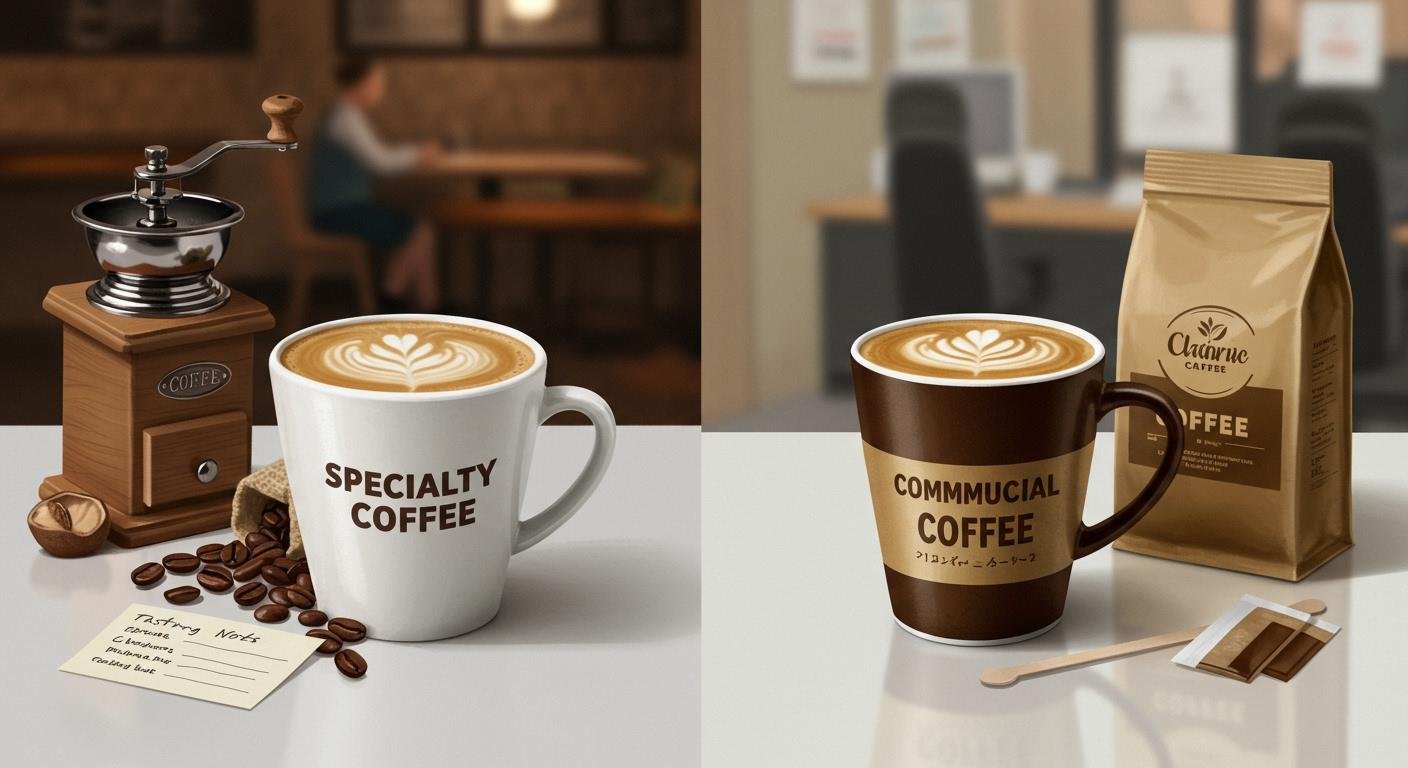
When I look at the great debate of specialty coffee vs commercial coffee, I always start by examining the baseline. Commercial coffee is mass-produced commodity coffee designed for one primary goal: scale. It prioritizes high yields, brand consistency, and a highly extended shelf life over showcasing unique regional flavors.
Sourcing and Harvesting Methods
In the commercial coffee sector, efficiency dictates the workflow.
- Mechanized Picking: Rather than hand-selecting ripe fruit, large operations rely on mechanized coffee cherry harvesting methods. Machines strip the branches entirely, collecting ripe, under-ripe, and over-ripe cherries all at once.
- Bean Selection: To keep profit margins wide, these blends heavily rely on high-yield, disease-resistant Robusta beans or lower-grade Arabica. When looking at Arabica vs Robusta beans in this tier, the focus is strictly on caffeine punch and cost-efficiency.
The Mass Roasting Process
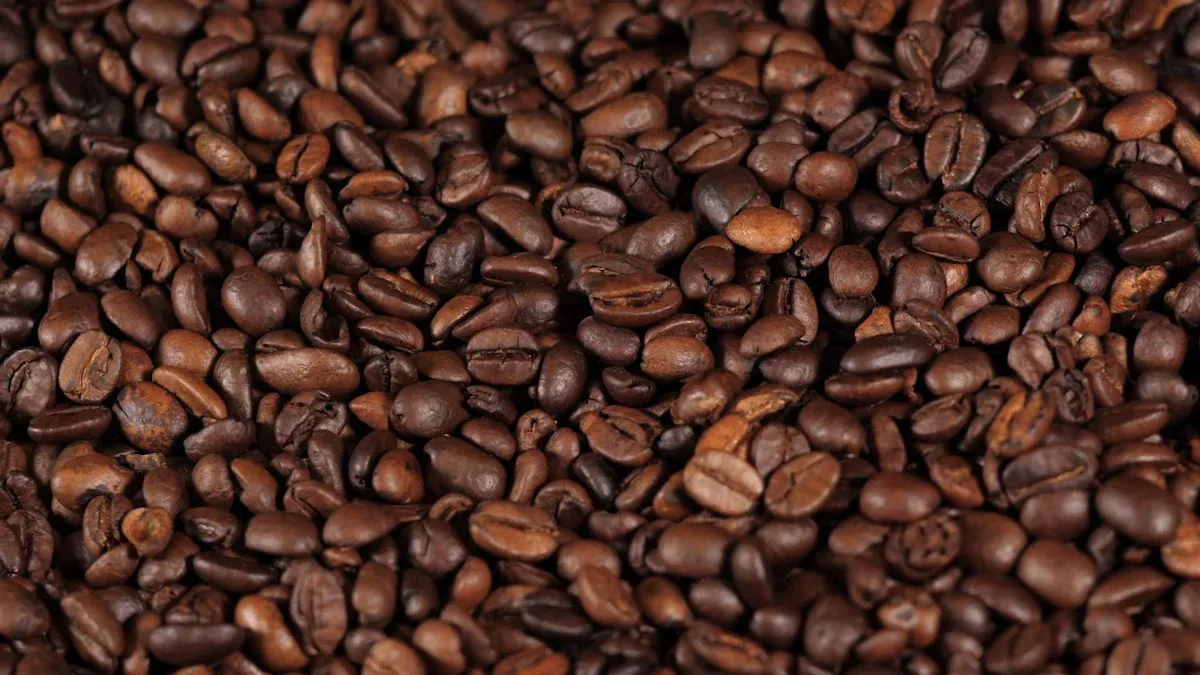
To hide the severe inconsistencies of bulk harvesting, large-scale facilities use aggressive mass-roasting techniques. These beans are intentionally pushed to a very dark roast. This heavy roasting process acts as an equalizer, masking natural defects and creating a uniform, often bitter, and flat flavor profile that consumers have historically recognized as simply “coffee.”
Pros and Cons of Commercial Coffee
- The Upside: Unbeatable accessibility, affordability, and sheer convenience. It is engineered to sit on a supermarket shelf for months and still brew a reliable, familiar cup.
- The Downside: A complete lack of supply chain traceability, harsh bitterness, and a monotonous flavor profile that completely strips away the bean’s natural terroir.
What is Specialty Coffee?
Specialty coffee represents the highest tier of coffee production, heavily driven by the third wave coffee movement. It prioritizes uncompromising quality, supply chain transparency, and complex flavors at every single step of the process.
The SCA Standard
To be officially recognized as specialty grade, the coffee is evaluated on a strict 100-point scale by certified Q Graders. According to the Specialty Coffee Association (SCA) grading system, beans must score 80 points or above. Any bean scoring below this threshold simply does not make the cut.
Sourcing and Harvesting Methods
Quality starts directly at the farm level. Instead of relying on mass machine harvesting, specialty coffee cherry harvesting methods require skilled workers to hand-pick only the fully ripe cherries.
- Traceability: There is a heavy emphasis on single-origin coffee beans and micro-lots to showcase specific regional characteristics.
- Ethics: Direct trade coffee sourcing and fair trade coffee farming practices ensure that farmers are compensated fairly for their labor-intensive, premium crops.
The Art of Small-Batch Roasting
Unlike mass-produced commodities, artisan coffee roasters treat roasting as a precise craft. Small-batch coffee roasting is customized for each specific lot to highlight its unique terroir. Instead of a uniform, dark, and bitter taste, the roasting process aims to extract a complex coffee flavor profile and tasting notes—ranging from bright florals and vibrant berries to rich chocolate and toasted nuts.
Specialty Coffee Pros & Cons
- Pros: Unmatched, superior taste; ethical sourcing; and strong environmental consciousness.
- Cons: Higher retail price points and a strictly limited window for peak freshness. Because protecting these delicate, expensive beans is critical, roasters must carefully plan how to design a coffee bag using high-barrier materials to lock in the intricate flavors and extend shelf life.
The Core Differences: A Head-to-Head Comparison
When examining specialty coffee vs commercial coffee, the differences go far beyond the price tag. The distinction comes down to how the beans are grown, sourced, roasted, and consumed. Here is exactly how they stack up against each other.
Bean Quality and Species
The foundation of your morning cup is the bean itself. In the Arabica vs Robusta beans debate, specialty coffee almost exclusively uses high-altitude Arabica, which is prized for its complex acidity and natural sweetness. Commercial brands typically rely on cheaper, mass-produced Robusta or lower-grade Arabica blends to maximize crop yield and keep costs low.
Supply Chain Transparency
Traceability is a non-negotiable standard in the modern market. Specialty coffee champions direct trade coffee sourcing, meaning roasters and buyers build relationships directly with producers. Working closely with a coffee farmer in the fields ensures fair compensation and better farming practices. Commercial coffee, on the other hand, operates on an anonymous commodity market where beans are traded purely as a bulk cash crop.
Flavor Complexity
When you brew single-origin coffee beans, you expect a dynamic coffee flavor profile and tasting notes ranging from bright citrus and floral jasmine to deep chocolate. Specialty roasters craft their profiles to highlight the bean’s natural terroir. Commercial coffee aims for strict uniformity across millions of batches, often over-roasting beans to mask inherent defects, which results in a flat, bitter, or burnt taste.
Freshness and Preservation
Coffee bean freshness and shelf life are handled completely differently across the two markets. Specialty grade coffee beans are treated like fresh produce. They demand precise brewing methods and are meant to be consumed shortly after their roast date to capture peak flavors. Commercial coffee prioritizes convenience, aggressively mass-packing grounds so they can sit on grocery store shelves for months or even years.
Specialty vs Commercial Coffee at a Glance
| Feature | Specialty Coffee | Commercial Coffee |
|---|---|---|
| Bean Type | 100% High-altitude Arabica | Robusta or Arabica/Robusta blends |
| Sourcing | Direct trade, highly traceable origins | Anonymous bulk commodity trading |
| Flavor Profile | Complex, distinct natural tasting notes | Uniform, flat, often dark and bitter |
| Freshness Focus | Consumed immediately after roasting | Mass-packed for extended shelf life |
The Crucial Role of Packaging in Coffee Quality
When comparing specialty coffee vs commercial coffee, packaging is often the silent deciding factor. Specialty grade coffee beans carry delicate, nuanced flavor profiles that degrade quickly after roasting. Unlike mass-produced commodity coffee, where flavor loss is less noticeable, the complex tasting notes of a single-origin roast require strict preservation to guarantee the perfect cup.
The Four Enemies of Coffee
To maintain artisan quality, we have to actively protect the beans from environmental factors. The primary enemies that quickly destroy coffee bean freshness and shelf life are:
- Oxygen: Causes rapid staling and oxidizes the natural oils.
- Moisture: Alters the bean structure and can lead to mold.
- Light: UV rays break down the chemical compounds that create flavor.
- Heat: Accelerates the degassing process, flattening the coffee flavor profile.
High-Barrier Packaging Solutions
This is where high-barrier coffee packaging becomes essential. We rely on specialized pouches designed to lock in flavor and keep the elements out. Premium packaging utilizes one-way degassing valve bags to safely release the carbon dioxide built up during small-batch coffee roasting, without letting oxygen sneak back in. Paired with resealable airtight zippers, these high-barrier layers ensure intricate flavors remain intact long after the bag is opened. If you are looking to maximize shelf life, understanding how long vacuum-packed coffee lasts highlights just how vital these protective barriers really are.
Sustainable Options for Artisan Roasters
For the eco-conscious third wave coffee movement, sustainability is non-negotiable. Artisan coffee roasters are increasingly moving toward environmentally friendly materials that do not compromise on freshness. Utilizing biodegradable or compostable structures, such as rice paper coffee bags, provides a smart balance. It delivers the necessary barrier protection to preserve delicate tasting notes while aligning perfectly with the ethical values of direct trade coffee sourcing and fair trade farming.
Which One is Right for You? Specialty Coffee vs Commercial Coffee
When deciding between specialty coffee vs commercial coffee, the right choice ultimately comes down to your daily routine, budget, and business goals. In my experience, understanding the end user is the most critical step.
For the Everyday Consumer
If you are brewing at home, your choice hinges on three main factors:
- Budget Considerations: Mass-produced commodity coffee is undeniably cheaper. If you just need a quick morning caffeine fix without breaking the bank, commercial brands are readily accessible. Specialty grade coffee beans cost more due to fair trade practices and higher farming standards.
- Brewing Equipment: Intricate coffee flavor profiles and tasting notes demand precise extraction. If you own a high-quality burr grinder, a gooseneck kettle, and a pour-over setup, specialty coffee will shine. If you use a standard automatic drip machine with a built-in blade grinder, you might not fully capture the nuanced acidity and sweetness of single-origin coffee beans.
- Taste Preferences: If you enjoy bold, traditional, and often bitter flavors (frequently found in Arabica vs Robusta beans blends), commercial coffee works perfectly. If you crave floral, fruity, or tea-like notes, you need specialty beans.
For Coffee Shops and Roasters
For businesses navigating the third wave coffee movement, serving specialty coffee is about creating an experience that justifies a premium price.
- Building a Brand: Artisan coffee roasters rely on supply chain transparency and distinct flavor profiles to stand out. Customers are increasingly willing to pay higher prices for ethically sourced, small-batch roasts.
- Attracting Loyal Customers: Coffee enthusiasts look for freshness. Emphasizing roast dates and specific farm origins builds a dedicated customer base that values quality over convenience.
- Premium Packaging on a Budget: You have to protect the freshness of these expensive beans. High-barrier packaging with one-way degassing valves is non-negotiable. Fortunately, scaling your brand doesn’t mean you have to overspend on bags. Utilizing high-quality yet affordable coffee pouch options allows you to protect delicate tasting notes, maintain your profit margins, and present a premium look on the retail shelf.
FAQs About Specialty vs Commercial Coffee
When comparing specialty coffee vs commercial coffee, a few common questions always come up. Here are the straight answers to help you navigate your next coffee purchase.
Is specialty coffee always organic?
Not necessarily. While many artisan coffee roasters and farmers prioritize sustainable, chemical-free practices, the “specialty” label strictly refers to the Specialty Coffee Association (SCA) grading score (80 points or higher). A coffee can be specialty grade without carrying an official organic certification, which is often too expensive for small-scale farmers to obtain.
Does commercial coffee have more caffeine?
Yes, it often does. Mass-produced commodity coffee relies heavily on Robusta beans because they are harder, easier to grow, and produce higher yields. Robusta beans naturally contain almost double the caffeine of the high-altitude Arabica beans predominantly used in specialty coffee.
Why is specialty coffee more expensive?
You are paying for the extensive labor and supply chain transparency required to produce a superior cup. Specialty grade coffee beans require hand-picking only the ripest coffee cherries, fair trade coffee farming compensation, small-batch coffee roasting, and premium packaging to maintain coffee bean freshness and shelf life.
Can you really taste the difference without being an expert?
Absolutely. You don’t need a highly trained palate to notice the difference. Commercial coffee is usually dark roasted to hide defects, resulting in a flat, bitter, or burnt taste. In contrast, a specialty coffee flavor profile features natural sweetness, balanced acidity, and clear tasting notes like chocolate, berries, or jasmine.