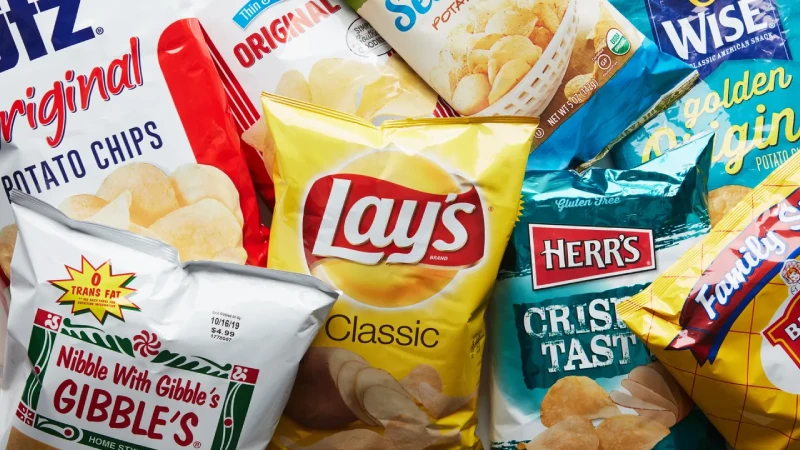
You may ask what chip bags are made of. Most chip bags use plastics, aluminum, and metallized films. These materials are put together in layers. The layers help keep chips fresh. They also protect chips from moisture and light. The table below explains how each layer protects your snack:
Layer Type | Material Used | Function |
|---|---|---|
Inner Layers | Metallized Films or Aluminum Foil, PE, PP | Block oxygen, light, moisture; seal and stop grease |
Middle Layers | BOPP, Adhesive Layers | Add strength and keep the shape |
Outer Layer | Polyester (PET) | Allow bright printing and brand designs |
BN PACK uses these strong multi-layer structures. They give safe and flexible packaging for snacks.
Chip Bags Materials Breakdown
Plastics in Chip Bags
When you see a chip bag, it is not just shiny. The bag is made with smart layers. These layers use different plastics to keep snacks fresh. The main plastics in chip bags are PET, BOPP, LDPE, and nylon. Each plastic has its own job.
PET makes the bag strong. It also lets colors and pictures show up well.
BOPP helps stop water from getting in. It also keeps the bag cheap to make.
Metalized PET or BOPP blocks air and light from reaching the chips.
LDPE seals the bag shut. It also keeps water out.
Nylon makes the bag tough. It is hard to poke holes in it.
All these plastics are put together in layers. Each layer does something special. Here is a table that shows what each layer does:
Layer | Material | Function |
|---|---|---|
Outer | PET (12 microns) | Good for printing and stops holes |
Middle | Metallized OPP (20 microns) | Blocks air, water, and light |
Inner | PE or CPP (40-60 microns) | Seals the bag and stops grease |
These plastics help keep chips safe from air, water, and grease. This is why your chips stay crunchy and tasty.
Aluminum and Metallized Films
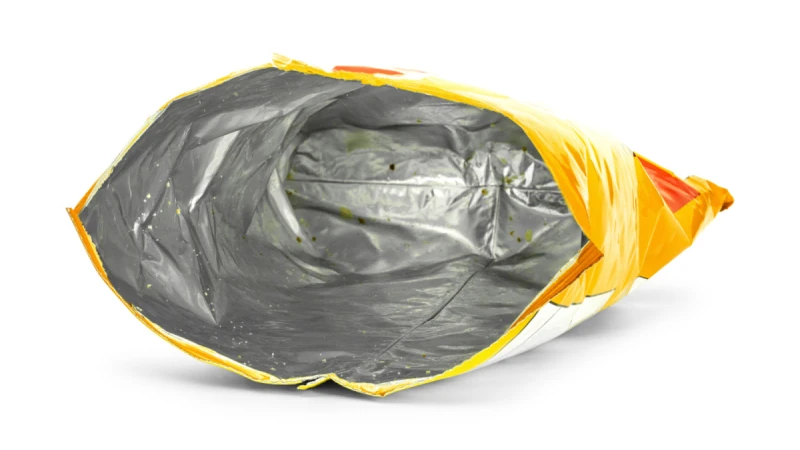
The inside of a chip bag looks shiny and silver. This shine comes from aluminum or metallized films. These materials help keep chips fresh.
Aluminum and metallized films block light, air, and water. This keeps chips fresh for a long time.
They make the bag stronger. The bag does not tear easily.
The shiny look makes the bag look fancy. It also helps the bag stand out in stores.
Metallized films use less aluminum than foil. They cost less but still protect the chips.
Metallized PET films bend more and do not tear as easily as foil. They are lighter and do not rust. Pure aluminum foil is heavier and wrinkles fast. Most chip bags use metallized films. These films protect chips better and save money.
Here is a table that compares metallized films and pure aluminum:
Feature | Metallized Films | Pure Aluminum |
|---|---|---|
Oxygen and Moisture Resistance | Very good | Good |
Weight | Very light | Heavy |
Flexibility | Bends easily | Not very bendy |
Tear and Puncture Resistance | Hard to tear | Tears easier |
Aesthetics | Shiny and bright | Not shiny |
Recyclability | Easier to recycle | Harder to recycle |
Cost Efficiency | Saves money | Costs more |
Chip bags look nice, last longer, and keep snacks safe.
Multi-Layer Packaging Structure
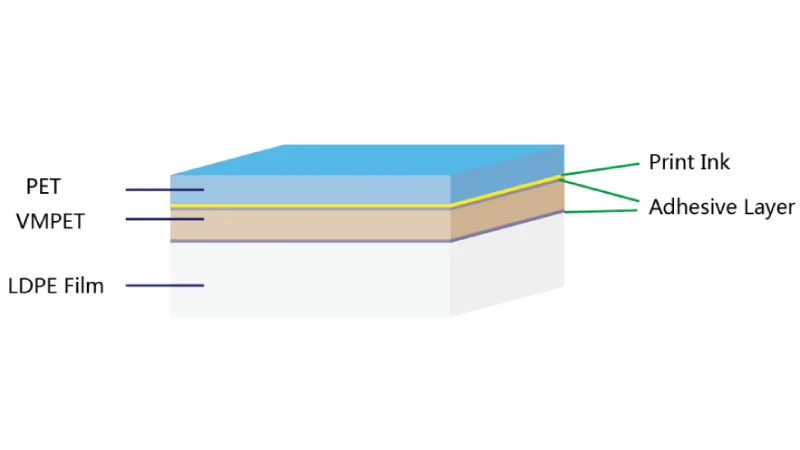
Chip bags have many layers to protect your chips. Each layer does something important. The outside layer is strong and blocks light. The middle layer stops air from getting in. The inside layer seals the bag and keeps grease in.
Here is a table that shows what each layer does:
Layer | Purpose |
|---|---|
Outer layer | Makes the bag strong and blocks light and damage |
Middle layer | Stops air from getting in and spoiling chips |
Inner layer | Touches the food and seals the bag shut |
Chip bags often use nitrogen gas. This gas pushes out the air inside the bag. Air can make chips go stale. Nitrogen keeps chips crunchy for weeks. Your chips taste fresh every time you open the bag.
Multi-layer packaging uses different materials to block water, air, and light. You can trust chip bags to keep your snacks safe and yummy.
Tip: When you open a chip bag, look for the layers. Each one helps keep your chips fresh and crunchy.
Why Chip Bags Are Made of These Materials
Freshness and Barrier Protection
You want your chips to taste good and stay crunchy. The bag uses special layers to help with this. These layers block air, water, and light. This keeps chips fresh for a long time. Each layer does something important for your snack:
Layer | Material | Purpose |
|---|---|---|
Outer layer | Printed PET | Makes the bag look nice and keeps printing safe |
Middle layer | Aluminum foil | Stops air, light, and water from getting in |
Inner layer | Polyethylene | Seals the bag and keeps oil inside |
Strong materials help chips stay fresh and safe. Chips need protection from water and air. If air gets in, chips get soft. If water gets in, chips get wet. Chip bags use special films to stop this. These films keep air and water out. Experts test how well the bag works. They use WVTR and OTR tests. These tests show if the bag keeps chips fresh.
Durability and Shelf Appeal
You want a chip bag that does not rip or break. Makers test chip bags to make sure they are strong. Burst testing fills the bag with air until it pops. This checks how strong the seal is. Creep testing pushes on the seal for a long time. This checks if the seal stays tight.
Test Type | Description |
|---|---|
Burst Testing | Fills the bag with air until it pops. Checks how much air the bag can hold. |
Creep Testing | Pushes on the seal for a set time. Checks if the seal stays strong. |
Chip bags also need to look cool in stores. Shiny film makes the bag sparkle and protects chips. Bright colors and fun designs catch your eye. A cool bag makes you want to buy the chips.
Tip: Shiny bags and bright pictures help chips stand out in stores.
Branding and Customization
You see chip bags with fun pictures and smart features. Brands use cool graphics, easy zippers, and clear spots. These things show what the brand is like. The table shows how these features help brands:
Customization Aspect | Impact on Branding |
|---|---|
Personalized Graphics | Makes the bag look cool and easy to spot in stores. |
Functional Customizations | Helps brands give you what you want and work better. |
Smart Features Integration | Adds extra value for you and the brand. |
Sustainability Elements | Shows the brand cares about the planet and attracts shoppers who care. |
Custom chip bags help brands talk to you. They catch your eye and make you want to buy again. Pictures and colors matter more than the bag’s material. When you see a bright chip bag, you get excited to try the chips inside.
BN PACK’s Expertise in Chip Bag Packaging
Rolls Film Packaging Solutions
You want chip bags that keep snacks fresh. You also want bags that look good in stores. BN PACK is a leader in flexible packaging for chips and snacks. Their rolls film packaging uses many layers to protect chips. These layers keep out moisture, oxygen, and light. You can pick the size you need. Small packs start at 80mm. You can also get big packs. The film uses strong materials like OPP, CPP, PET, PE, PP, nylon, aluminum, and metallized PET. All these layers work together. They help keep chips crunchy and safe.
Multi-layer barriers stop oxygen, moisture, UV rays, and smells.
Digital and flexographic printing make bright, clear designs.
You can add zippers, tear notches, windows, round corners, valves, and spouts.
This packaging keeps chips fresh. It also helps your brand stand out.
Customization and Eco-Friendly Options
You want packaging that matches your brand. You also want packaging that helps the planet. BN PACK lets you customize your chip bags. You can choose the size, shape, graphics, and materials. Pick what fits your product and style.
Customization Aspect | Description |
|---|---|
Size | Made for your needs |
Shape | Many shapes to pick from |
Graphics | Custom branding and designs |
Materials | Choose for function and looks |
BN PACK offers eco-friendly packaging choices. You can pick plant-based materials, bio-based plastics, or compostable options. These choices help cut down on waste. They also support green packaging goals.
Material Type | Environmental Benefits |
|---|---|
Plantcell™ materials | Renewable, home compostable, supports sustainability |
Made from corn or sugarcane, promotes sustainable resources | |
Compostable materials | Biodegradable, reduces environmental impact |
Choosing these options helps the planet.
Quality and Safety Standards
You want packaging that is safe and high quality. BN PACK has over 10 years of experience. The factory has 45 machines for fast production. They keep a dust-free workshop for food safety. BN PACK follows strict rules. They have FDA, SGS, and ISO certifications. The company uses solvent-free lamination and GMP practices. These steps protect your snacks.
Quality and Safety Standards | Description |
|---|---|
Experience | Over 10 years in flexible packaging |
Machinery | 45 machines for quick production |
Cleanliness | Dust-free workshop for food safety |
Certifications | FDA, SGS, ISO |
Lamination | Solvent-free for food safety |
Production Practices | GMP and dust-free workshop |
BN PACK uses food-grade, BRC-certified materials. They follow global safety standards. Your chips are protected from moisture, oxygen, and germs. This packaging works for snacks, frozen foods, pet treats, and health products.
Tip: BN PACK gives you packaging that is safe, keeps food fresh, and helps the environment.
Environmental Impact of Potato Chip Bags
Recyclability Challenges
You may think chip bags are easy to recycle, but they are not. Most chip bags use different materials like plastics and metallized films. Recycling centers have trouble separating these layers. This makes recycling slow and costs more money. Food crumbs inside the bags also cause problems. Most local recycling programs do not take chip bags. You can see this in the table below:
Accepted Items | Not Accepted Items |
|---|---|
Plastic shopping bags | Chip or snack bags |
Bread and cereal bags | Salad bags |
Cling and bubble wrap | Pet food bags |
Freezer, garbage, and produce bags | Boxes or cartons |
Products with many materials need special machines to separate them. This process is expensive and takes a long time. That is why most chip bags end up in landfills.
Biodegradable and Recyclable Packaging Options
There are new choices for better packaging. Some brands now use recyclable and biodegradable bags. The British Crisp Co. uses a paper bag with Hydropol coating. This material is compostable, recyclable, and safe for the earth. Two Farmers has a compostable bag made from eucalyptus. It breaks down in less than a year in compost bins. Tyrrells uses bags with 25% recycled plastic. These changes help cut down on waste and support sustainability.
Biodegradable bags break down much faster than regular packaging. They can decompose in months or a few years. Regular plastic bags can take hundreds of years to disappear. Compostable bags need special waste management and composting places to work best.
Consumer Tips for Disposal and Reuse
You can help the planet by making smart choices. Always check if your local recycling program takes chip bags. Most do not, so look for drop-off spots or special recycling programs. If you buy chips in recyclable or compostable bags, follow the disposal instructions. You can reuse chip bags for crafts, storage, or as lunch bags. Small steps like these help recycling and sustainability.
Tip: Pick snacks in recyclable or biodegradable packaging when you shop. You help the earth and encourage brands to use better materials.
You notice chip bags use plastics, aluminum, and metallized films. These materials help keep snacks fresh and safe. BN PACK makes packaging that protects food and helps the planet. You can help by picking bags with less material. Learn how to throw away bags the right way. Try to reuse chip bags when you can.
Resealable packaging keeps snacks fresh and cuts down on waste.
Some brands make chip bags from plant-based or recycled stuff.
Learning about recycling helps the earth.
Check out BN PACK’s flexible packaging to find what works best for your products.