Imagine you launch a new snack, but consumers start questioning if your packaging materials could impact food safety. The risk of ink migration remains a top concern for brands and shoppers, since even a small contamination can harm both health and reputation. See what matters most:
Concern | Description |
|---|---|
Regulatory Compliance | Low migration inks help meet strict regulations, ensuring packaging does not transfer harmful substances to food. |
Consumer Safety | These inks minimize health risks by reducing the chance of harmful substances leaching into food products. |
Product Integrity | Prevents contamination that could affect the quality and taste of food or beverages. |
You need Food Safety First in every ink selection. BN PACK stands with you, delivering trusted solutions that protect your products and your brand.
Food Safety First: UV Ink Risks
UV Inks in Food Packaging
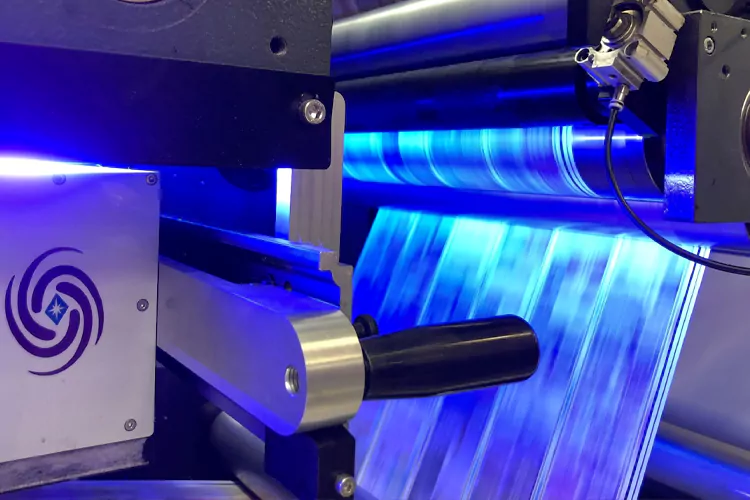
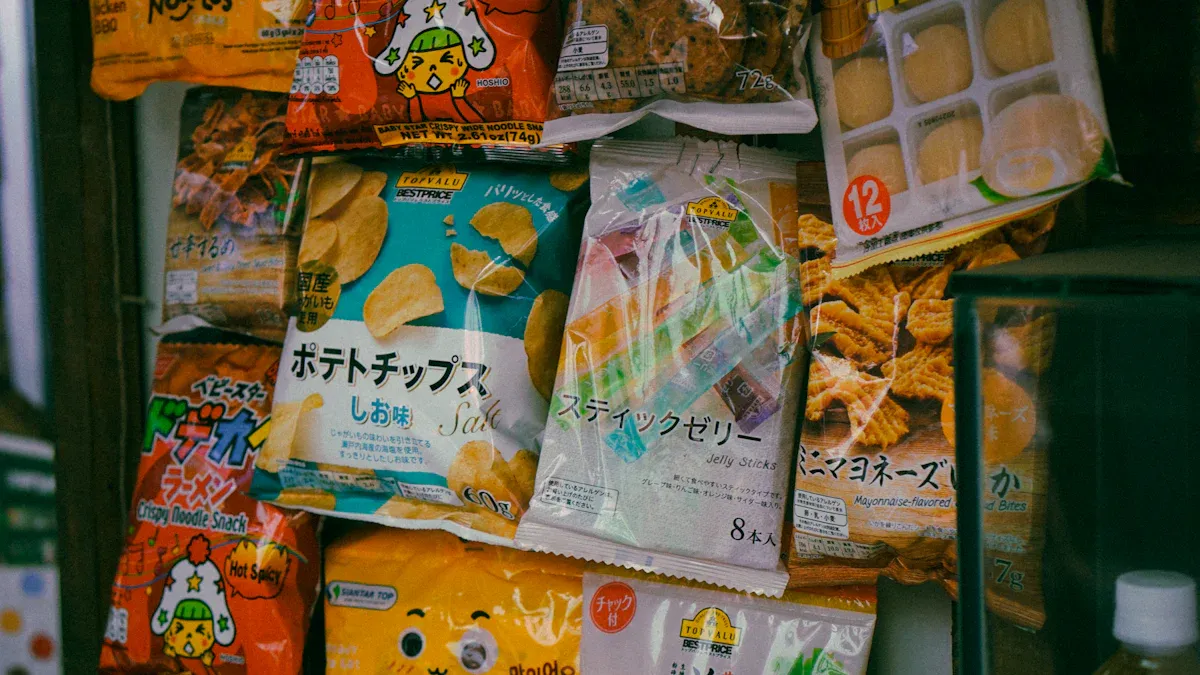
You rely on packaging to protect your products and reassure your customers. UV inks have become popular in food packaging because they cure quickly and offer vibrant colors. However, you must understand what goes into these inks and how they interact with food. UV inks contain acrylates, monomers, photoinitiators, and pigments. These components help create durable, attractive packaging, but they also introduce food safety first concerns.
UV inks use photoinitiators that start a chemical reaction when exposed to UV light. This process forms a solid ink layer, but not all chemicals react completely. Residual substances can remain in the ink.
Studies have shown that these substances can migrate into food, especially in acidic or fatty environments. For example, Castle L. et al. (1997) and Shen D. et al. (2009) identified residues of UV-cure ink photoinitiators in food packaging and even in milk.
Some UV inks may contain heavy metals like lead and cadmium, which can accumulate in the body and pose health concerns.
You must consider food safety first when selecting inks for your packaging. The FDA and other regulatory bodies require strict controls to limit the migration of these substances.
Ink Migration and Contamination
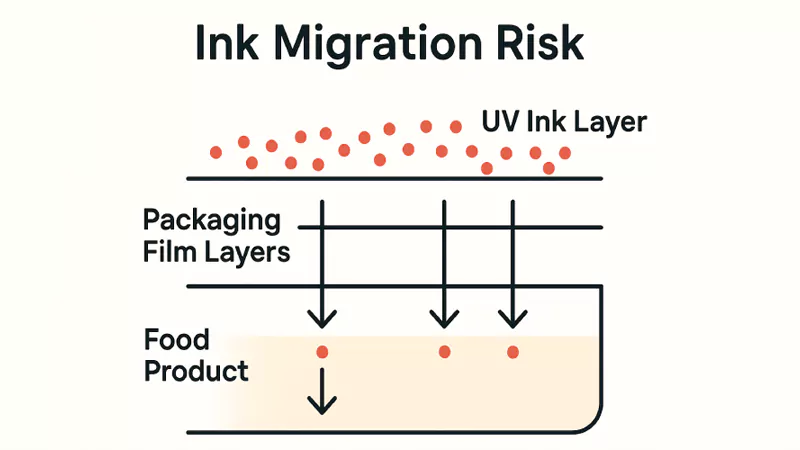
Ink migration risks are a top priority for any brand that values food safety first. Migration occurs when chemicals from the ink move from the packaging into the food. This process depends on several factors, including storage temperature, the type of food, and the packaging material.
Many cases of UV curing ink components have been reported in foodstuffs. Migration often happens through set-off, where ink transfers from the printed side to the food-contact side during stacking or storage.
The Rapid Alert System for Food and Feed (RASFF) has documented numerous incidents of photoinitiators migrating from packaging into food. Migration rates increase with higher temperatures and lower food pH.
In one study, 17 different migrants were found in food due to set-off from multilayer packaging materials. Adding lacquers reduced the number of migrants, but new ones appeared due to reactions between ink and lacquer.
Study Focus | Findings |
|---|---|
Set-off of non-volatile compounds from inks | 17 migrants found in migration from multilayer material due to set-off. |
Effect of lacquers | Number of migrants decreased with lacquer, but new migrants appeared. |
Material Types | Migration studied from multilayer materials like ink/PET/aluminum/PE. |
You must address food safety first by choosing inks and packaging materials that minimize migration. The FDA enforces strict limits on substances that can migrate into food, and non-compliance can result in penalties.
Consumer and Brand Impact
When you put food safety first, you protect both your customers and your brand. Ink migration risks can lead to serious health concerns for consumers. Dr. Wolfgang Bäumler, a dermatology professor, stated:
“Substances such as phthalates and also the PAHs should increase the health risk for chronic health problems such as cancer. However, the extent is unknown, because epidemiological studies are missing.”
Even though the full impact is not always clear, you cannot ignore the potential risks. Incidents of ink contamination have already caused major problems in the food industry. For example, Nestlé had to recall 30 million liters of baby milk due to ink migration. This event led to massive financial losses and damaged consumer trust.
In 2023, 88% of paper and board food contact materials showed migration of at least one harmful chemical. This widespread issue can undermine confidence in food safety and your brand’s reputation. Regulatory bodies like the FDA require you to follow strict standards. Failure to comply can result in penalties and further harm to your brand image.
You must prioritize food safety first in every decision about food packaging. By doing so, you protect your customers, maintain consumer safety, and safeguard your brand’s future.
Food Safety Compliant Inks
Safe Inks for Food Packaging
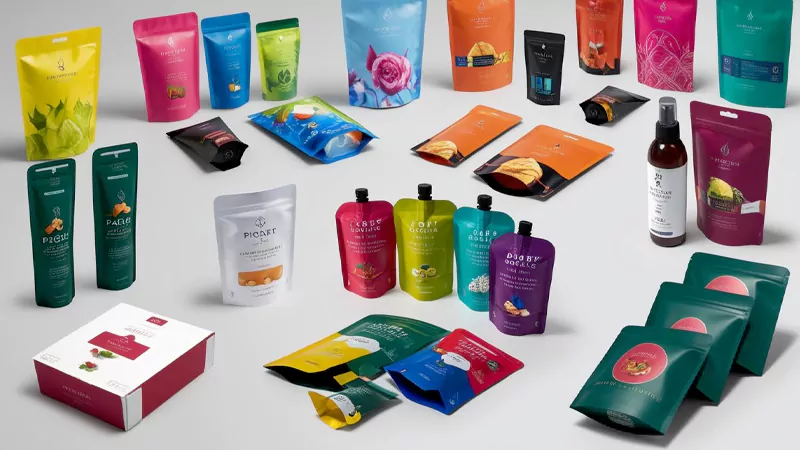
You must choose safe inks when designing food packaging. These inks protect your products and your customers. Food safety compliant inks use non-toxic and stable ingredients. They do not contain substances that can cause cancer, birth defects, or genetic mutations. You need to avoid inks with harmful chemicals, as even small amounts can migrate into food and create risks.
Safe inks help you maintain the integrity of your food products.
They prevent contamination and support high safety standards.
Food-grade inks must pass strict tests before you can use them in food packaging.
You should always select inks that meet recognized safety standards and have a proven record of performance.
By using food safety compliant inks, you show your commitment to consumer health and regulatory compliance.
Low Migration UV Inks
UV curable inks have become popular for their fast curing and vibrant colors. However, not all UV curable inks are suitable for food packaging. Standard UV curable inks can leave behind unreacted chemicals that may migrate into food. You need to use low migration UV curable inks to reduce this risk.
Low migration UV curable inks use special raw materials that limit the movement of chemicals.
These inks rely on high-molecular-weight photoinitiators and advanced curing systems.
They are formulated to comply with FDA and EU food contact regulations.
Low migration UV curable inks help you prevent changes in food taste and quality.
Water-based inks also offer low migration levels and are easier to use within strict safety standards. When you select low migration UV curable inks, you protect your brand and meet the expectations of both regulators and consumers.
Regulatory Standards
You must follow strict regulation when selecting food safety compliant inks for food packaging. In the United States, the FDA regulates food contact substances under Title 21 of the Code of Federal Regulations (21 CFR). The FDA requires that inks do not negatively impact food safety. In the European Union, Regulation (EU) 10/2011 sets migration limits for materials in contact with food. China enforces GB 9685-2016, which covers additives in food-contact materials.
Regulation | Description |
|---|---|
EU (EU) 10/2011 | Regulation on plastic materials and articles intended for food contact, including ink migration limits. |
U.S. FDA 21 CFR | Safety requirements for food-contact substances. |
China GB 9685-2016 | Standards for the use of additives in food-contact materials and articles. |
Other important safety standards include:
(EC) No 1935/2004: Framework regulation for materials in contact with food.
GB 4806.1-2016: General safety requirements for food-contact materials.
QB/T 2952-2008: Food packaging ink standards.
Certifications play a key role in proving compliance. You should look for suppliers with recognized certifications. BN PACK holds ISO certification, BRC Global Standard for Food Safety, EU EVOH PE Food Grade Certificate, and FDA certification. These achievements show BN PACK’s commitment to meeting international safety standards and delivering food safety compliant inks.
Tip: Always verify that your packaging supplier meets all relevant safety standards and holds up-to-date certifications. This step helps you avoid costly recalls and protects your brand reputation.
Choosing Safe Inks with BN PACK
Criteria for Food Safety
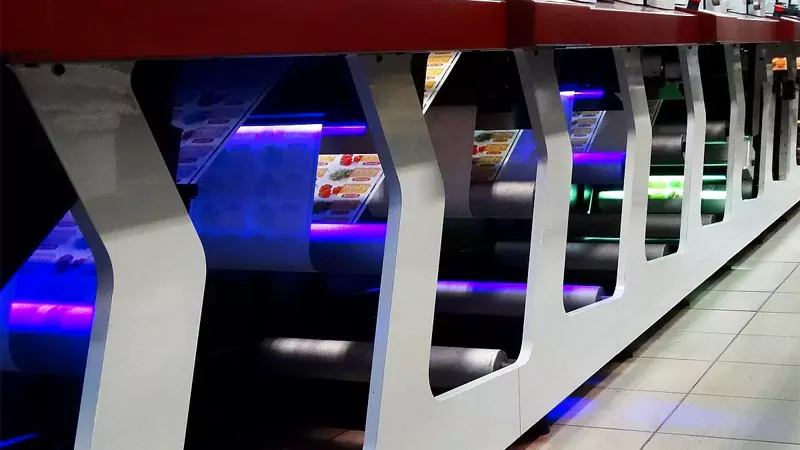
You need to evaluate several factors when selecting inks for food packaging. The right choice protects your products and your customers. Use the following table to guide your decision:
Criteria | Description |
|---|---|
Substrate Compatibility | The ink must adhere effectively to the packaging material, whether plastic, glass, or paper. |
Color and Dry Time | The ink should be vibrant and dry quickly to ensure production efficiency and legibility. |
Moisture Resistance | Inks must withstand moisture to maintain adhesion and legibility for products stored in damp areas. |
Durability and Versatility | Inks should retain their imprint throughout the product’s lifecycle, enduring various conditions. |
Safety Standards and Compliance | Compliance with regulations from bodies like the FDA and EU to ensure safe ink components and migration limits. |
You should also check for compliance with FDA, Health Canada, and Swiss regulations. These standards help you avoid risks and ensure food safety.
BN PACK’s Food Packaging Solutions
BN PACK brings over two decades of expertise to food packaging. You benefit from a wide range of packaging materials, including plastic pouches, paper, and foil options. Our solutions use water based inks, which offer excellent adhesion and vibrant colors. Water based inks also reduce environmental impact and support your sustainability goals.
You can choose from stand-up pouches, flat-bottom bags, and side gusset bags. Each option uses water based inks to prevent contamination and maintain product integrity. Our printing techniques include flexographic and digital printing, both designed for food-safe results. Water based inks not only protect your food but also lower environmental risks by minimizing harmful emissions.
BN PACK follows strict quality control. We use only FDA-approved materials and water based inks. Our team checks every batch to prevent labeling errors and ensure compliance with food safety standards.
Working with Trusted Suppliers
You need a reliable partner to maintain high standards in food packaging. BN PACK supports you with a transparent process and proven quality. Follow these steps to verify your supplier’s safety and compliance:
Define inspection criteria for seal integrity, label accuracy, and material safety.
Select samples for inspection based on production volume and past defect rates.
Examine packaging for visual and structural defects.
Test packaging functionality and performance.
Isolate and label defective packaging to prevent distribution.
Record findings and categorize defects for future improvements.
Implement corrective actions to address root causes.
Working with BN PACK also helps you reduce environmental impact. Our biodegradable packaging materials and water based inks support your environmental goals. You protect your brand, your customers, and the planet by choosing a trusted supplier.
Comparing UV Inks and Alternatives
UV Inks vs. Other Inks
You face many choices when selecting inks for food packaging. UV inks and water-based inks stand out as the most common options. Each type has a unique chemical makeup and performance profile.
Component | UV Inks | Other Inks (e.g., Water-based) |
|---|---|---|
Main Components | Monomers, oligomers, pigments, photoinitiators | Water, resins, pigments |
Curing Method | UV light-induced polymerization | Evaporation of water |
Drying Speed | Instantaneous (0.1 – 5 seconds) | Slower due to evaporation |
UV inks cure rapidly, which boosts production efficiency. You get high hardness, abrasion resistance, and vivid colors with a glossy finish. Water-based inks, on the other hand, offer a softer look and are more environmentally friendly because they use water as a base. Both ink types have low VOC emissions, but UV inks stand out for their fast curing and compatibility with recyclable materials.
Note: UV inks do not emit volatile organic compounds during curing, which helps reduce environmental impact.
Pros and Cons for Food Packaging
When you compare UV inks and alternatives, you must weigh their strengths and weaknesses.
Advantages of UV Inks:
Food safety compliance: Low migration UV inks minimize ink transfer into food.
Versatility: You can print directly on many packaging materials.
Cost-effectiveness: Short setup times and low waste rates reduce costs.
Reliability: UV inks maintain quality at high speeds.
Environmental benefits: LED-UV systems use less energy and lower emissions.
Advantages of Water-Based Inks:
Water-based inks are more eco-friendly due to their water base.
They work well for brands focused on sustainability.
Considerations and Risks:
UV inks can migrate into food if not fully cured, especially if photoinitiators remain mobile.
Operators must use protective gear to avoid skin or eye irritation.
Switching to low migration inks may require upfront investment in new technology, but you can achieve long-term savings through improved efficiency.
You need to choose the right ink based on your product, regulatory needs, and brand values. Both UV and water-based inks can deliver safe, high-quality results when you follow best practices and partner with a trusted supplier.
You must put food safety at the center of every packaging decision. Recent regulatory updates demand greater oversight and expanded toxicological reviews, making regulatory compliance more important than ever. Many brands overlook food-grade inks or use materials that risk contamination.
Review your current processes, check for accurate labeling, and ensure your packaging meets FDA standards.
Choose a trusted partner like BN PACK to protect your brand and deliver safe, high-quality food packaging solutions.