
A growing number of consumers now seek coffee bag materials that deliver both sustainability and freshness. The coffee packaging market has responded with new eco-friendly solutions, such as recyclable mono-materials and compostable films, reflecting a shift toward products that align with environmental values. These materials protect coffee from moisture, oxygen, and light, which helps maintain quality and flavor. Brands like BN PACK lead this movement by offering advanced packaging that supports both the environment and coffee quality.
Why Sustainability and Freshness Matter
Environmental Concerns
Sustainable coffee packaging plays a key role in reducing the environmental impact of the coffee industry. Traditional coffee bags often use mixed materials like plastic, aluminum, and paper, which complicate recycling and increase waste. Many of these bags end up in landfills, where they can take hundreds of years to decompose. The table below highlights the main environmental impacts of conventional coffee bag materials:
Environmental Impact | Description |
|---|---|
Carbon Footprint | Traditional coffee bags contribute 3-5% of the total carbon emissions in coffee production. |
Energy Consumption | High energy is required to produce the packaging materials, increasing their carbon footprint. |
Recycling Challenges | Coffee bags are often made from mixed materials, complicating recycling. |
Resource Depletion | Production of packaging materials consumes significant natural resources. |
Waste Accumulation | Non-biodegradable bags accumulate in landfills and can take hundreds of years to decompose. |
Packaging material choice affects the carbon footprint in several ways:
Different materials have varying production emissions and recyclability.
Bioplastics like PLA usually have a smaller carbon footprint than PET, but PET is easier to recycle.
Manufacturing, transportation, and disposal methods all influence the total environmental impact.
Roasters can lower emissions by choosing recyclable materials and educating customers about proper disposal.
Sustainable options such as kraft paper, rice paper, and LDPE, along with recyclable zippers and valves, support a circular economy.
🌱 Brands that switch to eco-friendly packaging help reduce pollution and support global sustainability goals.
Coffee Quality and Shelf Life
Packaging does more than protect the environment; it also preserves coffee quality. Coffee staling happens when beans lose aroma and flavor due to exposure to oxygen, moisture, light, and heat. Oxygen is the main cause, as it leads to oxidation and rancid flavors. Moisture and light speed up chemical changes, while high temperatures make staling worse.
Research shows that:
Green coffee beans stored in permeable packaging begin to degrade chemically within 3 to 6 months, even before taste changes are noticed.
After 6 months, coffee in permeable bags drops in quality, while beans in high-barrier packaging keep their flavor for up to 18 months.
High-barrier bags with features like oxygen barriers, moisture-proof layers, and UV protection help maintain freshness and extend shelf life.
Resealable designs and one-way degassing valves further protect coffee by limiting air and moisture exposure after opening.
☕ Choosing the right packaging material ensures that coffee stays fresh, aromatic, and enjoyable for longer periods. Sustainable, high-barrier bags offer both environmental benefits and superior product protection.
Coffee Bag Materials for Sustainability
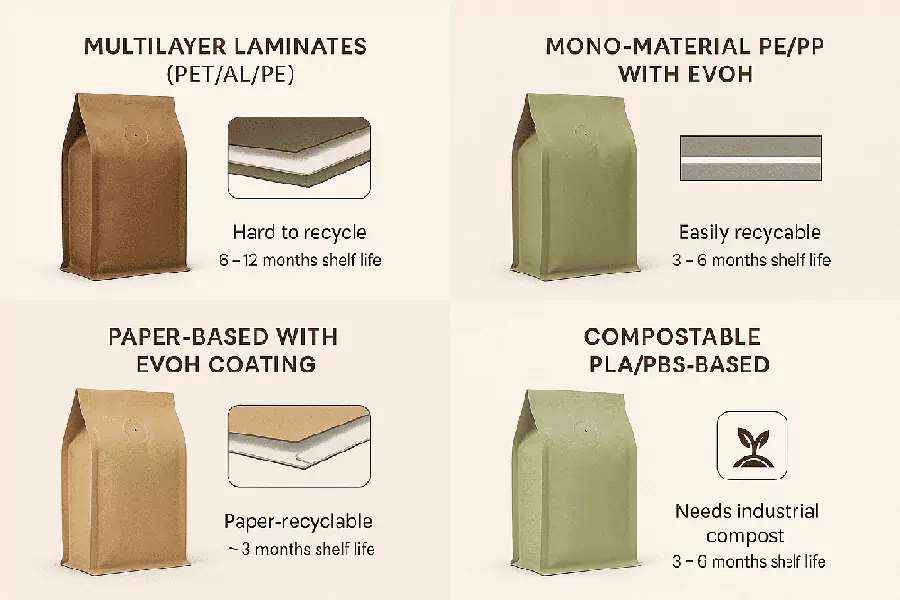
Coffee bag materials have evolved to meet both environmental and quality demands. Companies now use innovative options that reduce waste and support recycling. The two main categories are biodegradable and compostable materials, and recyclable films and papers. Each type offers unique benefits for coffee packaging.
Biodegradable and Compostable Options
Biodegradable and compostable coffee bag materials come from renewable resources. These materials break down into natural elements under the right conditions. Plant-based polymers like PLA (polylactic acid) and PBAT (polybutylene adipate terephthalate) are common choices. Manufacturers also use compostable papers and renewable fibers such as bamboo, cellulose, and sugarcane pulp.
Biodegradable and Compostable Materials | Description |
|---|---|
Plant-based Polymers (PLA, PBAT) | Polymers derived from renewable resources like corn starch (PLA) and a mix of renewable and petrochemical sources (PBAT), which break down efficiently in composting environments. |
Compostable Papers | Paper materials engineered to decompose quickly in compost, suitable for sustainable packaging. |
Other Sustainable Materials | Renewable fibers such as bamboo, cellulose, and sugarcane pulp that naturally biodegrade. |
Certifications help consumers trust these claims. The most recognized certifications include BPI Certification, OK Compost (Home and Industrial), ASTM D6400 and D6868, and EN 13432. These standards confirm that coffee bag materials will break down safely in composting environments.
Certifications Supporting Compostability Claims | Description |
|---|---|
BPI Certification | Confirms compliance with ASTM D6400 and D6868 standards, ensuring bags break down in industrial and home composting within specified timeframes. |
OK Compost (Home and Industrial) | TÜV Austria certification verifying compostability in home or industrial composting conditions. |
ASTM D6400 and ASTM D6868 Standards | Standards defining requirements for compostable plastics and materials in contact with food, ensuring safe biodegradation. |
EN 13432 (European Standard) | European certification ensuring biodegradability, disintegration, and no harmful residues in composting environments. |
Industrial composting facilities provide the best environment for these materials to decompose. High temperatures, moisture, and oxygen help break down the bags within 90 to 180 days. Home-compostable bags, certified under standards like AS 5810-2010, use materials such as kraft paper, cornstarch-based bioplastics, and cellulose. These bags break down at lower temperatures, usually within 90 to 120 days, if composting practices are followed. In landfills, however, compostable materials break down much more slowly due to lack of oxygen and moisture.
BN PACK offers coffee bag materials that meet these strict compostability standards. Their products use certified plant-based films and compostable papers, supporting both environmental goals and coffee freshness.
Recyclable Films and Papers
Recyclable coffee bag materials focus on reducing waste and supporting a circular economy. Paper-based packaging leads in global recycling rates, with about 65% of paperboard and paper-based materials recycled worldwide. These materials include molded fiber, laminated paper, and fiber-based flexible films. Paper coffee bags often carry certifications like FSC (Forest Stewardship Council), which ensures responsible sourcing.
Material Type | Description | Recycling Rate (Global) | Expert Commentary |
|---|---|---|---|
Paperboard & Paper-based | Includes molded fiber, paperboard, laminated paper | ~65% | Highlighted as leading sustainable packaging options due to high recyclability (Olga Kachook, SPC). |
Plastics | Flexible films and rigid plastics | ~9% | Much lower recycling rate compared to paperboard; flexible films gaining popularity but face challenges (Bain & Company). |
Flexible Films | Fiber-based flexible films | Slightly higher than pulp (approx. 3% higher) | Emerging recyclable options but limited market availability; popular for lightweighting (Kelly Murosky, Unilever). |
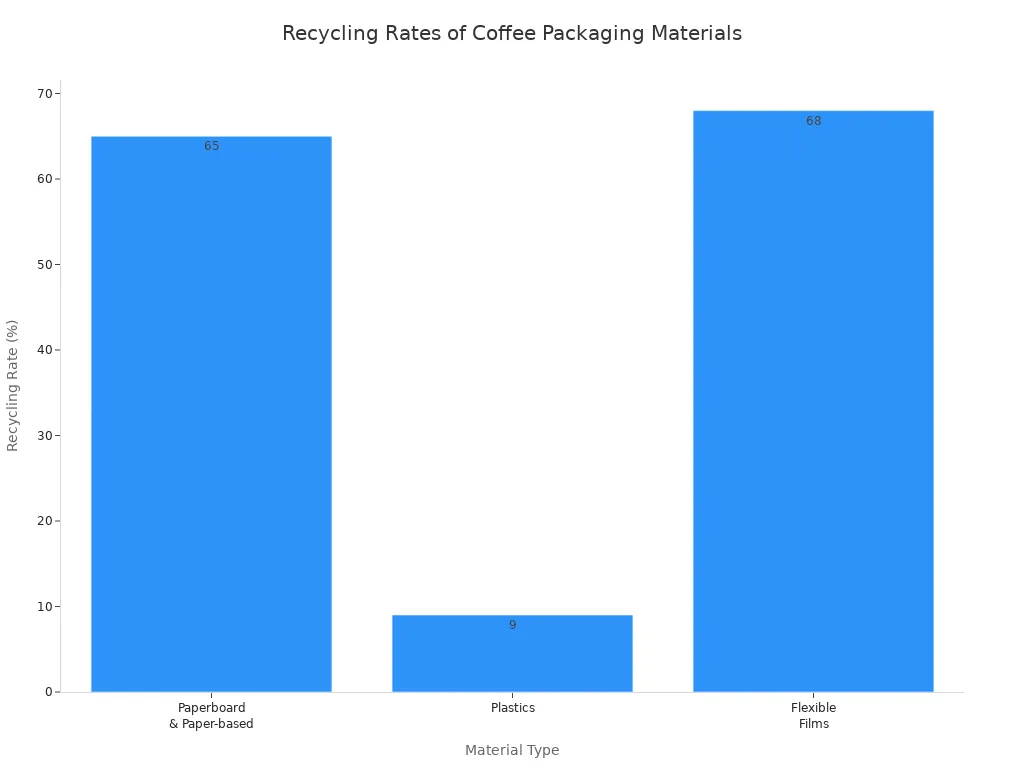
Flexible films, such as recyclable polyethylene (PE) and polypropylene (PP), are gaining popularity. These films use less material and lower transportation emissions. However, recycling rates for flexible films remain low, around 9% globally, due to technical and infrastructure challenges. The Association of Plastic Recyclers (APR) sets guidelines to improve recyclability, but balancing barrier properties and recyclability remains difficult.
Multilayer coffee bag materials, which combine plastics, aluminum, and paper, protect coffee but complicate recycling. Challenges include contamination from coffee oils, small bag size, and lack of standardization. Solutions include:
Redesigning packaging to use mono-materials, making recycling easier.
Developing chemical and mechanical recycling methods.
Launching collection programs and clear consumer communication.
BN PACK addresses these challenges by offering recyclable mono-material coffee bag materials and supporting take-back programs. Their products carry certifications such as Cradle to Cradle Certified®, Global Recycled Standard (GRS), and FSC. These certifications ensure responsible sourcing, recycled content, and safe material health.
♻️ Choosing the right coffee bag materials, whether compostable or recyclable, helps brands reduce their environmental impact and meet consumer expectations for sustainability.
Innovations in Coffee Bag Materials
Plant-Based and Bio-Polymers
Recent years have seen major progress in plant-based and bio-polymer coffee bag materials. Scientists now use coffee industry by-products like coffee parchment, husks, and oil to create biodegradable blends such as polylactic acid (PLA) and PBAT. These blends often include natural plasticizers from coffee oil, which improve flexibility and strength. Some researchers use acetylation to help these materials mix better, making the final product stronger and more reliable. Nanostructured coatings with chitosan nanoparticles add antimicrobial properties, helping coffee stay fresh longer.
Large companies like Nestlé lead the way in developing compostable biopolymers. They use agricultural waste, algae, and plant starches to make multi-layer flexible materials and barrier-enhanced films. These new materials keep coffee fresh while reducing the use of fossil-based plastics. Compostable coffee pods made from PLA biopolymers have also entered the market. These pods are lightweight, maintain high-barrier properties, and break down in industrial composting facilities.
Plant-based polymers like PLA come from renewable resources such as corn or sugarcane. Life cycle studies show PLA can have up to 75% lower carbon footprint than traditional plastics. However, PLA has lower heat resistance and weaker barrier properties compared to PET, which can limit its use for some coffee bag materials. Bioplastics also cost more and need proper waste management to deliver full environmental benefits.
🌱 Plant-based coffee bag materials offer a promising path toward sustainability, but they require ongoing innovation to match the performance of conventional plastics.
Mono-Material Solutions
Mono-material solutions use a single type of material, such as polyethylene (PE) or polypropylene (PP), throughout the entire coffee bag. This design makes recycling much easier. Recycling centers do not need to separate layers, so the process produces cleaner recycled materials and reduces contamination. Mono-material packaging supports a circular economy by allowing multiple recycling cycles without losing quality.
Mono-material coffee bag materials simplify recycling and lower sorting costs.
These packages often include advanced barrier technology to keep coffee fresh.
BN PACK uses mono-material polyethylene in its coffee bags, making them fully recyclable through store-drop programs.
Regulatory trends now encourage mono-material packaging to avoid separation challenges.
Clear recycling instructions on packaging help consumers recycle correctly.
Multi-layer coffee bag materials combine different materials to provide strong barriers against oxygen, moisture, and light. This structure extends shelf life but makes recycling difficult. Mono-material films have improved, but they still do not always match the barrier properties of multi-layer films. Advances in coatings and additives are closing this gap, making mono-material solutions more attractive for coffee packaging.
♻️ Mono-material coffee bag materials help brands meet recycling goals and support global sustainability efforts.
Preserving Freshness in Coffee Bags
High-Barrier Technologies
Coffee loses its flavor and aroma when exposed to oxygen, moisture, and light. High-barrier technologies help protect coffee from these threats. Manufacturers use several advanced methods to keep coffee fresh:
Multi-layered films combine different materials to block oxygen and moisture. These films create a strong barrier that extends shelf life.
Vacuum-sealed bags remove air from the package. This process prevents oxidation and keeps beans or grounds fresh for longer.
Aluminum foil packaging offers the best protection. It blocks almost all oxygen and moisture, making it ideal for ground and instant coffee.
Stand-up pouches with one-way degassing valves let carbon dioxide escape but stop air from entering. This feature helps maintain the coffee’s flavor and aroma.
Modified Atmosphere Packaging (MAP) replaces air inside the bag with inert gases. This method slows down the staling process.
The table below compares the oxygen and moisture barrier properties of common coffee bag materials:
Material | Oxygen Transmission Rate (OTR) (mL/m²/24h) | Water Vapor Transmission Rate (WVTR) (g/m²/24h) |
|---|---|---|
Aluminum foil | Very low (~0.066) | Very low (~0.009) |
VMPET | Low (~0.228) | Moderate (~0.214) |
Aluminum foil provides the strongest barrier, while VMPET offers a good balance of protection and cost. Newer bio-based and recyclable materials continue to improve in barrier performance.
🛡️ High-barrier packaging technologies are essential for keeping coffee fresh from the roaster to the cup.
Degassing Valves and Zippers
Freshly roasted coffee beans release carbon dioxide for several days. If this gas stays trapped, it can cause the bag to burst or affect flavor. Degassing valves solve this problem. These one-way valves let carbon dioxide escape while blocking oxygen from entering. This design keeps the coffee’s aroma and taste intact.
Resealable zippers add another layer of protection. After opening, consumers can close the bag tightly. This feature prevents air and moisture from getting inside, which helps preserve freshness. Powder-proof zippers also stop ground coffee from leaking out.
Feature | Purpose |
|---|---|
Degassing Valves | Allow CO₂ to escape, prevent oxygen entry, preserve freshness |
Powder-Proof Zippers | Prevent leakage, enable resealing, maintain freshness after opening |
Consumers value these features. They want coffee that stays fresh and easy to store. Brands respond by adding valves and zippers to their packaging. These innovations meet the demand for quality, convenience, and sustainability.
☕ Functional features like degassing valves and zippers help ensure every cup of coffee tastes as fresh as possible.
BN PACK’s Coffee Bag Solutions
Customization and Branding
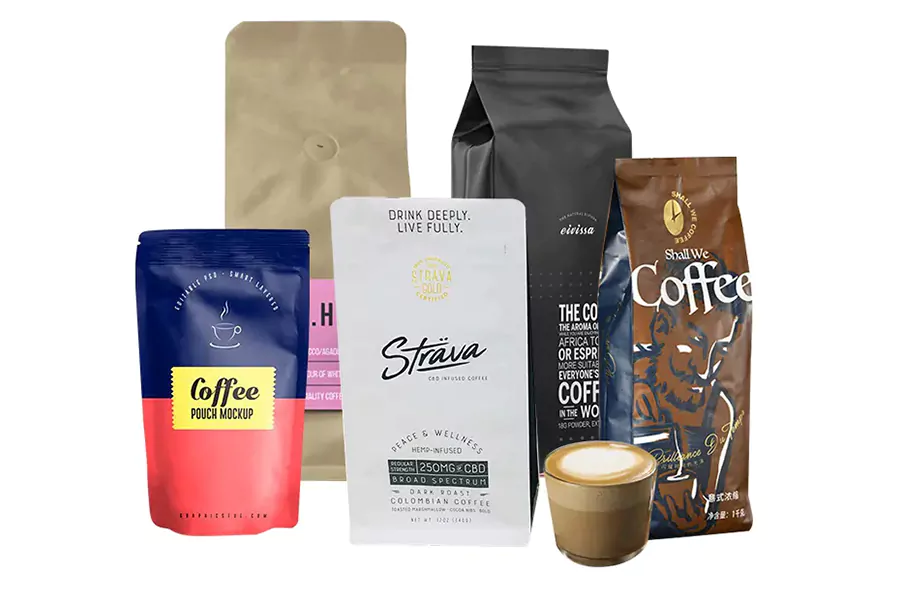
BN PACK offers a wide range of customization options for coffee packaging. Clients can choose from stand-up pouches, flat-bottom bags, and side gusseted designs. Each type provides unique benefits for both function and appearance. Popular sizes like 8 oz and 12 oz help balance freshness and convenience, which many consumers prefer. Material choices include kraft paper for a natural look, matte finishes for a premium feel, and post-consumer recycled content for sustainability.
Design trends in coffee packaging focus on both visual appeal and clear messaging. Brands often use vibrant illustrations to attract younger buyers, while minimalist designs create a sense of sophistication. BN PACK supports high-quality printing, allowing brands to add logos, origin stories, and tasting notes. Many clients also add QR codes to their bags, giving consumers access to brewing guides and farm information. These features help brands connect with customers and build trust.
Real-world examples show the impact of these choices. Thanksgiving Coffee improved its brand identity by using custom-printed block-bottom bags with zipper seals. 1000 Faces Coffee uses color-coded, fully compostable bags to highlight coffee origins, making it easier for customers to choose their favorite. These strategies help brands stand out and shape how consumers view quality and value.
Eco-Friendly and Functional Features
BN PACK’s coffee bag materials set a high standard for sustainability and performance. The company uses certified eco-friendly materials such as kraft paper, PLA, PBAT, and cellulose-based films. These materials meet global compostability standards like EN 13432 and ASTM D6400, ensuring that bags break down within six months in industrial composting.
Functional features play a key role in preserving coffee freshness. BN PACK integrates one-way degassing valves and resealable zippers made from compostable materials. These features allow carbon dioxide to escape while blocking oxygen, which helps maintain aroma and flavor. Additional options include tear notches, handles, and clear windows for added convenience.
A table below highlights some real-world applications of BN PACK’s solutions:
Client / Brand Type | BN PACK Solution Features | Outcome / Impact |
|---|---|---|
Colombian coffee cooperative | Fully compostable pouches, nitrogen-flush, digital storytelling | 40% sales increase in eco-conscious markets |
Premium coffee brands | DualLock™ zipper, one-way degassing valve | 98% aroma retention after 6 months |
Various brands (seasonal) | Rapid prototyping, custom shapes and finishes | Faster time-to-market for limited editions |
BN PACK’s commitment to quality and sustainability helps brands meet consumer expectations and regulatory standards. Their coffee bag materials combine eco-friendly benefits with advanced features, supporting both product freshness and environmental goals.
Trends and Future Directions
Refill and Reuse Systems
Coffee packaging is moving toward refill and reuse systems. Many brands now offer reusable containers or encourage customers to bring their own bags. This approach reduces single-use packaging waste and supports a circular economy. Retailers often provide bulk coffee stations where customers can refill containers, cutting down on disposable packaging.
Refillable systems require packaging that is durable, easy to clean, and safe for repeated use. Companies design these containers with airtight seals to keep coffee fresh. Some brands use materials like stainless steel or thick, food-grade plastic for longevity. Others choose compostable liners that fit inside reusable canisters, combining convenience with sustainability.
♻️ Refill and reuse systems help reduce waste and align with consumer demand for eco-friendly solutions.
Packaging trends also show a shift toward mono-material structures and biodegradable blends. Brands use recyclable polyethylene or paper combined with plant-based polymers like PLA. These materials often carry certifications from organizations such as TUV, which confirm their compostability. One-way degassing valves remain popular, as they let carbon dioxide escape while blocking air and moisture, preserving coffee quality. Packaging design now focuses on reducing material use and improving recyclability, without sacrificing product protection or shelf appeal.
Regulatory and Market Shifts
Regulations are shaping the future of coffee packaging. In California, Extended Producer Responsibility laws require companies to reduce single-use plastics by 25% and ensure that 100% of packaging is recyclable or compostable. The European Union’s Deforestation Regulation will soon require all pulp and paper packaging to be deforestation-free. These rules push brands to use responsibly sourced materials and improve recycling rates.
Other global regulations include plastic taxes, bans on hard-to-recycle materials, and the EU Packaging and Packaging Waste Regulation, which mandates reusable or recyclable packaging by 2030. These changes force companies to redesign packaging for circularity and sustainability. Environmental certifications, such as Rainforest Alliance and USDA Organic, help brands communicate their commitment to responsible sourcing.
Market shifts reflect growing consumer demand for sustainable packaging. Shoppers want recyclable, compostable, and low-plastic options. They also value features like reclosable zippers and packaging designed for convenience. Brands respond by adopting bold colors, expressive artwork, and clear messaging to stand out on crowded shelves. Strategic use of color and design helps set expectations for flavor and quality, making packaging a key part of the coffee experience.
Innovative coffee bag materials now support both sustainability and freshness, meeting the needs of brands and consumers. BN PACK offers solutions that combine eco-friendly design, advanced features, and strong branding. The future of coffee packaging will see more biodegradable, recyclable, and reusable options, smart technologies, and creative designs.
Industry growth will come from rising coffee demand, new regulations, and investment in sustainable packaging.
Companies will continue to focus on quality, convenience, and environmental impact.
FAQ
What materials help keep coffee fresh the longest?
High-barrier materials like aluminum foil, VMPET, and multi-layer films protect coffee from oxygen, moisture, and light. These materials help preserve aroma and flavor for several months. Many brands choose these options for premium coffee packaging.
Are compostable coffee bags safe for food storage?
Compostable coffee bags from certified materials like PLA and PBAT meet strict food safety standards. Certifications such as EN 13432 and ASTM D6400 confirm that these bags safely store coffee and break down without leaving harmful residues.
How do degassing valves work in coffee bags?
Degassing valves let carbon dioxide escape from freshly roasted beans while blocking oxygen from entering. This feature prevents bag swelling and helps maintain coffee freshness. Many specialty coffee brands use these valves for optimal quality.
Can coffee bags be recycled at home?
Most recyclable coffee bags require drop-off at designated recycling centers or stores. Home recycling bins often cannot process flexible films or multi-layer bags. Always check local recycling guidelines before disposal.