
The aroma of coffee fades quickly when exposed to oxygen, moisture, light, or heat. You enjoy coffee most when its aroma stays strong, as this signals freshness and high quality. Scientific studies show that oxidation and moisture can cause significant changes in key aroma compounds, with correlation coefficients above 0.7 and variation percentages over 20%. The right coffee packaging, using advanced materials and airtight designs, helps protect the aroma of coffee by blocking these damaging factors. Choosing the best packaging ensures you get the richest flavor in every cup.
Key Takeaways
Oxygen, moisture, light, and heat quickly reduce coffee aroma and freshness by breaking down key flavor compounds.
Using airtight, high-barrier packaging with features like one-way valves and nitrogen flushing protects coffee aroma longer.
Foil-lined and multi-layer bags block oxygen and moisture best, keeping coffee fresh and flavorful for weeks.
Store coffee in a cool, dark, and dry place; avoid the fridge and reseal bags tightly after each use to preserve aroma.
Grinding coffee just before brewing helps maintain the richest aroma and flavor compared to pre-ground coffee.
Look for packaging labels that mention nitrogen flushing, one-way valves, and airtight seals for the freshest coffee.
Specialty coffee packaging uses advanced materials and clear freshness info, offering better aroma preservation than everyday options.
Trust your senses: fresh coffee smells rich and inviting, while stale coffee smells flat, dull, or off.
Aroma of Coffee Factors
Oxygen Exposure
Oxygen is one of the main enemies of coffee aroma. When you expose coffee beans to air, oxygen starts to react with the oils and volatile flavour compounds inside the beans. This process, called oxidation, causes the aroma of coffee to fade and the flavour to become dull. Research shows that even very low oxygen levels, below 2%, can trigger oxidation reactions that break down key aroma compounds. If you store coffee in regular paper bags, you can lose about 10 quality points over 12 months. High-barrier packaging, which limits oxygen permeability, reduces this loss to less than 1 point. Each 1% increase in oxygen concentration speeds up the degradation rate by about 10%. Sensory panels can detect a drop in coffee aroma freshness within just one week of air exposure. After six months, coffee stored in air loses about one cup quality point per month. These numbers show how quickly oxygen can damage both the aroma and flavour of your coffee.
Oxidation Effects
Oxidation does more than just fade the aroma of coffee. It changes the chemical makeup of the beans, breaking down important volatile flavour compounds like hexanal and sulfurous molecules. These compounds give coffee its rich, complex scent and taste. As oxidation continues, you may notice the coffee develops stale or even rancid notes. Scientific studies reveal that after roasting, certain aroma compounds degrade at different rates. For example, methanethiol drops to about 20% of its original amount after two weeks, while other compounds like methylpyrazine retain about 80%. This rapid loss of volatile flavor compounds means you get the best aroma and flavour right after roasting. If you want to keep your coffee fresh, you need to limit oxygen exposure as much as possible.
Moisture Impact
Moisture is another factor that can ruin coffee aroma and freshness. Water molecules interact with the essential oils and volatile flavour compounds in coffee beans. These oils are water-soluble, so moisture can wash away the very compounds that create the coffee aroma you love. High humidity speeds up this process, especially in ground coffee. Studies show that higher humidity accelerates aroma loss, making your coffee taste flat and lifeless. Moisture also encourages the growth of mold and bacteria, which can further degrade both flavour and freshness. If you want to protect your coffee, you should always store it in a dry place and use packaging that blocks moisture.
Tip: Always reseal your coffee bag tightly after each use. This simple step helps keep out both oxygen and moisture, preserving the aroma of coffee for longer.
Light and Heat
Light and heat also play a big role in how quickly coffee aroma fades. Exposure to light, especially sunlight, causes chemical changes in the surface oils of coffee beans. These changes break down volatile flavour compounds and lead to a loss of both aroma and flavour. Heat speeds up all these reactions. For every 10°C increase in temperature, the rate of aroma loss nearly doubles. A 25°C rise can make coffee lose freshness 100 times faster. Roasting itself is a high-heat process that creates many of the aroma compounds, but once roasted, you need to keep coffee cool to slow down further degradation. If you leave coffee in a warm or sunny spot, you will notice the aroma and flavour disappear much faster.
Scientific studies confirm that controlling roasting time and temperature can help preserve coffee aroma. Faster, higher-temperature roasting increases certain aldehydes and speeds up aroma degradation. After roasting, the best way to keep your coffee fresh is to store it in a cool, dark place and use packaging that shields it from light and heat. This approach helps maintain the delicate balance of volatile flavour compounds that give coffee its unique character.
Time and Staling
Time acts as a silent thief when it comes to coffee aroma and flavor. The moment you roast coffee beans, a countdown begins. Freshly roasted beans burst with complex scents and lively flavors. As days pass, these qualities start to fade. You may not notice the change right away, but staling happens faster than you think.
Staling refers to the gradual loss of coffee aroma and flavor over time. Oxygen, moisture, light, and heat all speed up this process, but even in perfect storage, time alone causes changes. Volatile compounds, which give coffee its signature scent, escape from the beans. Oils inside the beans break down. The result is a dull, flat taste that lacks the excitement of fresh coffee.
You can see the effects of staling in both whole beans and ground coffee. Ground coffee stales much faster because grinding increases the surface area. This allows more aroma compounds to escape. Studies show that ground coffee can lose up to 60% of its aroma within just 15 minutes of grinding. Whole beans last longer, but you still need to use them within a few weeks for the best experience.
Note: If you want to enjoy the full aroma of coffee, buy whole beans and grind them just before brewing. Store your beans in airtight packaging to slow down staling.
Here is a simple table to show how time affects coffee aroma and flavor:
Time After Roasting | Aroma Strength | Flavor Quality |
|---|---|---|
1-3 Days | Very High | Excellent |
1-2 Weeks | High | Good |
3-4 Weeks | Medium | Fair |
1-2 Months | Low | Dull |
You can use this table as a guide. The sooner you use your coffee beans after roasting, the better the coffee aroma and flavor will be. Remember, time waits for no one—even your favorite cup of coffee.
Coffee Packaging Solutions
Airtight Seals
You need airtight seals to keep your coffee fresh. When you use coffee packaging with a strong seal, you stop oxygen, moisture, and other contaminants from getting inside. This helps preserve aroma and keeps the coffee’s distinct flavour locked in until you open the bag. Airtight seals also prevent the escape of aromatic compounds, which means you enjoy the full experience every time you brew a cup.
Airtight coffee bean packaging supports brand integrity. When you see a well-sealed bag, you know the company cares about quality. The sealing tightness also matters for freshness preservation. If the seal is weak, air and moisture can sneak in, causing the coffee to lose its flavour and aroma quickly. Many brands use reclosure features like zip-locks or tin ties. These features let you reseal the bag after each use, which helps with preserving freshness and flavour consistency.
Airtight seals:
Block oxygen and moisture
Keep contaminants out
Lock in aroma and flavour
Support brand quality
Vacuum-sealed packaging takes this a step further. By removing air from the bag, you reduce oxygen exposure and prolong the shelf life of your coffee. This method is one of the most effective packaging solutions for preserving freshness and flavour.
Multi-Layer Barriers
Multi-layer barriers play a key role in coffee packaging. These barriers use several layers of materials, such as aluminum foil, plastic films, or paper, to create a strong shield against oxygen, moisture, and light. Each layer serves a purpose. For example, foil blocks light and oxygen, while plastic adds strength and flexibility.
You can see the difference in how packaging affects coffee freshness by looking at the data:
Parameter | Packaging Type | Storage Temp | Time (days) | Key Findings |
|---|---|---|---|---|
Oxygen % in headspace (capsules) | Standard (STD) | 25 °C | 120+ | Higher oxygen levels, faster aroma loss. |
Oxygen % in headspace (capsules) | Alternative (ALT) | 25 °C | 120+ | Lower oxygen levels, better aroma preservation. |
2-butenal (oxidation marker) | Standard (STD) | 25 & 40 °C | 180 | Higher concentration, more aroma degradation. |
2-butenal (oxidation marker) | Alternative (ALT) | 25 & 40 °C | 180 | Lower concentration, better preservation of aroma compounds. |
This table shows that alternative multi-layer packaging keeps oxygen out better than standard types. Lower oxygen means less oxidation and better aroma retention. Multi-layer barriers also protect against moisture and light, which are two other big threats to coffee quality.
Many advanced coffee packaging options use modified atmosphere packaging (MAP). MAP changes the air inside the bag, often replacing oxygen with nitrogen. This slows down oxidation and helps preserve aroma and flavour for longer periods. You get coffee that tastes fresh even after months on the shelf.
One-Way Valves
Freshly roasted coffee releases carbon dioxide gas. If you seal this gas inside, the bag can bloat or even burst. One-way valves solve this problem. These small devices let carbon dioxide escape from the bag but do not let oxygen in. This keeps your coffee safe from oxidation while preventing bag bloating.
You often see the one-way degassing valve in specialty coffee packaging. It is a simple but powerful tool for preserving freshness and aroma. The one-way valve allows you to package coffee right after roasting, locking in the best flavour and aroma. At the same time, it protects the beans from oxygen, which is the main cause of staling.
Benefits of one-way valves:
Let carbon dioxide out
Block oxygen from entering
Prevent bag bloating
Help preserve aroma and flavour
BN Pack’s custom flexible packaging includes options with one-way valves, multi-layer barriers, and airtight seals. You can also choose eco-friendly materials and advanced features like modified atmosphere packaging or MAP. These technologies work together to give you effective packaging that keeps your coffee fresh, flavorful, and aromatic for longer.
Nitrogen Flushing
Nitrogen flushing is a powerful method that helps you keep your coffee fresh and aromatic. When you choose coffee packaged with nitrogen flushing, you get a product that stays flavorful for much longer.
Nitrogen is an inert gas. This means it does not react with coffee beans or their delicate aroma compounds. During the packaging process, manufacturers flush out the oxygen inside the bag and replace it with nitrogen. Oxygen causes coffee to go stale and lose its aroma. By removing oxygen, nitrogen flushing slows down the oxidation process.
How Nitrogen Flushing Works:
You roast and cool the coffee beans.
The beans go into the packaging machine.
The machine fills the bag with nitrogen gas, pushing out the oxygen.
The bag gets sealed tightly, trapping the nitrogen inside.
Tip: Always look for coffee bags that mention “nitrogen flushed” or “packaged in a protective atmosphere” on the label. This means your coffee will stay fresher for longer.
Why Nitrogen Flushing Matters for Coffee Aroma:
Nitrogen protects the volatile oils and aroma compounds in coffee.
It prevents oxidation, which causes staling and off-flavors.
It extends the shelf life of both whole bean and ground coffee.
It keeps your coffee tasting as close to freshly roasted as possible.
Here is a simple table to show the difference nitrogen flushing makes:
Packaging Method | Oxygen Level Inside Bag | Aroma Loss Over 3 Months | Shelf Life |
|---|---|---|---|
Standard Air-Sealed | High | High | 1-2 months |
Nitrogen Flushed | Very Low | Minimal | 6-12 months |
You can see that nitrogen flushing keeps oxygen levels very low. This means your coffee stays aromatic and flavorful for a much longer time.
BN Pack uses advanced nitrogen flushing technology in its custom flexible packaging. You can choose this option for your coffee products to ensure maximum freshness. BN Pack combines nitrogen flushing with other features like airtight seals, multi-layer barriers, and one-way degassing valves. This complete approach gives you the best protection for your coffee aroma.
Note: Nitrogen flushing is safe and widely used in the food industry. It does not change the taste or safety of your coffee. It only helps preserve what you love most—the rich aroma and flavor.
When you want the best coffee experience, choose packaging that uses nitrogen flushing. Your nose and taste buds will thank you every time you open a fresh bag.
Preserve Aroma with Materials & Technology
Packaging Materials
Foil, Plastic, Paper
You have many choices when it comes to coffee packaging. Each material offers different levels of protection for aroma and freshness. Foil-lined bags, especially those with an aluminum layer, give you the best barrier against oxygen, moisture, heat, and light. This type of packaging keeps your coffee’s bold fruitiness and pleasant acidity for over two weeks. Aluminum foil blocks almost all outside elements, so your coffee stays fresh longer.
Plastic packaging, such as LDPE (low-density polyethylene) or HDPE (high-density polyethylene), also works well for preserving aroma. LDPE bags are recyclable and can keep coffee fresh for up to a year if you store them properly. HDPE bags help maintain moisture and antioxidant levels, which are important for aroma and flavor. Plastic packaging is strong, flexible, and cost-effective.
Paper bags are common, but they do not protect coffee as well as foil or plastic. Paper lets in more air and moisture, which speeds up aroma loss. Compostable paper bags with PLA coatings offer better protection, but they still allow more light to reach the beans. This can cause the coffee to lose its flavor faster.
Here is a quick comparison:
Packaging Material | Aroma/Freshness Retention | Notes |
|---|---|---|
Standard Foil-Lined Bag | Retains bold fruitiness and pleasant acidity for 18 days | Best for long-term aroma preservation. Excellent oxygen and moisture barrier. |
Recyclable Bag (LDPE) | Maintains freshness well, up to 1 year | Eco-friendly, good barrier properties. |
Compostable/Biodegradable Bag | Noticeable flavor decline after 18 days | Allows more light, aroma loss is faster. |
One-way degassing valves are a must for coffee packaging. They let CO2 out but keep oxygen from getting in, which helps preserve aroma and prevents bag swelling.
Eco-Friendly Options
Biodegradable, Compostable, Recyclable
You can choose eco-friendly coffee packaging to help the environment and still keep your coffee fresh. Recyclable materials like LDPE and PP reduce landfill waste and ocean pollution. These materials also help you save on waste management costs. Compostable packaging, made from plant-based bioplastics, breaks down naturally in weeks or months. This means less carbon footprint and less waste in landfills.
Bio-based plastics from renewable resources, such as sugarcane or coffee grounds, offer protection similar to traditional plastics but with a lower carbon footprint. Paper-based packaging with PLA coatings is renewable, recyclable, and cost-effective. It protects your coffee beans while supporting sustainability.
Studies show that eco-friendly packaging keeps key aroma compounds stable, even when compared to standard multilayer aluminum packaging. However, high humidity can cause some loss of aroma-related compounds in compostable bags. You should store your coffee in a cool, dry place to get the best results from eco-friendly packaging.
Choosing sustainable coffee packaging helps you lower your carbon footprint and shows customers that you care about the planet.
Innovations
Customization & Design
Modern coffee packaging goes beyond just materials. You can now customize your packaging to fit your brand and product needs. BN Pack offers custom flexible packaging with advanced features. You can select from over eight eco-friendly materials, metallic foils, resealable zippers, and custom shapes. BN Pack’s packaging includes one-way degassing valves, airtight seals, and multi-layer barriers for maximum aroma protection.
You can also design your coffee bean packaging with eye-catching graphics and easy-pour spouts. BN Pack’s digital workflow lets you approve designs and track orders online, making the process fast and simple. With low minimum order quantities and quick turnaround times, you can launch new products or update your packaging easily.
Custom packaging not only preserves aroma but also helps your brand stand out on the shelf.
Freshness and Quality at Home
Storage Tips
You can keep your coffee tasting its best by following a few simple storage tips. Always store your coffee beans or ground coffee in an airtight container. Choose containers made from ceramic, stainless steel, or opaque glass. These materials block light and do not transfer unwanted flavors. Place your container in a cool, dark, and dry spot. The ideal temperature for storage is between 60°F and 70°F. Avoid keeping coffee near heat sources, windows, or in humid areas.
Grinding your coffee just before brewing helps you enjoy the full aroma and flavor. Whole beans hold their freshness and quality longer than ground coffee. If you buy ground coffee, use it quickly and keep it sealed tightly. Never store coffee in the refrigerator. Temperature changes cause condensation, which leads to aroma loss and staling.
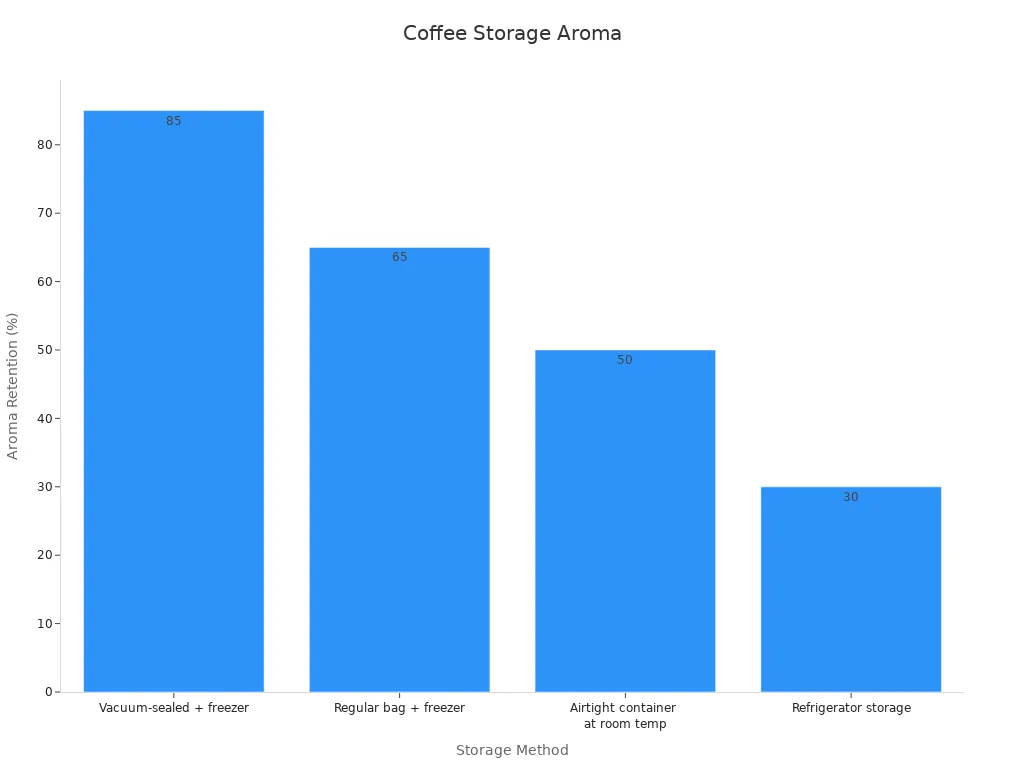
Here is a table showing how different storage methods affect aroma retention after one month:
Storage Method | Aroma Retention After 1 Month | Notes |
|---|---|---|
Vacuum-sealed + freezer | 85% | Best method for long-term aroma retention |
Regular bag + freezer | 65% | Acceptable for emergency storage |
Airtight container at room temp | 50% | Standard recommendation |
Refrigerator storage | 30% | Significant quality loss |
Tip: Store only what you need for a week or two in your kitchen. Keep the rest vacuum-sealed in the freezer to extend coffee shelf life.
Resealing Methods
Proper resealing helps you maintain freshness and quality after opening your coffee. Use bags with zip-lock closures or one-way valves. These features reduce oxygen exposure and keep out moisture and light. Press-to-close channels and adhesive strips also work well. They help you achieve a tight seal every time you close the bag.
Vacuum sealing is another excellent option. It removes air from the package, which slows down oxidation. If you use vacuum-sealed bags, store them in a dark place to prevent UV damage. Some containers use oxygen scavengers near the closure to further protect your coffee. Always follow the instructions on your packaging to get the best results.
Protect your coffee from oxygen, humidity, heat, and UV light.
Use original packaging with one-way valves when possible.
Choose opaque zip-lock bags for easy resealing.
Consider vacuum sealing for long-term storage.
Store resealed coffee in a cool, dark place.
Note: Clear instructions on resealing can improve freshness duration by up to 65%.
Shelf Life
The way you store your coffee has a big impact on its shelf life. Aroma, acidity, and bitterness change over time, especially if you do not use proper storage methods. Studies show that aroma loss is the main sign of declining freshness and quality. If you store coffee in airtight containers at the right temperature, you can keep whole beans fresh for 4-6 weeks. Ground coffee stays fresh for 2-3 weeks under ideal conditions.
Attribute | Mean Square | F-Value | p-value |
|---|---|---|---|
Aroma | 35.41 | 57.9 | 0.000 |
Acidity | 3.20 | 5.2 | 0.024 |
Bitterness | 3.95 | 6.5 | 0.012 |
Body | 0.63 | 1.0 | 0.312 |
Overall | 0.34 | 0.6 | 0.459 |
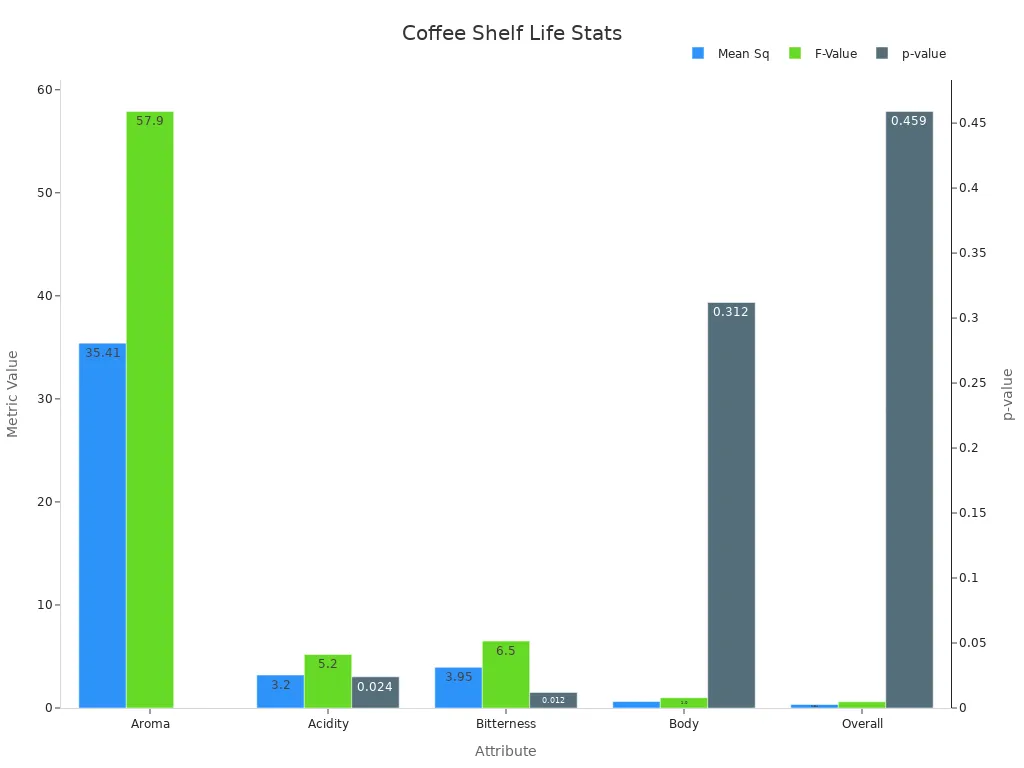
You can see that aroma changes the most as coffee ages. By following these storage and resealing tips, you protect the freshness and quality of your coffee and enjoy a better cup every time.
Detecting Coffee Aroma Loss
Sensory Signs
You can often detect coffee aroma loss with your senses before you see any visual changes. When you open a fresh bag of coffee, you should notice a strong, pleasant scent. This aroma comes from volatile compounds that give coffee its unique character. If you notice a weak or flat smell, your coffee may have lost its freshness.
Your nose can pick up changes in aroma even when your eyes cannot. As coffee ages, the concentration of key odor compounds drops. Scientists use tools like Odor Activity Value (OAV) and relative Odor Activity Value (rOAV) to measure these changes. An OAV greater than one means a compound strongly affects the aroma. When OAV values fall below one, you may notice the coffee smells dull or lifeless.
You might also notice specific off-notes. Stale coffee can smell papery, woody, or even slightly sour. These changes happen as the original aroma compounds break down and new, less pleasant ones form. Some marker compounds signal certain defects. For example, indole points to a light roast defect, while phenol signals a dark roast defect. If you detect odd or unpleasant scents, your coffee may have suffered from poor storage or roasting errors.
Professional tasters use sensory panels and statistical models to track these changes. One model, called Orthogonal Partial Least Squares Discriminant Analysis (OPLS-DA), helps experts tell the difference between fresh and stale coffee by analyzing both sensory quality and volatile compound profiles. High R2Y and Q2Y values in these models show reliable results. You do not need lab equipment to notice aroma loss, but these scientific methods confirm what your nose tells you.
Tip: Trust your senses. If your coffee does not smell rich and inviting, it may have lost its best qualities.
Visual Changes
While aroma gives you the first clue, you can also spot coffee aroma loss through visual signs. Fresh coffee beans have a glossy, oily surface. This shine comes from natural oils that carry much of the aroma. As coffee stales, these oils dry up or get absorbed back into the bean, leaving a dull, matte finish.
Ground coffee shows changes too. Fresh grounds look rich and dark. Over time, they turn lighter and may clump together. This happens as moisture and air break down the oils and volatile compounds. If you see white specks or mold, the coffee has absorbed too much moisture and is no longer safe to use.
You can use a simple checklist to spot visual signs of aroma loss:
Dull or faded color in beans or grounds
Dry, matte surface instead of a glossy one
Clumping or uneven texture in ground coffee
Presence of white spots or mold
Visual Sign | What It Means |
|---|---|
Glossy surface | Fresh, aromatic coffee |
Matte, dry surface | Aroma loss, staling |
Clumping | Moisture exposure |
White spots/mold | Spoilage, discard coffee |
Note: Always check both the smell and appearance of your coffee. Good packaging, like BN Pack’s custom flexible solutions, helps prevent these changes and keeps your coffee fresh longer.
Choosing Coffee Packaging
What to Look For
When you choose coffee packaging, you want to keep your coffee fresh and aromatic for as long as possible. Start by looking for packaging that blocks oxygen, moisture, light, and air. These elements cause coffee to lose its aroma and flavor quickly. High-barrier packaging, such as bags with aluminum foil or metallized film, works best. Research shows that these materials preserve aroma better than plastic or paper bags. Sensory tests with expert tasters found that coffee stored in aluminum or metallized film scored higher in aroma quality than coffee in plastic.
You should also check for features like one-way degassing valves and airtight seals. These features let carbon dioxide escape without letting oxygen in. This helps prevent staling and keeps your coffee tasting fresh. Multi-layer packaging with strong seals can reduce oxygen levels inside the bag to as low as 0.5%. This can extend the shelf life of your coffee by up to 20 times.
Here is a table to help you compare key indicators when selecting effective coffee packaging:
Key Numerical Indicator | Description | Impact on Coffee Packaging Effectiveness |
|---|---|---|
Accuracy | Ensures proper sealing and consistent packaging | Reduces waste and keeps coffee fresh |
Oxygen Barrier Effectiveness | Reducing oxygen to 0.5% inside the bag | Extends shelf life up to 20 times, preserves aroma |
Reliability | Consistent operation and quality | Maintains freshness and reduces downtime |
Cost Efficiency | Balances cost and quality | Helps you stay within budget while keeping coffee fresh |
Hopper Capacity | Maintains steady supply | Prevents interruptions in packaging of coffee |
You can also consider the type of packaging. Stand-up pouches are easy to open and store. Gusseted bags are traditional and affordable. Flat pouches work well for single-serve coffee. Kraft bags are biodegradable and compostable, which is good for the environment. Matte bags offer a modern look and recyclable options.
Tip: Choose packaging that matches your needs and values. If you want eco-friendly options, look for recyclable or compostable materials.
Reading Labels
Reading labels on coffee packaging helps you make smart choices. Look for information about the materials used, such as “aluminum foil,” “metallized film,” or “multi-layer barrier.” These terms mean the packaging will protect your coffee from oxygen and moisture. Labels may also mention “one-way valve,” “nitrogen flushed,” or “hermetically sealed.” These features help preserve aroma and freshness.
Check for freshness indicators. Some packaging includes a roast date or a “best by” date. The closer you buy to the roast date, the fresher your coffee will be. Labels may also list certifications like “compostable,” “recyclable,” or “biodegradable.” These show the packaging is better for the environment.
You should also look for claims about oxygen levels. If the label says the packaging reduces oxygen to 0.5%, you know it will keep your coffee fresh much longer. Scientific studies show that packaging with strong oxygen barriers and proper sealing methods preserves more aroma compounds over time.
Look for these features on labels:
High-barrier or multi-layer materials
One-way degassing valve
Nitrogen flushing
Airtight or hermetic seal
Eco-friendly certifications
Note: The best packaging of coffee combines strong protection with clear labeling. This helps you enjoy fresh, flavorful coffee every time.
Specialty vs. Everyday Packaging
Standards
You may notice that specialty coffee and everyday coffee use different standards for packaging. Specialty coffee brands focus on preserving freshness and aroma. They often use high-barrier materials, such as foil-lined bags or multi-layer films. These materials block oxygen, moisture, and light. Specialty coffee packaging usually includes features like one-way degassing valves and resealable zippers. These features help you keep your coffee fresh after opening.
Specialty coffee also follows strict guidelines for labeling. You will often see roast dates, origin information, and tasting notes on the bag. These details help you understand the coffee’s journey from farm to cup. Specialty brands want you to enjoy the best possible quality. They invest in packaging that protects delicate flavors and aromas.
Everyday coffee brands use simpler packaging. You may find plastic or paper bags without advanced barriers. These bags may not have degassing valves or airtight seals. Everyday packaging focuses on cost and convenience. It may not protect the coffee as well as specialty options. You might notice a difference in freshness and aroma when you compare the two.
Tip: If you want the best flavor, look for specialty coffee packaging with clear freshness features.
Market Differences
You will see clear differences between specialty and everyday coffee in the market. Specialty coffee targets customers who care about quality and freshness. These brands use premium packaging to stand out on the shelf. Specialty coffee often comes in smaller bags, so you can enjoy it at peak freshness. The packaging design is usually eye-catching and includes detailed information about the beans.
Everyday coffee aims for a wider audience. You will find larger bags and simpler designs. These products focus on affordability and convenience. Everyday brands may not highlight the origin or roast date. The packaging may use basic materials that do not offer the same level of protection.
Here is a table to help you compare specialty and everyday coffee packaging:
Feature | Specialty Coffee | Everyday Coffee |
|---|---|---|
Material | Multi-layer/foil | Plastic/paper |
Freshness Features | Degassing valve, zipper | Basic seal |
Label Information | Roast date, origin | Minimal |
Bag Size | Small (8-12 oz) | Large (16-32 oz) |
Shelf Appeal | Premium design | Simple design |
You can use this table to decide which type of packaging fits your needs. Specialty coffee packaging helps you enjoy the highest quality, while everyday options focus on value and convenience.
You face many threats to coffee aroma, including oxygen, moisture, light, and heat. Advanced packaging solutions, like those from BN Pack, help you fight these threats.
High-barrier materials block oxygen and moisture.
One-way valves let CO₂ out but keep oxygen away.
Opaque, airtight packaging protects aroma and flavor.
Choose packaging with these features and store your coffee in a cool, dry place. Look for sustainable options to protect both your coffee and the planet. Your choices keep every cup fresh and aromatic.
FAQ
How does coffee packaging keep aroma fresh?
Coffee packaging blocks oxygen, moisture, light, and heat. You get better aroma retention when you choose bags with airtight seals, multi-layer barriers, and one-way valves. These features help you enjoy a fresher cup every time.
What is a one-way degassing valve?
A one-way degassing valve lets carbon dioxide escape from the bag but stops oxygen from entering. You protect your coffee from staling and keep the aroma strong by choosing packaging with this valve.
Should you store coffee in the fridge or freezer?
You should avoid the fridge. Moisture and odors can ruin your coffee. For long-term storage, use vacuum-sealed bags in the freezer. Always keep coffee in a cool, dry, and dark place for best results.
How long does coffee stay fresh after opening?
Whole beans stay fresh for 2-4 weeks if you store them in airtight packaging. Ground coffee loses aroma faster. Use it within 1-2 weeks for the best flavor and aroma.
What materials work best for coffee packaging?
Material | Aroma Protection | Eco-Friendly Options |
|---|---|---|
Foil-lined | Excellent | Yes |
Plastic (LDPE) | Good | Yes |
Paper | Fair | Yes |
Choose foil-lined or recyclable plastic for the best aroma protection.
How do you know if coffee has lost its aroma?
If your coffee smells weak, flat, or stale, it has likely lost its aroma. You may also see dull beans or clumping in ground coffee. Trust your senses—fresh coffee always smells rich and inviting.
Why does BN Pack stand out for coffee packaging?
BN Pack offers custom flexible packaging with airtight seals, one-way valves, and eco-friendly materials. You get advanced protection for aroma and freshness, plus options that support sustainability and brand appeal.