City roast generally describes coffee finished around the end of first crack. City+ develops further, while Full City approaches second crack.
These names help describe a roast, but they are not universal temperature settings or guarantees of particular flavors.
For coffee roasters and brands, the useful task is to connect the name with a repeatable product: how the coffee looks, how it tastes, and how it performs after roasting and packing.
What Is City Roast Coffee?
Sweet Maria’s describes City roast as coffee finished at the last detectable sounds of first crack, or shortly afterward. Its definition emphasizes retaining origin character without developing strong roast flavors.
That does not mean every City roast tastes floral, citrusy, or tea-like. Green coffee, processing, roast profile, and preparation all affect the result.
A useful distinction is:
- The roast name describes an intended stage.
- The tasting notes describe the coffee you actually evaluated.
Keep those two pieces of information separate when developing a product or writing packaging copy.
City vs City+ vs Full City: A Practical Comparison

The following comparison follows Sweet Maria’s terminology. Individual roasters may use these names differently.
| Roast description | General roast position | What to evaluate |
|---|---|---|
| City | Around the completion of first crack | Whether the coffee is sufficiently developed and expresses the intended character |
| City+ | Further development after City, before second crack | The balance of acidity, sweetness, body, and roast character |
| Full City | Approaching second crack | Whether the additional development supports the intended cup |
| Full City+ | Just entering second crack | The effect of early second-crack development on the finished product |
Sweet Maria’s defines Full City as approaching second crack and distinguishes Full City+ by the first few audible snaps of second crack.
This distinction matters when comparing production records. Calling both stages “Full City” can hide a meaningful difference between batches.
What Temperature Is City Roast?
There is no single drop temperature that identifies City roast on every machine.
As one published reference, Sweet Maria’s gives approximately 415–425°F, or 213–218°C, for City roast on many roasters with responsive bean probes. That range belongs to the context described by the source; it should not be copied directly into another machine’s profile.
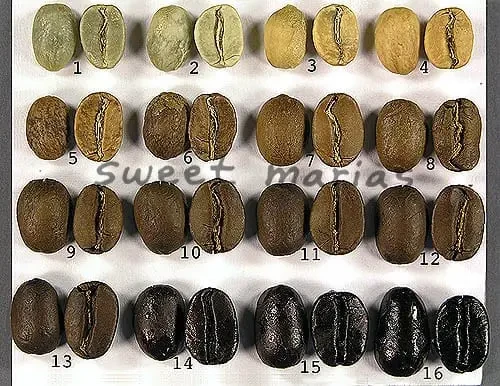
Its pictorial roasting guide also explains that temperature readings depend on the equipment and measurement arrangement.
For production consistency, record more than the displayed endpoint:
- Coffee lot and batch weight.
- Roaster and probe configuration.
- First-crack timing.
- Drop time and displayed temperature.
- Roast color, using a consistent measurement procedure.
- Cooling conditions.
- Sensory evaluation after a defined interval.
Use temperature as part of your own repeatable process, alongside roast events and product evaluation.
Does City Roast Taste Better Than Full City?
Neither name establishes a better product.
The decision depends on the coffee and the customer you intend to serve. A lighter endpoint may preserve characteristics you want to highlight, but it can also produce an unpleasant result if the roast is insufficiently developed. Additional roasting may suit one coffee and obscure desirable characteristics in another.
Avoid presenting a fixed flavor ladder such as:
City always tastes like citrus; City+ always tastes like caramel; Full City always tastes like dark chocolate.
Those descriptors should come from tasting the particular coffee.
Compare Roast Profiles Before Writing the Label
A useful development exercise is to roast the same lot to several intended endpoints and evaluate them under controlled conditions.
Keep the preparation method, water, grind approach, and roast-to-evaluation interval consistent. Blind-code the samples where practical.
Record:
| Evaluation area | Question to answer |
|---|---|
| Acidity | Is it pleasant, balanced, sharp, or poorly integrated? |
| Sweetness | How does it contribute to the overall cup? |
| Body | Does the texture suit the intended product? |
| Roast character | Does it complement or dominate the coffee? |
| Finish | What remains after tasting? |
| Intended preparation | Does the profile work for its proposed use? |
Use the results to choose the product—not merely the roast name.
If you distribute comparison sets, our guide to coffee sample pack packaging for cupping, events, and subscriptions explains how to organize sample quantities, identification, and packaging.
What Roast Differences Mean for Coffee Packaging
A packaging supplier does not need your complete roasting recipe. However, changes in the finished coffee can affect the packaging brief.
1. Assess Degassing From Your Actual Packing Schedule
Freshly roasted coffee releases gas after roasting. The relevant questions include how soon you pack it, whether it is whole bean or ground, and what happens during storage and shipping.
In a Specialty Coffee Association lecture, researcher Samo Smrke explains that roast profile affects degassing behavior and that storage temperature also influences the rate of gas release.
There is therefore no dependable rule that every City roast needs the same resting period or valve specification.
For a valve-equipped package, evaluate the coffee at the earliest intended roast-to-pack interval and under representative distribution conditions. Our coffee bags with valve page provides a starting point for discussing the package format.
2. Confirm Bag Fit Across Your Roast Range
Do not assume that the same fill weight occupies the same space in every product.
Test the proposed pouch with representative batches of your City, City+, and Full City coffees. Include whole-bean and ground versions separately if you sell both.
Check:
- The filled product level.
- Clearance below the zipper and final seal.
- Valve position relative to the contents.
- The finished shape and shelf presentation.
- Carton fit and handling.
If a common pouch is intended for several coffees, approve it against the relevant range rather than one convenient sample.
For retail formats with a defined standing base, explore flat-bottom coffee packaging and confirm its dimensions through filled samples.
3. Treat the Valve as Part of the Package
A valve needs a suitable component, installation, and position. Its presence alone does not establish the performance of the complete pack.
Check the filled pouch, not only the flat artwork. Product level, folds, closures, and equipment contact areas can influence where the valve should sit.
Our coffee bag valve placement guide covers these placement considerations.
4. Specify Protection Separately From Roast Level
“City roast” is not a barrier specification.
ROVEMA’s coffee packaging guide discusses post-roast degassing and oxidation as separate packaging considerations. It describes the use of protective atmospheres and degassing valves in coffee packing.
When selecting a structure, define:
- Whole-bean or ground coffee.
- Target shelf life.
- Roast-to-pack timing.
- Filling and sealing process.
- Any gas-flushing operation.
- Expected storage and shipping conditions.
Compare relevant barrier data and assess the finished package. Validate the product over its intended life rather than assigning a shelf-life claim from the roast name alone.
How to Describe City Roast on Your Coffee Bag
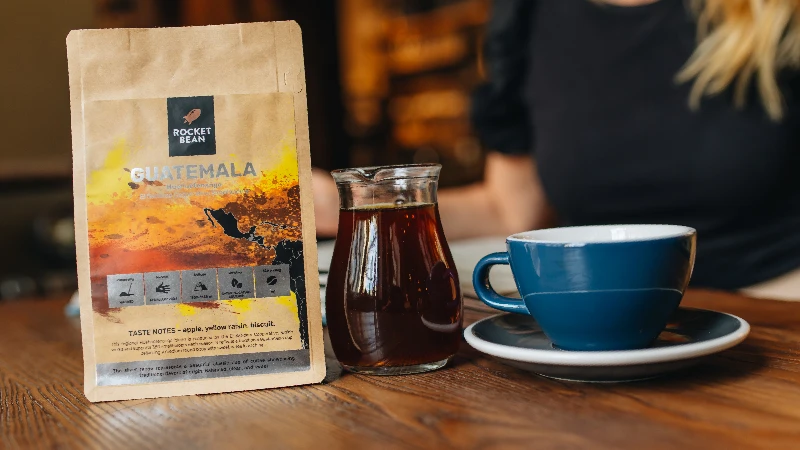
A roast name becomes more useful when customers can understand what to expect.
Consider pairing it with:
- A clear roast description consistent with your range.
- Tasting notes from the actual coffee.
- Origin and processing information.
- Whole-bean or ground identification.
- Roast or batch information.
- Relevant preparation and storage guidance.
Illustrative wording—not a claim about a tested coffee:
City Roast · Whole Bean
Tasting notes: replace with your evaluated descriptors
Origin and process: identify the actual lot
Roast date / batch: add traceable production information
Keep variable information readable and leave enough space for coding or labels. If you change lots frequently, discuss artwork and labeling flexibility when selecting your custom coffee bags.
Frequently Asked Questions
Is City roast a light or medium roast?
The classification varies between roasters. Describe where it sits in your own range and support that description with consistent product evaluation.
Is Full City the same as Full City+?
Not in the Sweet Maria’s terminology used here. Full City approaches second crack; Full City+ enters it slightly.
Is City roast underdeveloped?
Not necessarily. A roast name alone cannot establish development quality. Evaluate the actual coffee rather than assuming that a light appearance is either a defect or proof of quality.
Is City+ defined by a fixed number of seconds after first crack?
No universal duration applies. Coffee, equipment, batch conditions, and the roast trajectory affect the result.
Do City and Full City coffees need different bags?
Not automatically. A common package may work across the range, but confirm fill fit, degassing, sealing, and shelf-life performance with representative products.
Does a lighter roast need less protective packaging?
Do not make that assumption. Define protection from the coffee form, packing process, intended life, and distribution conditions.
Discuss Packaging for Your Coffee Range
Whether your range uses City, City+, Full City, or simpler roast descriptions, the packaging brief should reflect the coffee you actually produce.
When contacting BN PACK, share your fill weights, whole-bean or ground formats, packing schedule, preferred pouch style, and sales market.
Ask about dimensions, materials, valves, printing, and sample options. Confirm the package with representative coffees before approving production.