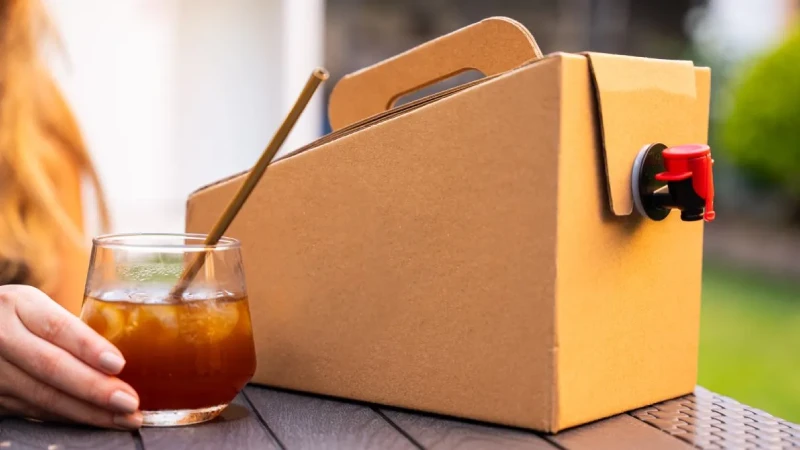
You see bag in box systems everywhere in 2025. You find them serving beer, wine, juice, coffee, and even water. Many food products and industrial liquids use this packaging because it keeps products fresh and helps you run your business smoothly. Today, more companies look for ways to reduce waste and save energy. BN PACK’s Bag-in-Box Cold Brew Coffee shows how new ideas can change the way you serve drinks.
The global bag-in-box packaging market could reach USD 3.9 billion by 2025.
The beverage industry may hold over 42% of this market share.
Experts expect the market to grow at a 5.6% rate from 2025 to 2035.
You also notice more businesses choosing bag in box every year.
The market for these systems may increase from USD 4.59 billion in 2024 to USD 4.88 billion in 2025.
Applications of Bag in Box
Beverages
You see bag in box systems everywhere in the beverage industry in 2025. These systems have become the go-to solution for serving drinks in both retail and foodservice settings. You can find them used for:
Juice
Wine (including boxed wine)
Water
Syrup
Many cafes, restaurants, and offices now rely on BN PACK’s Bag-in-Box Cold Brew Coffee. This packaging offers several advantages for commercial use:
Benefit | Description |
|---|---|
Lower carbon footprint | Achieve up to an 80% reduction in your footprint compared to glass. |
No need for exterior box | Simplifies packaging and reduces waste. |
Easy to use valve | Enhances user experience and convenience. |
Sterile – no prewash needed | Ensures hygiene and reduces preparation time. |
Stands on its own | Provides stability and ease of use. |
Comfortable carrying handle | Improves portability for commercial use. |
Lightweight & Recyclable | Facilitates shipping and promotes sustainability. |
Easier to ship | Space-efficient design reduces shipping costs. |
💡 The revolutionary spigot design keeps cold brew coffee fresh for up to a month after opening. The rectangular shape makes shipping, storage, and handling easy for your staff.
Bag in box packaging helps you serve beverages quickly, keep them fresh, and reduce waste. You also save on shipping and storage costs because the design is lightweight and compact.
Food Products
You find bag in box packaging widely used in the food and beverage market. This trend continues to grow as more companies look for effective and economical ways to package bulk liquids. You often see products like wine, fruit juices, dairy, edible oils, and sauces in these containers.
Bag in box packaging offers many benefits for sauces and dairy products:
Reduces material waste by using lightweight, flexible materials.
Designed to be fully recyclable, making it a sustainable option.
Compact design requires less storage space and lowers transportation costs.
Lightweight structure leads to energy-efficient shipping and reduces carbon emissions.
Airtight bags extend shelf life and help reduce food waste.
Convenient design makes it easy to dispense and store products, keeping them fresh.
Often more cost-effective than traditional packaging methods.
You can easily pour out just the amount you need, which helps you avoid spills and keeps your kitchen organized.
Industrial & Non-Food Liquids
Bag in box systems also play a big role in packaging industrial and non-food liquids. You see them used for:
Motor oil
Detergents
Agricultural liquids
Chemicals
Cleaning solutions
These systems offer several advantages for chemicals and cleaning solutions:
Advantage | Description |
|---|---|
Leak-Proof & Chemical-Resistant | Prevents hazardous spills. |
Easy Handling & Storage | Lightweight and stackable. |
Cost Savings | Lower packaging and shipping costs compared to traditional containers. |
Eco-friendly | Reduces plastic use by up to 80%. |
Lower Carbon Footprint | Lighter weight reduces transportation emissions. |
Biodegradable & Recyclable Options | Some brands offer plant-based film bags. |
Innovative barrier films and hermetic fitments protect your products.
Patented connection systems ensure maximum user safety.
Designed to minimize product residual for safer dispensing.
You benefit from safer handling, easier storage, and a reduced environmental impact. Bag in box packaging helps you manage liquids efficiently, whether you work in a factory, a farm, or a cleaning business.
Advantages of Bag in Box Packaging
Shelf Life Extension
You want your products to stay fresh as long as possible. Bag in box packaging helps you achieve this goal. The airtight seal and protective layers keep beverages safe from air and light. When you use bag in box packaging for cold brew coffee, the bag collapses inward as you dispense, preventing air from entering. This oxygen-free environment preserves flavor and quality for weeks. BN PACK’s system uses high-barrier bags and sterile dispensing taps, which extend shelf life and reduce contamination risks. You can see the difference in shelf life compared to traditional methods:
Description | Source |
|---|---|
Airtight seal and protective layers extend shelf life | |
Bag collapses inward, preventing air contact | |
Sterile filling and dispensing reduce contamination |
Scientific studies show that bag in box packaging keeps cold brew coffee safe and fresh. Eurofins® Microbiology Laboratories found no pathogen growth or toxin formation in oxygen-free environments. You avoid preservatives and keep your drinks tasting great.
Sustainability
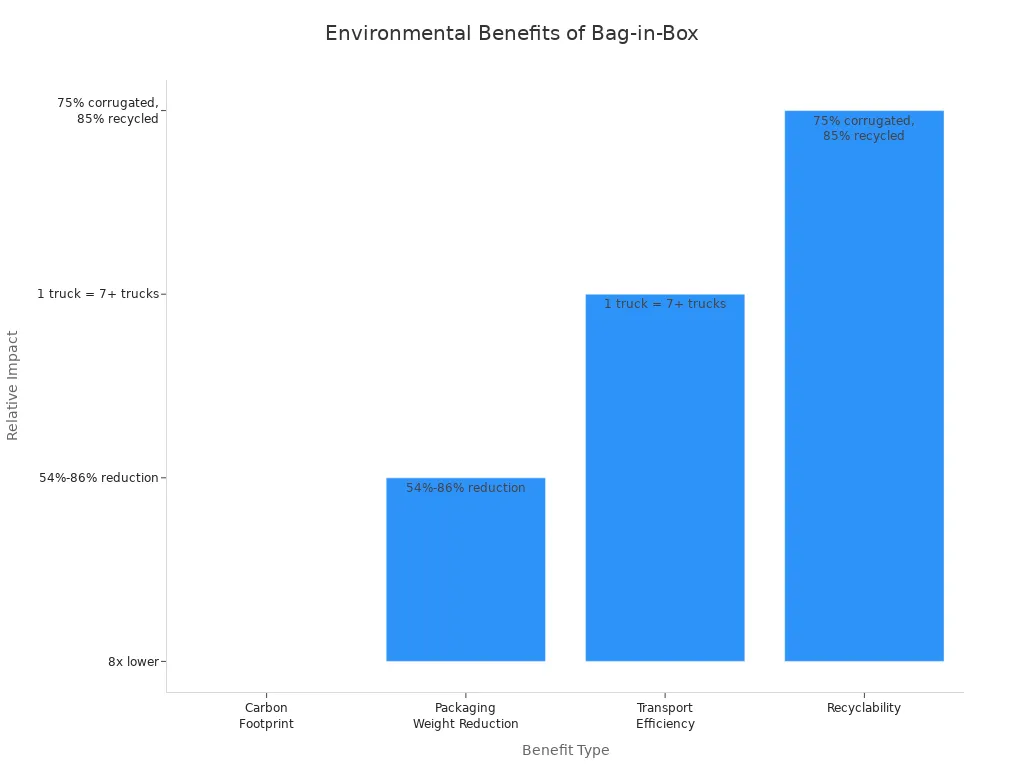
You care about the environment. Bag in box packaging offers a sustainable choice. The lightweight design uses less material than glass or rigid plastic. You reduce your carbon footprint by choosing bag in box packaging. Life cycle studies show that bag-in-box packaging generates 8.8 times fewer emissions than glass bottles. You also benefit from high recyclability rates. Most packages use corrugated cardboard, with up to 85% recycled in Europe. The compact design means you use less energy and water during production.
Bag in box packaging produces fewer greenhouse gases.
You save energy and reduce waste.
The package contains less plastic than other options.
Cost & Logistics
You want to save money and make your operations more efficient. Bag in box packaging helps you lower shipping costs because it weighs 50% less than glass bottles. You pay only $0.12 per unit for shipping, compared to $0.35 for glass. The collapsing feature of bag in box packaging makes storage and transportation easier. After dispensing, the bag becomes almost flat, saving space in your warehouse. One truck of bag in box packaging equals over seven trucks of bottles. BN PACK’s solution is easy to use and lets you customize your branding. You swap out empty bags in seconds, keeping your workflow smooth.
Packaging Type | Weight | Shipping Cost per Unit |
|---|---|---|
Bag-in-Box | 50% lighter than glass | $0.12/unit |
Glass Bottles | Standard weight | $0.35/unit |
You get more space, lower costs, and a better experience for your staff and customers.
Trends in Bag-in-Box Packaging
Smart Packaging
You see smart packaging changing how you use bag in box packaging in 2025. Companies now use high-barrier bags and advanced dispensing taps to keep drinks fresh and safe. The vacuum seal of the tap prevents oxygen from touching the liquid after opening. This helps products like wine and cold brew coffee stay fresh for weeks. The Fres-co Pierce Tap 1, for example, has an oxygen transmission rate of less than 0.01 cc per package per day. You get a consistent flow rate and less waste.
Feature | Benefit |
|---|---|
High-barrier bags | Protect against oxygen, keeping beverages fresh longer. |
Pierce Tap 1 | Reduces contamination and gives you a steady flow. |
Low oxygen transmission | Extends shelf life for sensitive drinks. |
Reduced product waste | Less waste due to longer shelf life and better sealing. |
Consistent flow rate | Makes dispensing easy and reliable. |
SIG has launched a recycle-ready bag for water in bulk packaging. The SIG Terra RecShield bag-in-box material uses a unique polymer instead of aluminum, making it fully recyclable. These innovations help you lower your carbon footprint and support sustainability.
Eco-Friendly Materials
You want packaging that protects the planet. Bag in box packaging uses recyclable materials and less plastic than traditional options. You find paper or fabric handles instead of plastic ones, making it an eco-friendlier option. In 2025, companies use PLA from corn and PHA from sugarcane or algae. These bio-based materials help reduce fossil fuel use and environmental harm. The lightweight design of bag in box packaging also lowers transportation emissions. You see more brands choosing these materials to meet consumer demand for green solutions.
Paper or fabric handles replace plastic.
Boxes use recyclable materials.
PLA and PHA are common bio-based choices.
Less plastic means lower emissions.
Lightweight design helps save energy.
You help the environment every time you choose bag in box packaging.
Market Growth
You notice bag in box packaging growing fast worldwide. The market is expected to reach USD 3.9 billion in 2025 and could grow to USD 6.7 billion by 2035. Asia-Pacific leads as the fastest-growing region because of industrialization and new investments. North America and Europe have mature markets with strong regulations and advanced technology. Latin America and the Middle East show emerging opportunities, especially for cost-sensitive and sustainable applications.
Region | Growth Status | Key Drivers |
|---|---|---|
Asia-Pacific | Fastest-growing | Industrialization, infrastructure, investments |
North America | Mature market | Regulations, technology, consumer awareness |
Europe | Mature market | Regulations, technology, consumer awareness |
Latin America | Emerging niche | Cost-sensitive, sustainability initiatives |
Middle East | Emerging niche | Cost-sensitive, sustainability initiatives |
You see more people choosing bag in box packaging for beverages and food. Consumers want sustainability, cost-effectiveness, and convenience. The shift to at-home consumption and health-conscious choices drives demand. You benefit from packaging that meets your needs and helps the planet.
You see bag in box packaging leading the way in 2025 for beverages, food, and household products. This packaging extends shelf life, reduces waste, and makes storage simple. Many businesses choose bag in box packaging for its lightweight design and cost savings.
Main Uses | Benefits |
|---|---|
Packaging of liquids | Extended shelf life |
Wine, coffee, household | Reduced wastage, easy handling |
E-commerce convenience | Lightweight, resealable |
Innovative brands like BN PACK drive progress by using recyclable materials and smart features. You help the planet and your business when you choose bag in box packaging.