
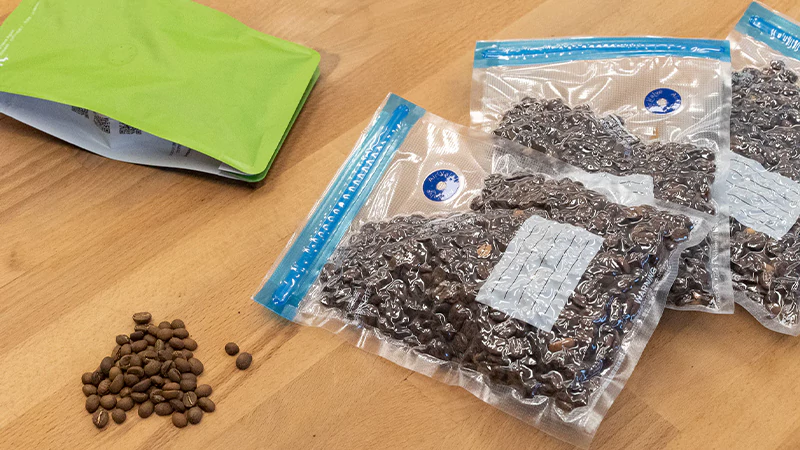
Vacuum-sealed coffee bags offer producers and consumers a reliable way to preserve freshness and extend shelf life. Scientific studies show vacuum-sealed coffee packaging maintains aroma better than traditional methods, especially when combined with freezing. BN PACK provides customizable options, supporting sustainability and cost efficiency while addressing diverse packaging needs.
Vacuum-Sealed Coffee Packaging
How It Works
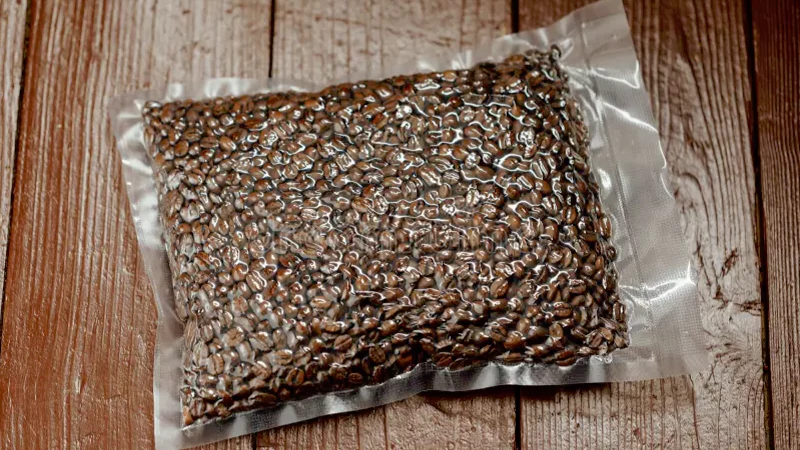
Vacuum-sealed coffee packaging uses technology to remove air from the bag before sealing it tightly. This process creates a low-oxygen environment that helps protect coffee beans from spoilage. The main mechanisms that preserve freshness include oxygen removal, oxidation reduction, and moisture control. The table below explains these mechanisms:
Mechanism | Description |
|---|---|
Oxygen Removal | Removes air to stop bacteria, molds, and yeasts that need oxygen from growing. |
Oxidation Reduction | Slows down the chemical changes that cause coffee to lose flavor and aroma. |
Moisture Barrier | Blocks moisture from entering or leaving, keeping beans dry and flavorful. |
Freezing Synergy | Works with freezing to prevent freezer burn and humidity damage. |
Oxygen Absorbers | Pads inside the bag further lower oxygen, helping beans stay fresh longer. |
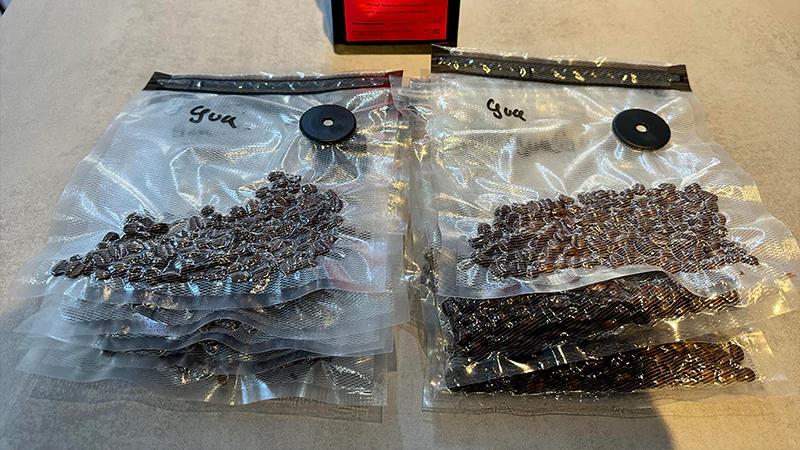
Vacuum-sealing coffee beans can also include oxygen absorber pads for extra protection. When combined with freezing, this method keeps coffee fresh for months.
Why Use It
Vacuum-sealed coffee packaging offers several advantages for both producers and consumers. Removing air from the bag slows oxidation, which is the main cause of coffee staleness. Research shows that vacuum-sealing coffee beans can make them last four to five times longer than beans in regular packaging. Specialty Coffee Association studies confirm that fresh coffee leads to higher customer satisfaction. Proper packaging, such as vacuum-sealed coffee packaging, also prevents moisture and outside odors from affecting the beans. Producers use this method to maintain quality during shipping and storage, while consumers enjoy better-tasting coffee at home.
Benefits of Vacuum-Sealed Coffee Bags
Freshness and Shelf Life
Vacuum-sealed coffee bags offer a powerful solution for anyone who values coffee freshness. These bags create an airtight environment that slows down oxidation, which is the main reason coffee loses its flavor and aroma. By removing air, vacuum-sealed coffee packaging helps preserve the essential oils and aromatic compounds inside the beans. This method extends peak coffee freshness by two to three weeks beyond what conventional storage methods can achieve. Specialty coffee beans stored in vacuum-sealed coffee bags can maintain their best flavor profile up to three or four times longer than beans in standard packaging.
Vacuum-sealed coffee bags also trap the natural carbon dioxide released by roasted beans. This gas acts as a protective barrier against oxygen, further helping to keep the beans fresh. When combined with freezing, vacuum-sealed coffee packaging allows coffee to maintain its quality for several months without moisture damage. These measurable improvements reduce waste and save money by extending the period during which coffee remains fresh and flavorful.
Laboratory tests support these benefits. In controlled experiments, panelists found that vacuum-packed coffee tasted the same as nitrogen-flushed coffee after one week. Coffee stored in simply sealed bags tasted different, showing less flavor retention. Another study compared vacuum-sealed coffee stored in freezers to coffee in Ziploc bags over six months. The results showed that vacuum-sealed coffee generally kept its flavor better, especially for certain origins. Sensory qualities like aroma, flavor, acidity, and aftertaste declined over time in all samples, but vacuum-sealed coffee bags often preserved these qualities better. This demonstrates that packaging choice can make a real difference in coffee freshness and extended shelf life.
Tip: For the best results, always let freshly roasted beans off-gas before vacuum sealing. This step helps prevent moisture buildup and stale flavors.
Quality and Protection
Vacuum-sealed coffee bags provide strong protection against external threats that can harm coffee quality. The process removes air, which helps protect both flavor and aroma. However, timing matters. Sealing beans too soon after roasting can trap carbon dioxide, causing moisture buildup and freshness loss. Valve-sealed bags allow carbon dioxide to escape while blocking oxygen, which helps maintain freshness even better.
Vacuum-sealed coffee bags use multi-layer construction and high-barrier films to block out moisture, oxygen, light, and odors. The table below shows how these barriers work:
Barrier Property | Protective Benefit |
|---|---|
Light Barrier | Blocks harmful UV rays to preserve coffee flavor and aroma |
Odor Barrier | Prevents contamination of coffee fragrance, maintaining aroma |
Moisture Barrier | Resists moisture absorption, protecting taste and quality |
Vacuum-sealed coffee packaging prevents common quality issues such as moisture fluctuations, oxidation, mold growth, and off-flavors. By maintaining stable water activity and moisture content, these bags protect green coffee from absorbing or losing moisture, which can cause unwanted flavor changes and mold. The airtight environment limits oxygen exposure, reducing oxidation and slowing the breakdown of coffee quality. This protection helps maintain coffee freshness and sensory quality for a longer period, making vacuum-sealed coffee bags a preferred choice for both producers and consumers.
Drawbacks of Vacuum-Sealing Coffee Beans
Cost and Investment
Vacuum-sealing coffee beans requires specialized equipment that can represent a significant investment for producers. Vacuum packaging machines use advanced technology, including vacuum pumps and chamber systems, to remove air and seal bags tightly. These machines often cost more upfront than other packaging options. Ongoing expenses include higher energy consumption and maintenance due to the complexity of the equipment. Skilled operators may be needed to monitor and maintain these systems, which can increase labor costs.
The following table compares the costs of vacuum-sealing equipment with other common coffee packaging methods:
Cost Category | Vacuum-Sealing Equipment | Other Packaging Methods (VFFS, Premade Pouch) |
|---|---|---|
Initial Investment | Higher initial cost, especially for fully automatic machines with vacuum pumps; tens of thousands of dollars possible. Additional costs for conveyors, labelers, installation, etc. | Generally lower initial cost for VFFS; premade pouch machines can be costly but vary by features. |
Energy Consumption | Significant due to motors, heaters, vacuum pumps; can lead to high electricity bills. Energy-efficient models exist but still relatively high. | Typically lower energy consumption, especially for simpler VFFS machines. |
Maintenance & Repairs | Higher due to complexity of vacuum systems; includes replacement parts, labor, and potential specialized technician costs. | Generally lower maintenance costs; simpler mechanisms reduce repair frequency and cost. |
Labor Costs | Requires skilled operators for monitoring and maintenance; fewer operators needed for fully automatic machines but with higher expertise. | VFFS machines require more manual intervention for semi-automatic; premade pouch machines need operators but may be slower. |
Packaging Material Cost | Vacuum bags or pouches may be specialized but not necessarily more expensive than premade pouches. | Premade pouches often have higher per-unit material cost; VFFS uses film rolls which are cost-effective at scale. |
Product Quality Benefit | Superior preservation of freshness and longer shelf life due to vacuum sealing. | VFFS is cost-effective but may not preserve freshness as long; premade pouches offer premium packaging options but at higher cost. |
Producers must weigh these costs against the benefits of longer shelf life and superior freshness. For some, the investment in vacuum-sealed coffee bags pays off through reduced waste and higher product quality. For others, especially small-scale roasters, alternative packaging methods may offer a better balance between cost and performance.
Environmental Impact
Vacuum-sealing coffee beans often uses multilayer bags that combine materials like plastic, paper, and sometimes aluminum. These composite materials can make recycling difficult. Most local recycling programs do not accept laminated or multi-material coffee bags because of contamination risks and the complexity of separating layers. Specialist recycling services, such as TerraCycle, offer programs for hard-to-recycle coffee bags, but these are not always accessible or free.
Most coffee bags, especially those with multiple layers or plastic valves, are not accepted in curbside recycling.
Specialist recycling programs exist in several countries, but participation may require extra effort or fees.
Consumers can help reduce environmental impact by buying in bulk, choosing single-material bags, or supporting brands with recycling initiatives.
Bringing reusable containers to local coffee suppliers also helps minimize packaging waste.
Vacuum-sealed coffee bags with recyclable materials and valves can help reduce landfill waste. These bags preserve coffee freshness and reduce product waste, but plastic valves and multilayer construction still pose recycling challenges. Packaging accounts for about 3% of the coffee supply chain’s carbon emissions. Vacuum-sealed bags generally have a moderate carbon footprint compared to single-serve capsules, which create more post-consumer waste. Innovations such as biodegradable kraft paper bags and eco-friendly vacuum seal bags are emerging to balance preservation and recyclability.
BN PACK addresses these concerns by offering eco-friendly coffee bag options. Their sustainable materials, including recyclable and compostable films, help reduce environmental impact while maintaining product quality. Producers and consumers who choose these options support sustainability and help lower the carbon footprint of coffee packaging.
Off-Gassing Issues
Roasted coffee beans naturally release carbon dioxide after roasting, a process called off-gassing. This release continues even when vacuum-sealing coffee beans. The trapped CO2 can cause vacuum-sealed coffee bags to loosen or expand over time. Scientific studies show that vacuum sealing does not speed up the degassing process, but it may remove CO2 from the beans prematurely. This gas normally protects coffee from oxidation, so removing it too soon can lead to faster flavor changes when oxygen re-enters the bag.
Roasted beans continue to off-gas CO2 even in vacuum-sealed bags, which can affect packaging integrity.
Vacuum sealing may remove protective CO2, leading to faster flavor degradation if oxygen enters the bag.
Some experts report that vacuum-sealed coffee stored at room temperature may develop less sweetness and a drier flavor compared to coffee stored in bags with one-way valves.
Freezing coffee soon after vacuum sealing can help preserve flavor and prevent issues caused by trapped CO2.
One-way valves in coffee bags allow CO2 to escape while blocking oxygen, helping maintain freshness.
Off-gassing also affects packaging safety. The buildup of CO2 inside vacuum-sealed coffee bags can challenge the seal, potentially causing leaks. If the seal fails, oxygen can enter, accelerating oxidation and reducing freshness. Nitrogen flushing offers an alternative by replacing oxygen with nitrogen, which preserves freshness without pressure buildup. Managing off-gassing is important for both flavor and safety when vacuum-sealing coffee beans.
Note: Choosing the right packaging method and timing the sealing process carefully can help minimize off-gassing problems and maintain coffee quality.
Alternatives to Vacuum-Packed Coffee
Nitrogen Flushing
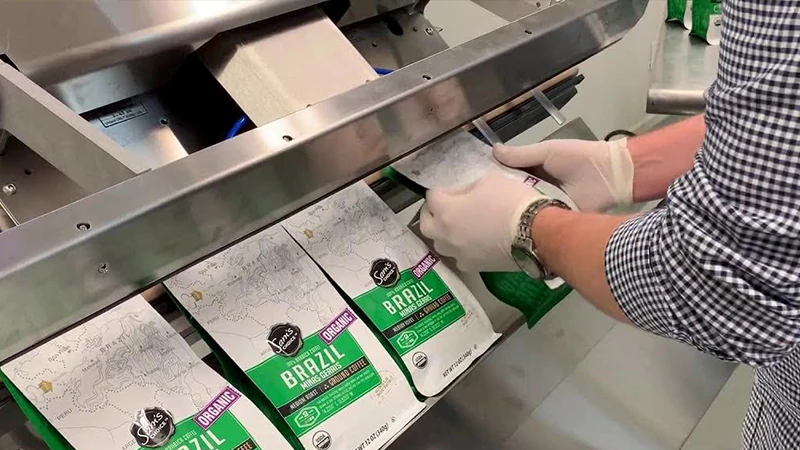
Nitrogen flushing offers a popular alternative to vacuum-packed coffee. This method replaces oxygen inside the packaging with nitrogen gas right after roasting. Nitrogen creates an environment that prevents oxidation and microbial growth. One-way valves on the bags allow carbon dioxide to escape while blocking oxygen from entering. This process helps preserve the aroma and flavor of coffee better than some other methods. The table below compares nitrogen flushing and vacuum pack coffee:
Aspect | Nitrogen Flushing | Vacuum Pack Coffee |
|---|---|---|
Oxygen removal | Nitrogen replaces oxygen | Air is removed by vacuum |
Timing | Immediate after roasting | Wait for beans to off-gas |
Freshness | Preserves aroma and flavor | Some staling during off-gassing |
Pressure | No pressure buildup | Risk of seal failure |
BN PACK provides customizable coffee bag solutions with nitrogen flushing and one-way valves, supporting both freshness and convenience.
Traditional Packaging
Traditional packaging uses materials like foil-lined or biodegradable bags. These bags often include one-way valves to let gases escape while keeping air out. Foil linings block light and moisture, helping to maintain coffee quality. However, these bags may not be as airtight as vacuum-packed coffee bags. Over time, some air can enter, which may affect freshness. The table below highlights the advantages and disadvantages:
Packaging Type | Advantages | Disadvantages |
|---|---|---|
Traditional | Protects from light and moisture, eco-friendly options | Not completely airtight, less protection over time |
BN PACK offers a range of traditional and eco-friendly packaging options, including kraft paper and PLA film, to meet different needs.
Small Batch Buying
Small batch buying helps consumers keep coffee fresh by matching purchase size to consumption rate. Buying smaller amounts means coffee spends less time exposed to air, moisture, and light. Using the “First In, First Out” method ensures older coffee gets used first, reducing waste. Vacuum pack coffee bags work well for bulk buyers who want to store coffee longer. Combining small batch buying with airtight packaging helps maintain quality and minimize waste.
Tip: Choose BN PACK’s flexible packaging solutions to support any preservation method, from nitrogen flushing to traditional and vacuum-packed coffee.
Innovations in Coffee Bag Packaging
Sustainable Materials
Coffee bag packaging has seen major improvements in sustainability. Producers now use compostable films, bio-based plastics, and mono-material recyclable laminates. These materials help reduce environmental impact and keep coffee fresh. Many brands choose PLA, kraft paper, and omnidegradable linings for their packaging. PLA comes from renewable resources and breaks down in industrial composting. Kraft paper gives a natural look and is easy to recycle. Omnidegradable linings break down in soil and water, supporting a circular economy. Some companies use rice paper for specialty bags, which adds aesthetic appeal and compostability. Aluminum foil and PET still provide strong barriers, but they are harder to recycle when combined with other layers.
Material | Sustainability Features | Usage in Coffee Bags |
|---|---|---|
PLA | Compostable, eco-friendly | Lining or multilayer component |
Kraft Paper | Biodegradable, recyclable | Outer layer for organic brands |
Omnidegradable | Breaks down naturally | Paper pouches for freshness |
Rice Paper | Compostable, natural look | Specialty bag outer layer |
BN PACK leads in offering coffee bag packaging with these sustainable materials. Their solutions balance freshness, shelf stability, and environmental responsibility.
Certifications and Standards
Certifications play a key role in sustainable coffee bag packaging. BPI Certification confirms compostability in industrial and home systems. OK Compost and ASTM standards ensure materials break down safely. EN 13432 supports compliance with European regulations. Certified packaging builds consumer trust and helps brands show their commitment to sustainability. Clear labeling, QR codes, and eco-friendly symbols increase transparency. BN PACK’s coffee bag packaging meets ISO9001 and BRC standards, showing their dedication to quality and safety. Brands using certified packaging often see stronger customer loyalty and improved marketability.
Tip: Certified packaging not only protects the environment but also boosts brand reputation and consumer confidence.
Making the Right Choice
For Producers
Coffee producers face many decisions when selecting the best packaging for their beans. They must protect coffee from oxygen, moisture, sunlight, and heat, which can all reduce aroma and freshness. Vacuum sealing removes oxygen and slows oxidation, making it effective for ground coffee. For freshly roasted whole beans, producers often choose bags with one-way degassing valves. These valves let carbon dioxide escape while keeping oxygen out, which helps preserve aroma and prevents package bloating.
Producers should also consider packaging materials. Multi-layer barriers, such as foil or metallized films, block light and moisture. Resealable options like zippers or tin ties improve convenience and keep coffee fresh after opening. Sustainability matters, so many producers now select recyclable or biodegradable packaging to lower their carbon footprint. Packaging size, shape, and branding affect shipping costs and shelf appeal. BN PACK offers flexible solutions, including custom sizes, eco-friendly materials, and advanced sealing features to meet these needs.
For Consumers
Consumers should look for packaging that keeps coffee fresh and easy to use. Whole beans in vacuum-sealed bags stay fresh for up to six months, but the best flavor comes within three to four weeks of roasting. Ground coffee has a shorter shelf life, so buying smaller amounts helps maintain quality. Packaging with inner foil linings, degassing valves, and resealable zippers protects coffee from oxygen, moisture, and light. Opaque bags prevent light from damaging coffee oils and aroma.
Consumers can check for features like tear notches for easy opening and durable, food-safe materials. BN PACK’s coffee bags offer these qualities, along with custom printing and premium finishes. Storing coffee in a cool, dark place and using resealable packaging helps preserve taste and aroma. Choosing the right packaging ensures every cup delivers the best possible flavor.
Vacuum-sealed coffee bags deliver superior freshness and long shelf life, especially with multi-layer barriers. Producers and consumers must balance cost, sustainability, and convenience.
BN PACK’s coffee bags offer airtight seals, eco-friendly materials, and customizable styles.
Experts recommend choosing packaging based on product type, shelf life, and environmental impact.
Factor | Freshness | Cost | Sustainability |
|---|---|---|---|
Vacuum-Sealed | High | Medium-High | Varies |
Alternatives | Medium | Low-Medium | Often Higher |
Selecting the right coffee bag ensures quality and supports responsible choices.
FAQ
How long do coffee beans stay fresh in vacuum-sealed bags?
Coffee beans usually stay fresh for six to nine months in vacuum-sealed bags. Ground coffee loses freshness faster, often within two to four weeks after opening.
Tip: Store bags in a cool, dark place for best results.
What features help coffee bags maintain freshness?
High-barrier materials, degassing valves, and resealable zippers help keep coffee fresh. These features block oxygen, moisture, and light, preserving aroma and flavor.
Feature | Benefit |
|---|---|
Degassing Valve | Releases CO₂, blocks air |
Resealable Zipper | Maintains airtight seal |
Barrier Materials | Prevents moisture entry |
Are BN PACK coffee bags eco-friendly?
BN PACK offers coffee bags made from recyclable, compostable, and biodegradable materials. These options support sustainability and help reduce environmental impact.
Note: Eco-friendly packaging appeals to environmentally conscious consumers.