The packaging bioplastic market is accelerating, with a projected 4.8% compound annual growth rate from 2025 to 2032, driven by sustainability trends and technological advancements.
Brands face new packaging legislation, including Extended Producer Responsibility, which requires recycled content and material reduction.
Novel bioplastic materials from seaweed and agricultural waste offer alternatives that reduce fossil fuel reliance.
Smart packaging and circular economy practices support regulatory compliance and consumer trust.
BN PACK leads the industry by delivering innovative, eco-friendly flexible packaging solutions, meeting international safety and sustainability standards.
Packaging Bioplastic Innovations
New Materials
The packaging industry has seen remarkable breakthroughs in bioplastic materials. Companies now use plant-based, mushroom, and seaweed-derived bioplastics to create sustainable packaging solutions. These materials offer unique benefits for both the environment and product performance.
Plant-based bioplastics such as polylactic acid (PLA) and polyhydroxyalkanoates (PHA) have become popular. PLA is compostable and widely used in food packaging. PHA can biodegrade even in marine environments, helping to address ocean plastic pollution.
Mushroom packaging uses mycelium combined with agricultural waste like corn husks or hemp. This material is fully biodegradable, durable, and provides natural insulation. It decomposes within 30 to 90 days, making it a strong alternative to polystyrene foam.
Seaweed-based packaging uses fast-growing marine plants rich in polysaccharides. These materials are biodegradable, compostable, and sometimes even edible. Seaweed packaging also has antimicrobial properties, which help keep food fresh longer. Seaweed cultivation does not require freshwater, fertilizers, or pesticides, and it absorbs carbon dioxide, supporting climate change mitigation.
Venture capital investment in sustainable packaging exceeded $400 million globally this year, showing strong confidence in these innovations. Companies like Ecovative, Cruz Foam, Xampla, and Notpla are scaling up production and winning awards for their efforts.
BN PACK has embraced these new materials by offering flexible packaging bioplastic options that meet international safety and sustainability standards. The company’s commitment to innovation ensures clients can access the latest eco-friendly solutions for their products.
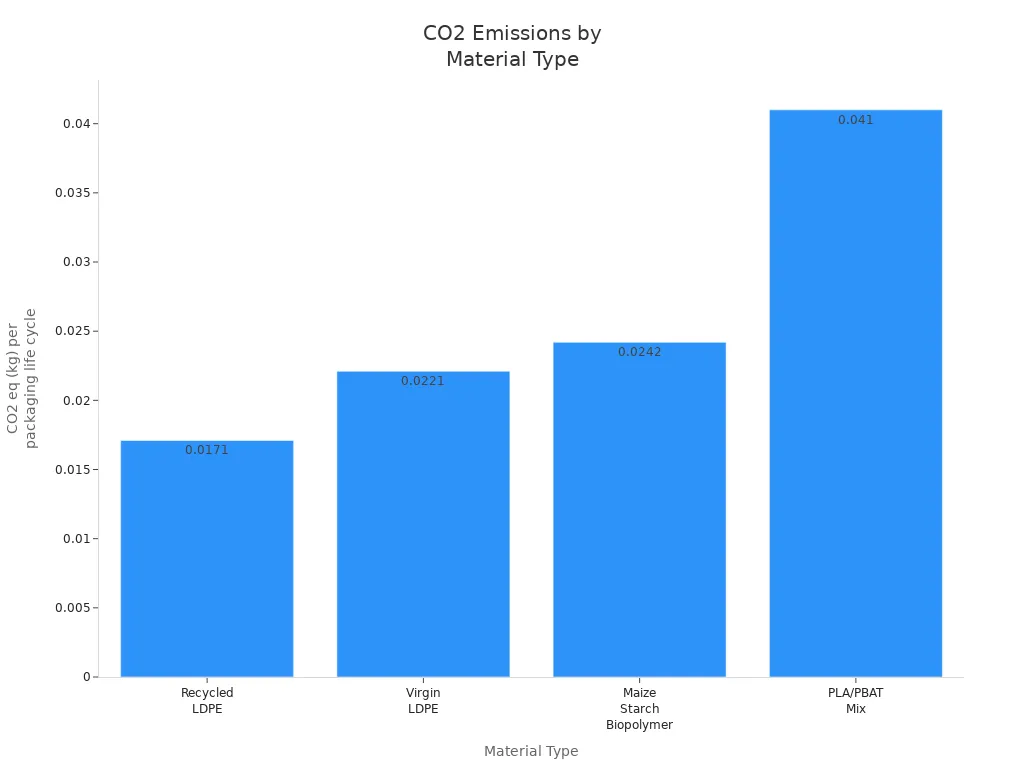
Mono-layer bioplastics are another important development. They simplify recycling and reduce material complexity. The table below compares mono-layer bioplastics and traditional plastics in terms of environmental impact and performance:
Material Type | Environmental Impact Highlights | Performance Notes |
|---|---|---|
Recycled LDPE (R-LDPE) | Lowest CO2 equivalent emissions (0.0171 kg CO2 eq per packaging life cycle); best environmental performance in sanitary packaging | Benefits from circular economy; saves virgin material; currently best environmental option in studied context |
Virgin LDPE | Moderate CO2 emissions (0.0221 kg CO2 eq); higher impact than recycled LDPE | Traditional plastic with known performance; less sustainable than recycled counterpart |
Maize Starch Biopolymer | Higher CO2 emissions (0.0242 kg CO2 eq); significant impacts in raw material production and processing waste | Bioplastic with biodegradability but higher environmental cost in production phase |
PLA/PBAT Mix | Highest CO2 emissions (0.041 kg CO2 eq); high impacts during raw material production and processing waste | Bioplastic blend enhanced for performance but environmentally less favorable in this application |
Smart Packaging
Smart packaging is transforming the way brands and consumers interact with products. Bioplastics play a key role in this shift by enabling new features that support sustainability and enhance user experience.
Active packaging uses oxygen scavengers, moisture regulators, and antimicrobial coatings to extend shelf life and reduce food waste.
Intelligent packaging integrates digital technologies like QR codes, RFID, and NFC tags. These features provide real-time product information, track supply chains, and boost consumer trust.
Edible and active bio-packaging includes films and containers with antiseptic properties, vitamins, or edible components. These innovations help preserve food and offer added value.
Nanotechnology improves the mechanical strength and barrier properties of bioplastics, making them more competitive with traditional plastics.
Smart packaging also supports regulatory compliance and consumer engagement. For example, packaging bioplastic solutions can include freshness indicators or tamper-proof designs. These features help brands build transparency and loyalty.
BN PACK leverages smart packaging technologies in its flexible packaging bioplastic offerings. The company uses digital printing, high-barrier films, and customizable features to meet the evolving needs of global brands.
Advanced Recycling
Advanced recycling methods are essential for managing bioplastic waste and supporting a circular economy. Traditional mechanical recycling has limitations, especially with mixed or contaminated plastics. New technologies are addressing these challenges.
Enzymatic recycling uses enzymes to break down PET and PLA into monomers. This process allows repeated recycling without loss of quality and works even with contaminated materials.
Chemical recycling, including molecular recycling and pyrolysis, converts plastics into oils and gases. These can be refined into new plastics, reducing landfill waste and emissions.
Biological recycling methods, such as industrial composting and enzymatic degradation, turn starch-based and PLA bioplastics into compost or new biopolymers.
Advanced sorting technologies, like Near Infrared systems, separate bioplastics from mixed waste streams efficiently.
Public-private partnerships and national initiatives are improving recycling infrastructure and promoting community recycling programs.
Advanced recycling methods are more effective than conventional mechanical recycling in managing packaging bioplastic waste. They accept a wider range of materials, handle contamination better, and produce higher quality recycled products.
BN PACK supports these efforts by designing packaging bioplastic products that are compatible with advanced recycling and composting systems. The company’s focus on innovation and sustainability helps clients achieve their zero waste and circular economy goals.
Sustainability Trends 2025
Circular Economy
The packaging bioplastic industry is shifting toward circular economy models that prioritize resource efficiency and waste reduction. Companies now use drop-in biobased feedstocks, which replace fossil-based materials without changing existing manufacturing processes. This approach allows manufacturers to integrate bioplastics into current recycling streams, making sustainability more achievable. Reusable packaging systems are gaining momentum, supported by regulatory frameworks like the EU Packaging and Packaging Waste Regulation (PPWR) and national laws in France and Chile. These systems aim to reduce single-use plastics and encourage reuse, which helps combat plastic pollution.
Circular economy practices impact the lifecycle of packaging bioplastic in several ways:
They promote sustainable sourcing of raw materials and energy-efficient production.
Manufacturers design packaging for recyclability or compostability, improving end-of-life management.
Proper waste management infrastructure ensures bioplastics are recycled or composted, not sent to landfills.
Life cycle assessment (LCA) evaluates environmental impacts at every stage, guiding improvements.
Clear labeling and certification, such as EN 13432, help consumers handle packaging correctly.
Recycling and upcycling offer opportunities for high-value product recovery, though they require better collection and sorting.
Circular bioeconomy approaches combine recycling with increased biomass use, reducing emissions and resource consumption.
BN PACK supports these circular economy models by offering certified compostable and recyclable packaging solutions. The company’s ISO9001 and BRC-certified factory ensures advanced production and strict quality control, helping clients meet sustainability goals.
♻️ Circular economy models in packaging bioplastic are transforming the industry, making reuse and responsible end-of-life management central to sustainability.
Regulations
Regulations play a critical role in driving innovation and adoption of sustainable packaging bioplastic. Major global markets enforce strict standards and compliance requirements, shaping the future of packaging.
Region | Core Standard(s) | Registration/EPR Requirement | Enforcement Level | Key Compliance Risk |
|---|---|---|---|---|
Europe (EU) | EN13432, EU PPWR | Yes (Extended Producer Responsibility) | Very Strict | Border seizure, heavy fines |
USA | ASTM D6400, BPI | BPI/State-level certification | Strict | Labeling fines, certification mandates |
Canada | SOR/2022-138 | No (yet) | Strict | Market recalls, bans on single-use plastics |
Japan | Plastic Resource Circulation Act, JSA/SOLAS | Yes | Strict | Import refusal, mandatory registration and traceability |
Singapore, Malaysia, Thailand | EN13432, ISO 17088 | Yes | Strict | Fines, port seizures, blacklisting |
China enforces bans on non-degradable plastics through standards like GB Standard 38507-2023 and nationwide single-use plastic bans effective in 2025. Germany’s PPWR mandates recyclable packaging by 2030, with compostability requirements and federal investments in innovation. The USA’s California SB 54 requires 100% recyclable or compostable packaging by 2032, with other states following suit. Over 127 countries regulate traditional plastic usage, including bans on single-use plastics in India, Hong Kong, Nigeria, and Solomon Islands. These regulations encourage the adoption of packaging bioplastic and stimulate innovation in advanced polymers and new applications.
BN PACK meets global regulatory requirements by maintaining certifications such as ISO9001, BRC, and FDA food-contact approvals. The company’s experts guide clients through material selection and certification processes, ensuring compliance with international standards.
Regulatory changes are not only enforcing compliance but also accelerating the shift to sustainable packaging bioplastic across industries.
Industry Commitments
Leading packaging companies have made strong sustainability commitments, integrating bioplastics into their products and operations. Eastman Chemical Company, Plantic Technologies, Futamura Group, NatureWorks LLC, Polymateria Ltd, TIPA Corp Ltd, and Biome Bioplastics all develop innovative bioplastic materials and compostable films. These companies invest in research and partnerships to expand the use of biodegradable and recyclable packaging.
Major brands such as Coca-Cola, PepsiCo, Heinz, Ford, Mercedes, and Toyota have adopted packaging bioplastic to meet sustainability goals and reduce carbon footprints. They focus on biodegradability, compostability, and environmental impact reduction. Consumer demand for sustainable packaging continues to grow, with many willing to pay premiums for recycled content.
BN PACK demonstrates industry leadership through its commitment to sustainability and innovation. The company holds certifications like ISO 14001 for environmental management, ISO 9001 for quality, FSC® for responsible sourcing, and FDA approvals for food-contact safety. Regular third-party audits verify compliance with international benchmarks. BN PACK collaborates with global brands to deliver packaging solutions that meet both environmental standards and functional needs.
🌱 Industry-wide sustainability pledges and certifications are setting new benchmarks for responsible packaging, with BN PACK leading by example in flexible packaging innovation.
Challenges and Solutions
Cost and Scale
Bioplastic packaging faces several cost and scalability hurdles. Manufacturers encounter higher production costs because sourcing and processing renewable feedstocks require specialized equipment and expertise. The limited variety of bioplastic materials restricts flexibility, making it difficult to match the performance of conventional plastics. Production capacity remains low, as bioplastics lack the extensive infrastructure of traditional plastics. Raw material prices often fluctuate due to reliance on crops like sugarcane and corn, adding unpredictability to costs. Recycling integration also presents challenges, since mixing bioplastics with conventional plastics can contaminate recycling streams.
Solution Category | Description | Impact on Cost-Competitiveness and Viability |
|---|---|---|
Manufacturing Process Advances | Optimizing molding and extrusion for biodegradable materials | Reduces waste and production time, lowering costs |
Developing nano-cellulose, PHA, and algae-based plastics | Improves performance and scalability, reducing raw material costs | |
Enhanced Barrier Properties | Using nanocomposites and multilayer films | Extends shelf life, making bioplastics more competitive |
Economies of Scale | Increasing production capacity and raw material availability | Drives down costs, making bioplastics more affordable |
Recent advancements in PHA production have lowered costs and improved scalability, making bioplastics more viable for widespread use. As manufacturing processes become more efficient, the price gap between bioplastics and traditional plastics continues to shrink.
Supply Chain
The global supply chain for bioplastics remains complex and less established than that of fossil-fuel-based plastics. Only a small percentage of plastics feedstocks come from bio sources, and the supply chain involves multiple stages from feedstock sourcing to conversion. Environmental challenges include emissions, land use competition, and trade-offs with food production. Regional differences in manufacturing capacity and regulations add further complexity.
To address these issues, companies conduct thorough supply chain assessments and collaborate closely with suppliers. They ensure compliance with certifications and standards, perform cost-benefit analyses, and stay updated on technological advancements. These strategies help secure a stable and sustainable supply of raw materials, supporting the growth of bioplastic packaging.
Consumer Adoption
Consumer adoption of bioplastic packaging faces several barriers. Limited availability and higher costs discourage many buyers. Many consumers lack knowledge about bioplastics, their benefits, and proper disposal methods. Concerns about quality, safety, and performance also affect acceptance. Emotional factors, such as the desire to make environmentally friendly choices, influence purchasing decisions more than rational assessments.
Brands address these challenges by launching awareness campaigns and using clear, informative labeling. They educate consumers about the environmental benefits and correct disposal of bioplastic packaging. Eye-catching, third-party certified labels help build trust and encourage responsible behavior. By combining education, certification, and social messaging, companies foster greater acceptance and responsible use of bioplastic packaging.
Real-World Impact
Food & Beverage
The food and beverage industry leads the way in adopting packaging bioplastic solutions. Major brands such as Coca-Cola, Vittel, and Volvic use bio-PET bottles, which help reduce reliance on fossil fuels. Companies like Chipotle and A&W Canada have switched to compostable bowls, cups, and sleeves, lowering their environmental footprint. Foodservice providers now offer bioplastic cutlery, cups, plates, and carrier bags that compost alongside food waste. Polylactic acid (PLA) and polyhydroxyalkanoates (PHA) serve as popular choices for clear containers, beverage packaging, and disposable cutlery. These materials decompose naturally, supporting landfill diversion and reducing pollution. The shift to biodegradable packaging aligns with consumer demand for eco-friendly products and helps brands improve loyalty and operational efficiency.
Market trends show that compostable and recyclable packaging bioplastic options continue to grow in popularity, driven by regulatory pressures and sustainability goals.
E-commerce
E-commerce platforms face unique challenges due to the high volume of packaging required for shipping. Companies respond by adopting packaging bioplastic materials derived from regenerative crops, algae, and agricultural residue. These solutions maintain product protection and shelf-life while minimizing environmental impact. Bioplastics offer recyclability in existing waste streams and compostability under certified conditions. Brands choose biodegradable and recyclable packaging to meet consumer expectations and enhance reputation. Technological advancements support the development of flexible, lightweight packaging that reduces shipping emissions. The rapid growth of online sales reinforces the need for sustainable packaging to manage waste and support circular economy principles.
E-commerce brands prioritize packaging bioplastic to meet ESG commitments and regulatory requirements.
Resealable and customizable features improve product freshness and reduce waste.
BN PACK Case Study
BN PACK demonstrates leadership in sustainable packaging bioplastic innovation. The company holds certifications such as ISO9001, FSC, BRC, FDA, and OK COMPOST HOME, confirming its commitment to quality and environmental responsibility.
Certification | Purpose / Relevance |
|---|---|
ISO9001 | Quality management system |
FSC | Responsible paper sourcing |
BRC | Food safety compliance |
FDA | US food-grade packaging |
OK COMPOST HOME | Home compostability |
Biodegradable Bags (OWS) | Material biodegradability |
International Recyclable | Packaging recyclability |
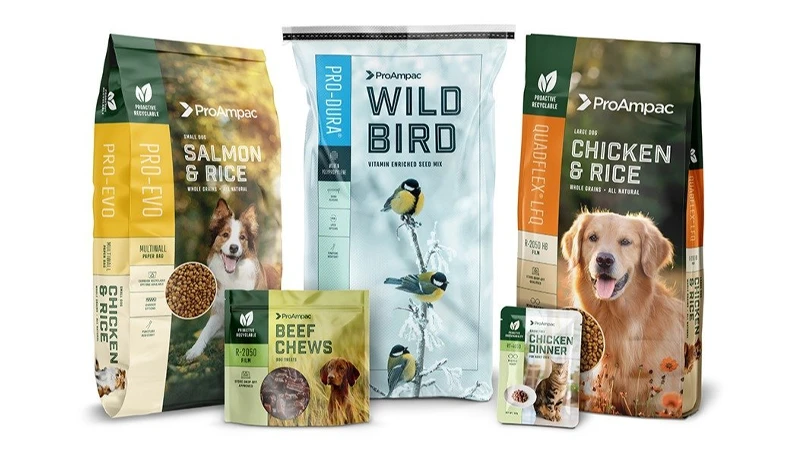
BN PACK’s innovations include plastic-free degassing valves, mono-material recyclable packaging, and lightweight designs that reduce shipping emissions. The company’s solutions help clients achieve up to 60% less plastic waste and a 30% reduction in carbon emissions. BN PACK offers biodegradable materials such as PLA, starch-based films, and bagasse, which enrich soil after decomposition. Their product line includes biodegradable tea bags, chocolate packaging, and dog food bags. By supporting recyclable and compostable packaging, BN PACK enables brands to meet sustainability targets and regulatory demands.
BN PACK’s commitment to packaging bioplastic innovation sets new standards for environmental stewardship and product performance.
Recent innovations and sustainability trends are transforming the future of packaging.
The market for bioplastics is expanding rapidly, driven by consumer demand and strict regulations.
Brands adopt new materials and smart technologies to reduce waste and improve transparency.
Circular economy models and industry commitments support long-term environmental goals.
Forward-thinking companies like BN PACK lead this change. Businesses seeking to enhance sustainability and market competitiveness should consider eco-friendly packaging solutions.
FAQ
What are bioplastics, and how do they differ from traditional plastics?
Bioplastics come from renewable sources like plants or algae. Traditional plastics use fossil fuels. Bioplastics can be biodegradable or compostable, reducing environmental impact. Many bioplastics offer similar strength and flexibility as conventional plastics.
Are bioplastic packaging materials safe for food contact?
Most bioplastic packaging meets strict safety standards, including FDA and BRC certifications. BN PACK provides food-grade bioplastic solutions that protect products and maintain freshness. Brands can trust these materials for direct food contact.
How should consumers dispose of bioplastic packaging?
Consumers should check packaging labels for disposal instructions. Some bioplastics are compostable at home or in industrial facilities. Others are recyclable. Proper sorting helps ensure responsible waste management and supports sustainability.
What certifications does BN PACK hold for sustainable packaging?
Certification | Purpose |
|---|---|
ISO9001 | Quality management |
BRC | Food safety |
FSC | Responsible sourcing |
OK COMPOST HOME | Home compostability |
FDA | Food-contact approval |
Can bioplastics help brands meet new packaging regulations?
Bioplastics support compliance with global regulations, including Extended Producer Responsibility and compostability standards. BN PACK’s certified solutions help brands reduce waste, improve recyclability, and meet legal requirements in major markets.