Choosing between aluminum and PLA for your coffee bag interiors depends on your priorities. If you want maximum freshness and a strong moisture barrier for your coffee packaging bags, aluminum stands out. For brands focused on sustainability and eco-friendly coffee packaging, PLA offers compostability and renewable sourcing. BN Pack brings over 22 years of expertise in custom flexible packaging, supporting both options with innovative interior lining solutions.
Metric | Aluminum | PLA |
|---|---|---|
Freshness Retention | Excellent | Improved, especially chilled |
Environmental Benefit | Recyclable, circular use | Compostable, renewable |
The Aluminium vs PLA decision shapes both the shelf life and the brand image of your coffee bag.
Key Takeaways
Aluminum coffee bag interiors offer the best protection for freshness by blocking oxygen, moisture, and light, extending shelf life up to two years.
PLA liners provide a compostable, plant-based option that supports sustainability and appeals to eco-conscious customers, keeping coffee fresh for up to 12 months.
Choosing aluminum supports recycling and a premium brand image, while PLA highlights eco-friendliness and modern, minimalist design.
Consider your brand’s priorities like freshness, environmental impact, cost, and customer values when selecting between aluminum and PLA packaging.
BN Pack offers customizable packaging solutions with both materials, helping brands protect coffee quality and meet sustainability goals.
Coffee Bag Interior Importance
Freshness Protection
When you select coffee packaging bags, the interior design plays a key role in keeping your coffee fresh. The right coffee bag interior stops air, moisture, and light from reaching your beans. This protection helps you deliver a rich aroma and flavor to your customers every time they open a bag.
Airtight materials in a coffee bag prevent air from entering, which reduces oxidation and keeps the beans from turning stale or losing color.
Degassing valves let carbon dioxide escape while blocking oxygen, so the coffee bag maintains the right gas balance.
Moisture-proof layers stop dampness from ruining the aroma and taste.
UV-resistant and opaque materials shield the beans from light, which can break down flavors.
Anti-odor barriers keep outside smells from mixing with the coffee’s unique profile.
Resealable zippers give extra protection after opening, locking in freshness for longer.
A scientific study using gas chromatography mass spectrometry (GC/MS) found that packaging with a screw cap preserved the freshness of coffee best. This design controlled oxygen and carbon dioxide inside the coffee bag, keeping the aroma and flavor intact. Other methods, like clips or tape, did not offer the same level of protection.
Product Safety
You want your coffee packaging to do more than just keep coffee fresh. It must also protect the product from contamination and spoilage. The interior of a coffee bag acts as a barrier against bacteria, dust, and other unwanted particles. This protection ensures that your coffee beans packaging meets food safety standards and keeps your customers safe.
Tip: Choose a coffee bean packaging bag with certified food-grade materials. This step adds another layer of protection and builds trust with your customers.
A well-designed coffee bag interior also prevents leaks and spills, which helps maintain a clean shelf and a professional look for your brand. With the right coffee packaging, you can guarantee both the freshness of coffee and the safety of your product from the roastery to the customer’s cup.
Aluminum Foil Pouches
Barrier Properties
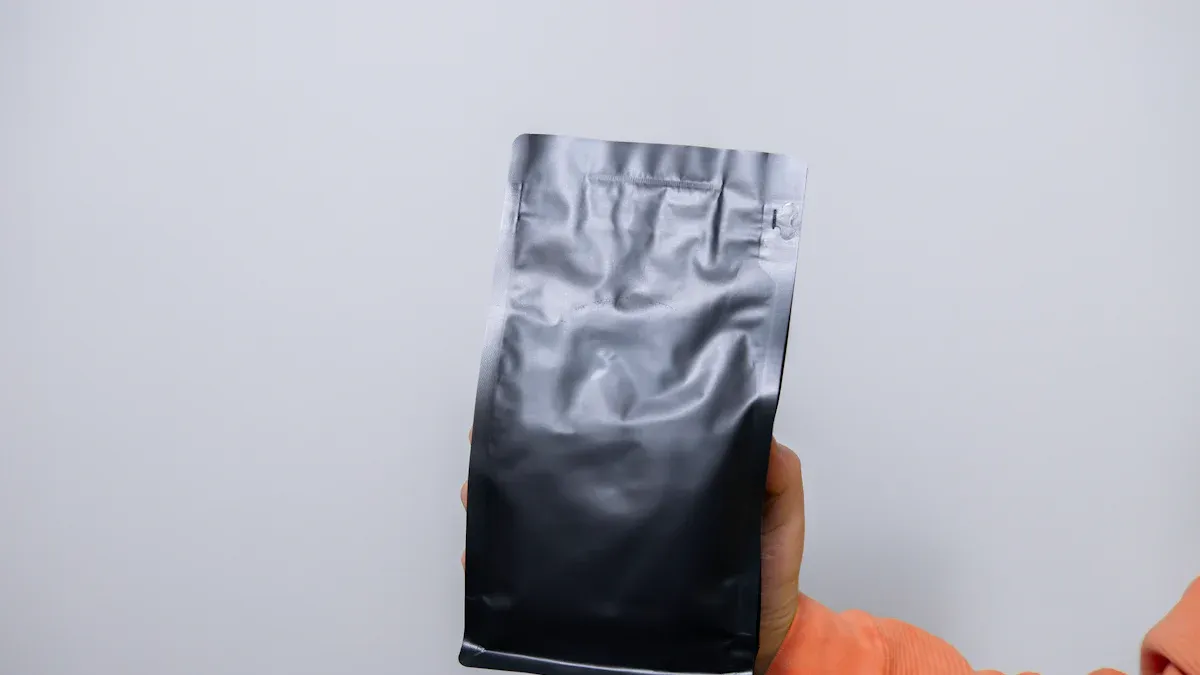
When you choose aluminum foil pouches for your coffee bag, you get outstanding barrier qualities. Aluminum foil blocks oxygen, moisture, light, and odors. This means your coffee stays fresh and flavorful for longer. The multilayer structure of an aluminum foil pouch combines a pure aluminum foil sheet with outer and inner film layers. The outer layer adds strength and printability, while the inner layer seals the pouch tightly. These features make aluminum foil pouches a top choice for preserving coffee quality.
Exceptional barrier protection against oxygen, moisture, light, and odors
Extended shelf life by minimizing exposure to degrading elements
Mechanical stability and flexibility for various pouch styles
Printability and customization through lamination
Structural integrity via multilayer laminates
Property | Description |
|---|---|
Gas permeability | Negligible permeability to gases |
Water vapor permeability | Negligible permeability to water vapor |
Odor barrier | Negligible permeability to odors |
Dimensional stability | Maintains shape and size under conditions |
Additional features | Opacity, grease resistance, brilliant appearance, dead folding characteristics |
Durability and Heat Resistance
Aluminum foil pouches offer impressive durability. The foil layer resists punctures and tears, keeping your coffee bag safe during shipping and storage. Aluminum foil has a tensile strength of up to 150 MPa, which means it can handle rough handling. The heat resistance of aluminum foil pouches also stands out. The foil and polymer layers create a hermetic seal at high temperatures, protecting your coffee from outside elements.
Property/Characteristic | Value/Range | Impact on Durability and Heat Resistance |
|---|---|---|
Foil Thickness | 6–20 µm | Greater mechanical strength and puncture resistance |
Tensile Strength | 70–150 MPa | Improves resistance to tearing and damage |
Thermal Conductivity | ~237 W/m·K | Rapid, uniform heat distribution |
Oxygen Transmission Rate (OTR) | Near zero | Prevents oxygen ingress |
Moisture Vapor Transmission Rate (MVTR) | < 0.01 g/m²·day | High moisture barrier |
UV Reflection | 98–99% | Protects contents from UV damage |
Heat Seal Layers | 10–50 µm thick | Hermetic seals at 130–160 °C |
Recyclability
Aluminum foil pouches support your brand’s sustainability goals. Aluminum is infinitely recyclable and keeps its properties after each cycle. In the U.S., more than 80% of aluminum production comes from recycled sources. Nearly 75% of all aluminum ever produced is still in use today. New recycling methods, such as molten metal pyrolysis, recover clean aluminum from laminated pouches. This process also converts most plastic layers into waxes, making aluminum foil pouches a strong option for recyclable packaging.
Consumer Perception
You want your coffee bag to stand out on the shelf. Aluminum foil pouches give a premium look with their brilliant appearance and dead folding qualities. Many consumers associate aluminum foil with freshness and quality. The opacity of the foil protects the coffee from light, which reassures buyers about product safety. Metallized pouches offer similar visual appeal, but aluminum foil pouches provide superior barrier qualities and durability. When you use aluminum foil pouches, you show your commitment to freshness, safety, and recyclable packaging.
PLA Coffee Bag Liners
Sustainability
You can make a positive impact by choosing PLA coffee bag liners. PLA, or polylactic acid, comes from renewable resources like corn starch. This makes it one of the most sustainable packaging materials available for coffee bags. Traditional packaging materials such as plastic and aluminum often end up in landfills and require a lot of energy to produce. PLA coffee bag liners help reduce your environmental footprint and support eco-friendly packaging goals. Many roasters now find compostable coffee packaging more affordable and accessible. Environmentally conscious consumers prefer biodegradable options over recycled plastics. When you use PLA, you show your commitment to sustainability and support the shift toward environmentally friendly packaging.
Barrier Performance
You want your coffee bag to keep beans fresh and flavorful. PLA coffee bag liners offer strong barrier qualities that protect against moisture and oxygen. These liners use cellulose-based biopolymer coatings and natural resins to provide grease resistance and maintain the aroma of your coffee. PLA is widely used in bio-based coffee capsules because it preserves freshness. Continuous improvements in PLA formulations have enhanced durability, making it a reliable choice among sustainable packaging materials.
Compostability
PLA coffee bag liners stand out for their compostability. Certified compostable packaging materials must meet strict standards like EN 13432 in Europe. This standard requires the material to break down within a few months and leave no harmful residue. In the U.S., certifications such as BPI or TÜV Austria confirm that PLA coffee bag liners will compost properly in industrial facilities. Home compostable bags decompose naturally in backyard bins, making disposal easy for your customers. Clear labeling and disposal instructions help ensure that compostable bags do not end up in landfills.
Consumer Appeal
You can attract eco-conscious buyers by using PLA coffee bag liners. Many premium coffee brands now choose PLA because it aligns with consumer values. Research shows that 54% of European coffee buyers look for packaging claims like “less plastics” and “recyclable.” About 44% say sustainable packaging influences their decision to buy again. Millennials and Gen Z especially prefer brands that use sustainable materials and eco-friendly packaging. By choosing PLA, you help your brand stand out and build stronger customer relationships.
Aluminium vs PLA
Freshness and Shelf Life
When you compare aluminium vs pla for coffee bag interiors, you see clear differences in how each material protects the freshness of coffee. Aluminum foil pouch interiors create a nearly perfect barrier against oxygen, moisture, and light. This barrier is critical because even a small amount of oxygen can speed up coffee staling. Studies show that reducing oxygen inside a coffee bag to just 0.5% can extend shelf life by up to 20 times. Aluminum foil keeps water vapor and odors out, so your coffee stays aromatic and flavorful for longer.
PLA linings also offer good protection against moisture and oxygen. They use biopolymer coatings to block water vapor and humidity, which helps preserve freshness for up to 12 months. However, PLA can absorb some moisture over time, which may affect the shelf life of your coffee. If you want to maximize the life and aroma of your beans, aluminum foil pouch interiors give you the strongest defense.
Tip: If your brand’s top priority is the longest possible shelf life and maximum freshness of coffee, aluminum foil pouch interiors are the best choice.
Environmental Impact
You want your coffee bag to reflect your brand’s values. The aluminium vs pla debate often centers on environmental impact. Aluminum foil comes from metal and is highly recyclable. Recycling aluminum saves about 90% of the energy needed to make new foil. Most aluminum foil pouch materials can be recycled, but they often need special facilities to separate the foil from other layers. If not recycled, aluminum can last a long time in landfills.
PLA, on the other hand, is a bioplastic made from renewable resources like corn or sugarcane. PLA linings are compostable in commercial facilities, breaking down in about 90 days. This makes PLA a strong choice for brands focused on sustainability. However, composting PLA requires the right infrastructure, and if it ends up in a landfill, it may not break down as intended. Both materials have unique environmental benefits and challenges.
Aspect | Aluminum Foil Interior | PLA Lining Interior |
|---|---|---|
Material Origin | Metal, recyclable | Bioplastic from renewable resources |
Environmental Benefit | Saves 90% energy when recycled | Compostable in commercial facilities |
End-of-Life Impact | Long-lasting if not recycled | Decomposes in ~90 days (industrial) |
Recycling Challenges | Needs separation facilities | Needs composting infrastructure |
Cost Factors
Cost plays a big role in your packaging decision. Aluminum foil pouch interiors often cost more than PLA linings because of the energy needed to produce and laminate the foil. However, aluminum’s superior barrier properties can reduce product loss and waste, which may save money over time. PLA linings usually have a lower upfront cost and use less energy to produce. As compostable packaging becomes more popular, PLA prices continue to drop.
You should also consider the cost of end-of-life processing. Aluminum can be recycled many times, which adds value if your customers have access to recycling programs. PLA needs commercial composting, which may not be available everywhere. Think about your target market and what disposal options they have.
Brand Image
Your choice between aluminum and PLA affects how customers see your brand. Aluminum foil pouch interiors give your coffee bag a premium look and feel. Many people associate aluminum with quality, durability, and freshness. This can help your product stand out on the shelf and build trust with buyers.
PLA linings send a strong message about your commitment to the environment. Many consumers, especially younger ones, look for brands that use compostable or renewable materials. Using PLA can help you connect with eco-conscious customers and show that your brand cares about sustainability. Minimalist designs with PLA also create a modern, clean look that appeals to many buyers.
Note: Packaging materials do more than protect your product. They shape your brand’s identity and influence how customers feel about your coffee.
Aluminium vs PLA: Quick Comparison Table
Performance Dimension | Aluminum Foil Pouch Interior | PLA Lining Interior |
|---|---|---|
Barrier Properties | Excellent (oxygen, moisture, light) | Good (moisture, oxygen) |
Shelf Life | Up to 2 years | Up to 12 months |
Environmental Impact | Recyclable, energy-saving | Compostable, renewable |
Cost | Higher upfront, long-term value | Lower upfront, growing adoption |
Brand Image | Premium, quality, trusted | Eco-friendly, modern, minimalist |
Use this table to match your brand’s priorities with the right coffee bag interior lining. If you want the longest shelf life and a premium image, aluminum foil pouch interiors are ideal. If you want to highlight sustainability and appeal to eco-conscious buyers, PLA linings are a smart choice.
Choosing the Right Coffee Bag Material
Aligning with Brand Values
Selecting the right material for your coffee packaging bags starts with understanding your brand’s core values and goals. You want your packaging to do more than just protect your product. It should tell your story and connect with your customers.
Cost, customization, freshness, and sustainability all play a role in your decision.
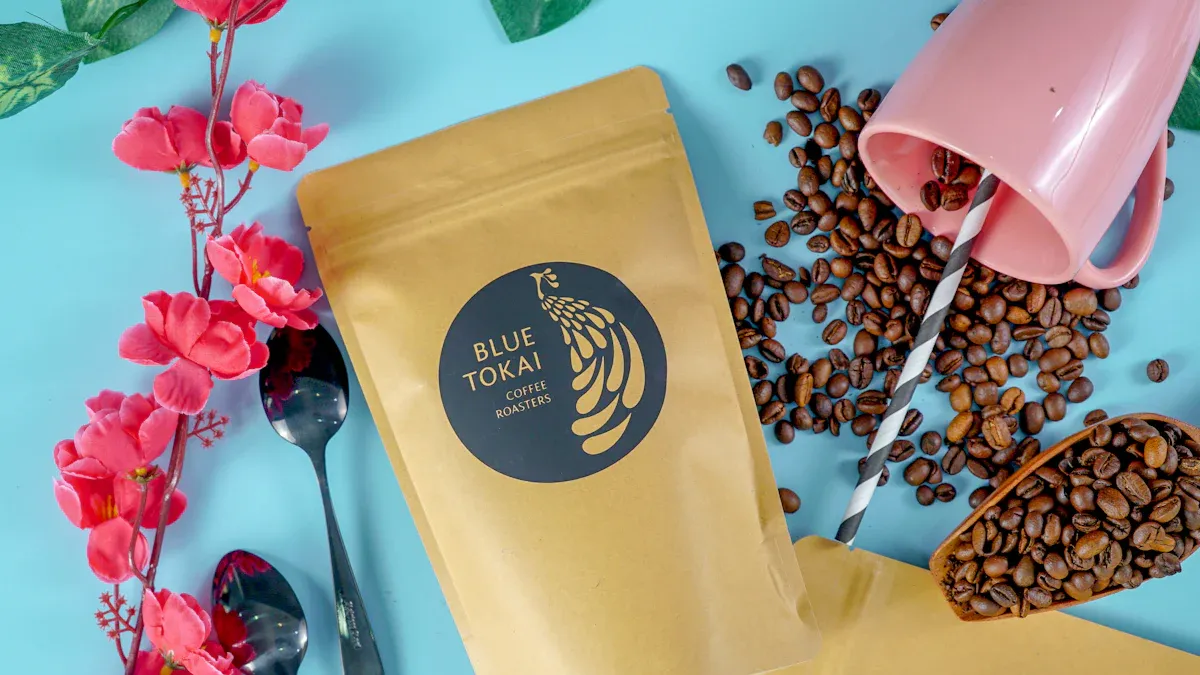
Kraft paper offers affordability and biodegradability, but may not give a premium feel.
Matte finish bags provide high customization and better freshness, but they can be more expensive and less sustainable.
Packaging styles like stand-up pouches, gusseted bags, and flat pouches help you target different customer needs.
You should also consider how your packaging communicates your brand identity. Use color psychology and storytelling elements to make your product stand out. Many consumers—up to 70%—say they will pay more for eco-friendly packaging. Clear messaging about sustainability or specialty features can build trust and loyalty.
Tip: Include details like roast type, flavor profile, and your brand story on the packaging. This helps customers connect with your product and understand what makes it unique.
When you choose packaging materials, think about your target audience, your sustainability commitments, and your budget. Make sure your packaging meets food safety standards and regulatory requirements.
Market Trends
You need to stay ahead of market trends to keep your brand relevant. The demand for sustainable and innovative packaging continues to rise. Many consumers now prefer biodegradable and eco-friendly options. Companies are launching new products that use compostable bioplastics, recycled content, and renewable resources.
Recent launches include recyclable mono-material pouches, biodegradable coffee packaging, and compostable cups.
Brands use materials like PLA, PHA, kraft paper, and even coffee grounds to create packaging that supports a circular economy.
Lightweight and flexible bags and pouches use less material and help maintain freshness with multilayer structures.
The paper and paperboard segment is growing, showing a shift toward cost-effective and recyclable solutions.
Generation Z and younger buyers look for sustainable and visually appealing packaging.
A table below summarizes key market insights:
Trend Area | Key Insight |
|---|---|
Sustainable Materials | Shift from plastic to recyclable paper and metal; expected to hold 65% market share by 2027 |
Packaging Innovation | Bags and pouches use 75% less material, maintain freshness, and support sustainability |
Consumer Influence | Gen Z drives demand for eco-friendly, attractive packaging |
Regional Growth | Europe and APAC lead in sustainable, cost-effective packaging adoption |
Industry Drivers | Regulatory policies and innovation push sustainability innovation in packaging |
You can see that aligning your packaging with these trends not only meets consumer expectations but also strengthens your brand’s position in the market.
BN Pack Custom Solutions
You want packaging that fits your brand’s unique needs. BN Pack offers a wide range of customizable solutions for both aluminum and PLA packaging. You can choose from recyclable, compostable, and biodegradable options that meet strict food safety and environmental standards.
BN Pack’s EcoLock series uses PLA-based materials enhanced with additives for better strength and barrier properties.
The ReGen line features mono-material PP films with mineral-based barriers, while the HempGuard line uses hemp composites for added sustainability.
You can select features like resealable zippers, child-resistant closures, and degassing valves to keep your coffee fresh and convenient.
BN Pack supports low minimum order quantities and fast turnaround times, making it easy for startups and established brands to adapt quickly.
Certifications such as FDA, BRC, FSC, and TÜV Rheinland OK Compost Industrial validate the eco-friendly claims of BN Pack’s packaging.
BN Pack’s success stories show real results. Brands using BN Pack’s solutions have seen up to 60% less flavor loss over 12 months, a 35% drop in product returns, and 30% savings in shipping costs. Customization options include sizes from 2oz to 5lb, various shapes, and advanced printing techniques like metallic foils and embossing. You can also choose packaging that matches your brand’s color scheme and story, whether you want a minimalist look or a bold, eye-catching design.
Note: BN Pack’s expertise in sustainability innovation and flexible packaging materials helps you create coffee packaging bags that protect your product, reflect your values, and appeal to today’s eco-conscious consumers.
You should choose aluminum for coffee packaging if you want the best freshness and a strong barrier. Studies show aluminum keeps flavor and aroma better than other materials. Aluminum also supports recycling and reuse, which lowers carbon emissions over time. PLA works well if you want compostable, plant-based packaging and care about sustainability. PLA protects coffee for up to 12 months and breaks down in commercial composting. Think about your brand’s goals—freshness, eco-friendliness, cost, and what your customers expect. For expert advice or to explore custom packaging, reach out to BN Pack and discover solutions that fit your needs.
FAQ
What is the main difference between aluminum and PLA coffee bag interiors?
Aluminum provides the best barrier against oxygen, moisture, and light. PLA offers compostability and comes from renewable resources. You should choose aluminum for maximum freshness. Choose PLA if you want to highlight sustainability.
Can you recycle aluminum coffee bags?
You can recycle aluminum coffee bags in many areas. Some recycling centers require you to separate the layers. Always check local recycling guidelines. Aluminum recycling saves energy and supports a circular economy.
Are PLA coffee bags safe for food contact?
Yes, PLA coffee bags meet strict food safety standards. You can use them for direct contact with coffee beans. Certifications like FDA and BRC confirm their safety for food packaging.
How long does coffee stay fresh in PLA packaging?
Coffee in PLA packaging stays fresh for up to 12 months. Store your bags in a cool, dry place for best results. PLA protects against moisture and oxygen but does not match aluminum’s barrier strength.
Which material is better for eco-conscious brands?
If you want to appeal to eco-conscious customers, choose PLA. PLA is compostable and made from plants. Aluminum is recyclable and also supports sustainability. Your choice depends on your brand’s values and your customers’ preferences.